Pearson Edexcel · GCSE · Psychology
Course version: 1PS0 · Version from Sept 2017
The use of drugs as a treatment, including strengths and weaknesses of…
Full specification wording
Psychological problems: 3.1.8 the use of drugs as a treatment, including strengths and weaknesses of each treatment a. depression b. addiction
Drug therapy treats psychological problems by altering brain neurochemistry.
Checked against the Pearson Edexcel 1PS0 specification (opens in a new tab) on .
- Point 5 of 5
Study notes
From the checked teaching notes for this specification point.
The idea
Drug therapy treats psychological problems by altering brain neurochemistry. For depression, antidepressants like SSRIs increase serotonin levels in the synaptic cleft, improving mood. For addiction, drugs can be used as substitutes to reduce withdrawal symptoms, or as aversives to create unpleasant associations with the substance. A major strength of drug therapy is that it requires less motivation from the patient compared to CBT, making it accessible for severe cases. However, a significant weakness is the risk of side effects, such as nausea or insomnia. Furthermore, drugs often only treat the symptoms rather than the underlying cause, leading to a high risk of relapse if the medication is stopped.
What earns the marks
- Identifies that antidepressants treat depression by increasing neurotransmitter levels in the brain.
- Recognises that drug therapy for addiction can involve substitute prescribing or aversive medication.
- Evaluates drug therapy by stating a strength, such as requiring less patient effort than psychological therapies.
- Evaluates drug therapy by stating a weakness, such as the potential for negative side effects or relapse upon cessation.
Common mistakes and how to put them right
Stating that antidepressants cure depression permanently.
Put it right: Antidepressants manage symptoms but do not cure the underlying cause, and relapse is common if stopped.
Confusing substitute drugs with aversive drugs.
Put it right: Substitute drugs replace the addiction with a safer alternative, while aversive drugs cause unpleasant physical reactions when the addictive substance is used.
Claiming drug therapy requires high motivation.
Put it right: Drug therapy requires less motivation than psychological therapies like CBT, as the patient only needs to take the medication.
Exam tips
- Clearly distinguish between how drugs treat depression (altering neurotransmitters) and addiction (substitution or aversion).
- When discussing weaknesses, provide specific examples of side effects rather than just saying 'it has side effects'.
- Compare drug therapy to CBT to highlight its strengths, such as requiring less active participation from the patient.
Try the lesson
The start of the Psychological problems: 3.1.8 the use of drugs as a treatment, including strengths and weaknesses of each treatment a. depression b. addiction lesson, made from checked teaching notes for this specification point.
Have a go first
How do substitute drugs, such as methadone, primarily help in the treatment of addiction?
Listen
Drug therapy treats psychological problems by altering brain neurochemistry. For depression, antidepressants like SSRIs increase serotonin levels in the synaptic cleft, improving mood. For addiction, drugs can be used as substitutes to reduce withdrawal symptoms, or as aversives to create unpleasant associations with the substance. A major strength of drug therapy is that it requires less motivation from the patient compared to CBT, making it accessible for severe cases. However, a significant weakness is the risk of side effects, such as nausea or insomnia. Furthermore, drugs often only treat the symptoms rather than the underlying cause, leading to a high risk of relapse if the medication is stopped. A strong answer earns marks for these points. Identifies that antidepressants treat depression by increasing neurotransmitter levels in the brain. Recognises that drug therapy for addiction can involve substitute prescribing or aversive medication. Evaluates drug therapy by stating a strength, such as requiring less patient effort than psychological therapies. Evaluates drug therapy by stating a weakness, such as the potential for negative side effects or relapse upon cessation. A common slip: Stating that antidepressants cure depression permanently. Instead, Antidepressants manage symptoms but do not cure the underlying cause, and relapse is common if stopped. Exam tip: Clearly distinguish between how drugs treat depression (altering neurotransmitters) and addiction (substitution or aversion).
See it
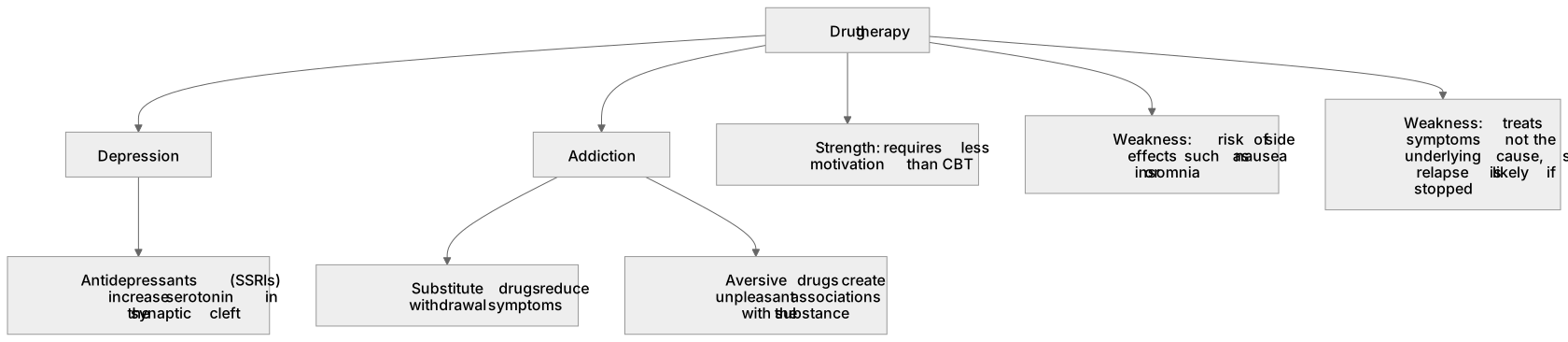
Label the diagram
Some boxes have lost their names. Pick the right name for each number.
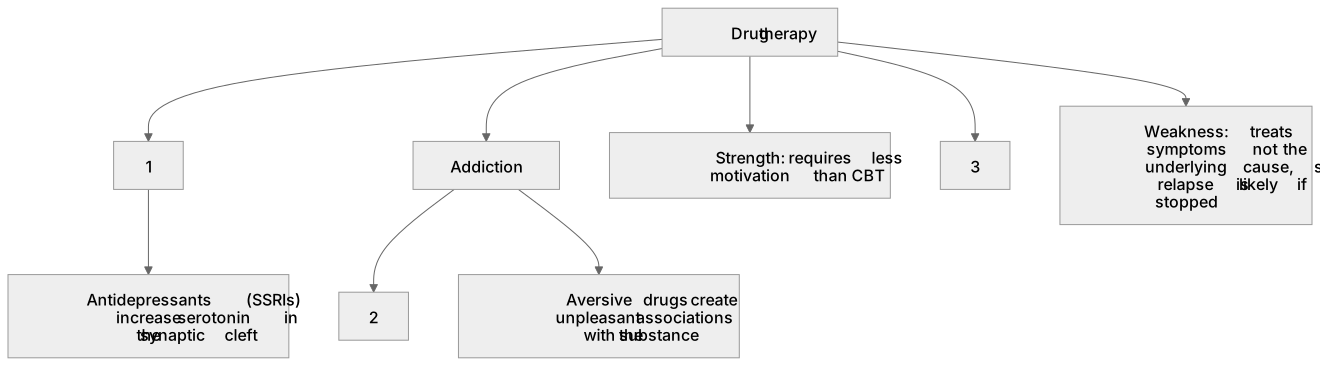
1Box 1
2Box 2
3Box 3
There is more to this lesson
The full lesson goes on to check your understanding and help you earn the marks. Create a free account to carry on, with your progress saved.
A week of Premium from your first lesson · Then the free plan continues · No card, no charge
Test your understanding of Psychological problems: 3.1.8 the use of drugs as a treatment, including strengths and weaknesses of each treatment a. depression b. addiction
Active recall beats re-reading. Take an instant quiz now to test what you’ve learned and lock it into long-term memory.
A week of Premium from your first lesson · Then the free plan continues · No card, no charge