AQA · GCSE · Religious Studies
Course version: 8062 · Version from Sept 2018
Buddhism - 3.1.1.2 Practices: generosity
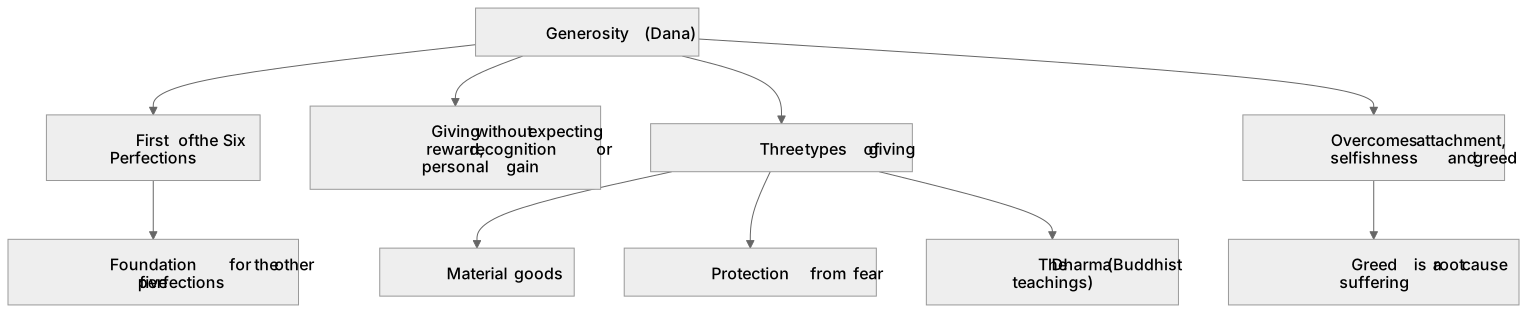
Generosity (Dana) is the first of the Six Perfections in Mahayana Buddhism and forms the foundation for the others.
Checked against the AQA 8062 specification (opens in a new tab) on .
- Point 24 of 29
- 4 key terms
Study notes
From the checked teaching notes for this specification point.
The idea
Generosity (Dana) is the first of the Six Perfections in Mahayana Buddhism and forms the foundation for the others. It involves giving freely without expecting any reward, recognition, or personal gain. This practice is essential for overcoming attachment, selfishness, and greed, which are root causes of suffering. Generosity extends beyond material wealth; Buddhists recognise three main types of giving: material goods, protection from fear, and the Dharma (Buddhist teachings).
For example: A Buddhist might practice generosity by donating to a charity, offering a safe space to someone in distress, or sharing Buddhist wisdom, all cultivated with a pure motivation to alleviate the suffering of others.
What earns the marks
- Define generosity (Dana) as the sincere desire to give without expecting anything in return.
- Identify the three types of giving in Buddhism: material goods, protection from fear, and the Dharma.
- Explain that generosity helps Buddhists overcome the poison of greed and attachment to worldly things.
- Discuss how generosity is the foundational perfection that supports the development of the other five perfections.
Common mistakes and how to put them right
Limiting generosity to only giving money.
Put it right by including the giving of time, protection, and spiritual teachings.
Thinking generosity is about gaining good karma for selfish reasons.
Put it right by emphasising that true perfection of generosity requires giving without attachment to the result.
Confusing generosity with general kindness.
Put it right by linking it specifically to the Buddhist goal of overcoming attachment and the ego.
Exam tips
- Provide examples of non-material generosity, such as giving blood or teaching, to demonstrate a deeper understanding.
- Connect the practice of generosity to the overcoming of the Three Poisons, specifically greed.
- Use the Sanskrit term 'Dana' to add precision and depth to your answers.
Try the lesson
The start of the Buddhism - 3.1.1.2 Practices: generosity lesson, made from checked teaching notes for this specification point.
Have a go first
In the context of the six perfections, what does the practice of generosity (dana) require a Buddhist to do?
Listen
Generosity (Dana) is the first of the Six Perfections in Mahayana Buddhism and forms the foundation for the others. It involves giving freely without expecting any reward, recognition, or personal gain. This practice is essential for overcoming attachment, selfishness, and greed, which are root causes of suffering. Generosity extends beyond material wealth; Buddhists recognise three main types of giving: material goods, protection from fear, and the Dharma (Buddhist teachings). For example, a Buddhist might practice generosity by donating to a charity, offering a safe space to someone in distress, or sharing Buddhist wisdom, all cultivated with a pure motivation to alleviate the suffering of others. A strong answer earns marks for these points. Define generosity (Dana) as the sincere desire to give without expecting anything in return. Identify the three types of giving in Buddhism: material goods, protection from fear, and the Dharma. Explain that generosity helps Buddhists overcome the poison of greed and attachment to worldly things. Discuss how generosity is the foundational perfection that supports the development of the other five perfections. A common slip: Limiting generosity to only giving money. Instead, including the giving of time, protection, and spiritual teachings. Exam tip: Provide examples of non-material generosity, such as giving blood or teaching, to demonstrate a deeper understanding.
See it
Key words
Say what each word means before you turn the card.
Dana (Giving)
Try answering aloud or in your head before turning the card.
Overcoming greed
Try answering aloud or in your head before turning the card.
Karma and intention
Try answering aloud or in your head before turning the card.
Practical Buddhism
Try answering aloud or in your head before turning the card.
See every definition
- Dana (Giving)
- The first of the Six Perfections in Mahayana Buddhism, involving giving freely without expecting any reward, recognition, or personal gain.
- Overcoming greed
- Generosity is essential for overcoming attachment, selfishness, and greed, which are root causes of suffering.
- Karma and intention
- Generosity is cultivated with a pure motivation to alleviate the suffering of others, giving without attachment to the result.
- Practical Buddhism
- Generosity extends beyond material wealth to three main types of giving: material goods, protection from fear, and the Dharma.
Label the diagram
Some boxes have lost their names. Pick the right name for each number.
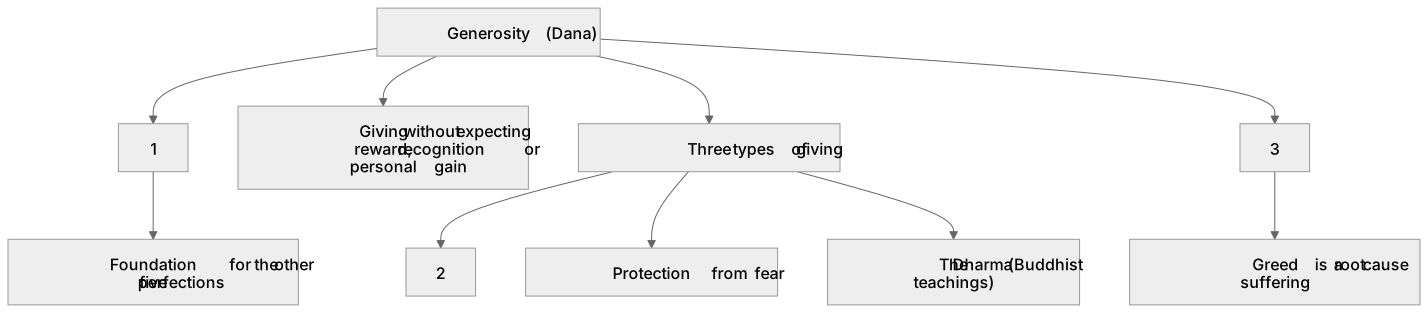
1Box 1
2Box 2
3Box 3
There is more to this lesson
The full lesson goes on to check your understanding and help you earn the marks. Create a free account to carry on, with your progress saved.
A week of Premium from your first lesson · Then the free plan continues · No card, no charge
Test your understanding of Buddhism - 3.1.1.2 Practices: generosity
Active recall beats re-reading. Take an instant quiz now to test what you’ve learned and lock it into long-term memory.
A week of Premium from your first lesson · Then the free plan continues · No card, no charge