AQA · GCSE · Religious Studies
Course version: 8062 · Version from Sept 2018
Buddhism - 3.1.1.2 Practices: Wesak
Wesak (Vesak or Buddha Day) is the most significant festival in the Buddhist calendar, originating from the Theravada tradition.
Checked against the AQA 8062 specification (opens in a new tab) on .
- Point 10 of 29
- 4 key terms
Study notes
From the checked teaching notes for this specification point.
The idea
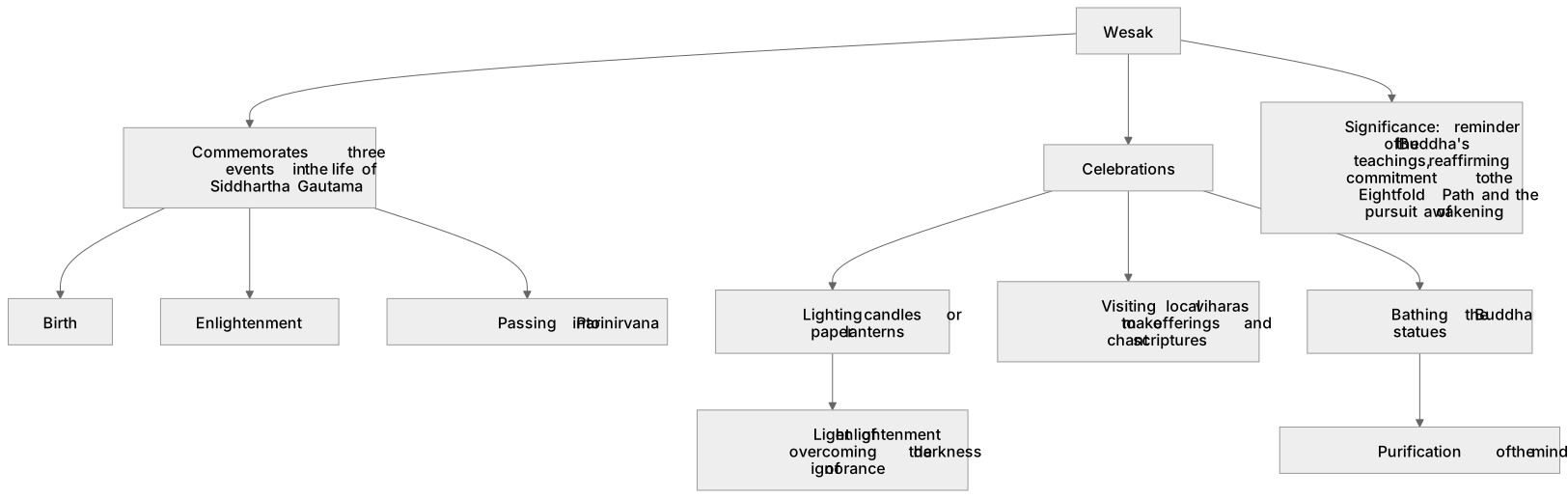
Wesak (Vesak or Buddha Day) is the most significant festival in the Buddhist calendar, originating from the Theravada tradition. It commemorates three pivotal events in the life of Siddhartha Gautama: his birth, his enlightenment, and his passing into Parinirvana. Celebrations in the UK and globally involve lighting candles or paper lanterns to symbolise the light of enlightenment overcoming the darkness of ignorance. Buddhists visit local viharas to make offerings, chant scriptures, and participate in bathing the Buddha statues, representing the purification of the mind. The significance of Wesak lies in its powerful reminder of the Buddha's teachings, inspiring practitioners to reaffirm their commitment to the Eightfold Path and the pursuit of awakening.
What earns the marks
- Identify Wesak as the celebration of the Buddha's birth, enlightenment, and passing away (Parinirvana).
- Describe specific ways Wesak is celebrated, such as lighting lanterns, making offerings, and bathing the Buddha statue.
- Explain the symbolic meaning behind the celebrations, for example, light representing wisdom overcoming ignorance.
- Analyse the significance of Wesak in strengthening the faith of the Sangha and encouraging adherence to the Dhamma.
Common mistakes and how to put them right
Claiming Wesak only celebrates the Buddha's birth.
Put it right: State that Wesak commemorates his birth, enlightenment, and passing into Parinirvana.
Describing Wesak as a Mahayana-only festival.
Put it right: Identify Wesak primarily with Theravada Buddhism, though it is widely celebrated across many traditions as Buddha Day.
Focusing only on the physical actions of the festival without explaining the meaning.
Put it right: Link actions, like lighting candles, to their symbolic significance, such as the light of enlightenment.
Exam tips
- Use the phrase 'light of enlightenment' when explaining the use of candles and lanterns during Wesak.
- Connect the events celebrated at Wesak directly to core Buddhist teachings, such as the possibility of achieving Nirvana.
- In evaluation questions, argue how Wesak unites the Buddhist community by providing a shared focus on the Buddha's life and achievements.
Try the lesson
The start of the Buddhism - 3.1.1.2 Practices: Wesak lesson, made from checked teaching notes for this specification point.
Have a go first
What does the Buddhist festival of Wesak primarily commemorate?
Listen
Wesak (Vesak or Buddha Day) is the most significant festival in the Buddhist calendar, originating from the Theravada tradition. It commemorates three pivotal events in the life of Siddhartha Gautama: his birth, his enlightenment, and his passing into Parinirvana. Celebrations in the UK and globally involve lighting candles or paper lanterns to symbolise the light of enlightenment overcoming the darkness of ignorance. Buddhists visit local viharas to make offerings, chant scriptures, and participate in bathing the Buddha statues, representing the purification of the mind. The significance of Wesak lies in its powerful reminder of the Buddha's teachings, inspiring practitioners to reaffirm their commitment to the Eightfold Path and the pursuit of awakening. A strong answer earns marks for these points. Identify Wesak as the celebration of the Buddha's birth, enlightenment, and passing away (Parinirvana). Describe specific ways Wesak is celebrated, such as lighting lanterns, making offerings, and bathing the Buddha statue. Explain the symbolic meaning behind the celebrations, for example, light representing wisdom overcoming ignorance. Analyse the significance of Wesak in strengthening the faith of the Sangha and encouraging adherence to the Dhamma. A common slip: Claiming Wesak only celebrates the Buddha's birth. Instead, State that Wesak commemorates his birth, enlightenment, and passing into Parinirvana. Exam tip: Use the phrase 'light of enlightenment' when explaining the use of candles and lanterns during Wesak.
See it
Key words
Say what each word means before you turn the card.
Wesak
Try answering aloud or in your head before turning the card.
Enlightenment
Try answering aloud or in your head before turning the card.
Sangha
Try answering aloud or in your head before turning the card.
Ritual and Symbolism
Try answering aloud or in your head before turning the card.
See every definition
- Wesak
- The most significant festival in the Buddhist calendar, commemorating the Buddha's birth, enlightenment, and passing into Parinirvana.
- Enlightenment
- Represented by the light of candles or paper lanterns overcoming the darkness of ignorance.
- Sangha
- The Buddhist community whose faith Wesak strengthens and encourages adherence to the Dhamma.
- Ritual and Symbolism
- Celebrations such as lighting lanterns, making offerings, chanting scriptures, and bathing Buddha statues, representing the purification of the mind.
Label the diagram
Some boxes have lost their names. Pick the right name for each number.
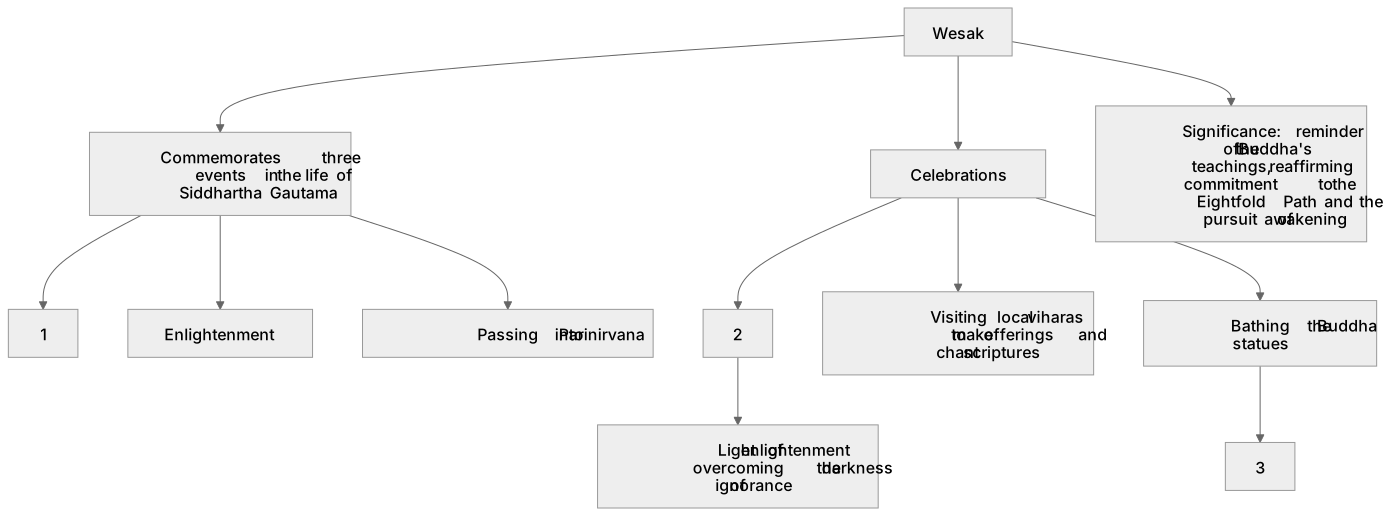
1Box 1
2Box 2
3Box 3
There is more to this lesson
The full lesson goes on to check your understanding and help you earn the marks. Create a free account to carry on, with your progress saved.
A week of Premium from your first lesson · Then the free plan continues · No card, no charge
Test your understanding of Buddhism - 3.1.1.2 Practices: Wesak
Active recall beats re-reading. Take an instant quiz now to test what you’ve learned and lock it into long-term memory.
A week of Premium from your first lesson · Then the free plan continues · No card, no charge