AQA · GCSE · Religious Studies
Course version: 8062 · Version from Sept 2018
Key Beliefs: suffering (dukkha) including different types of suffering
Dukkha, the First Noble Truth, translates to suffering, unsatisfactoriness, or frustration.
Checked against the AQA 8062 specification (opens in a new tab) on .
- Point 21 of 24
- 3 key terms
Study notes
From the checked teaching notes for this specification point.
The idea
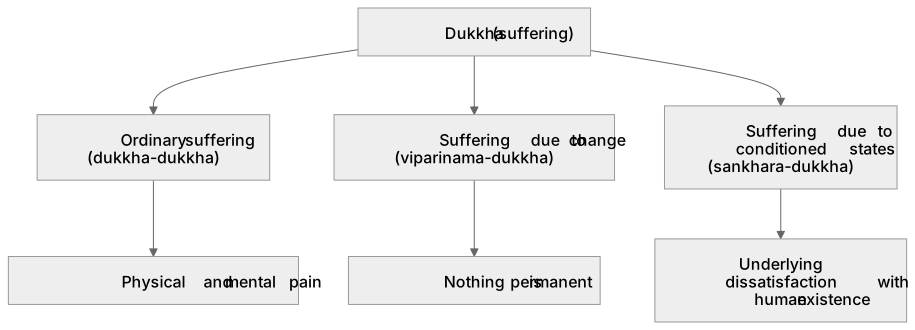
Dukkha, the First Noble Truth, translates to suffering, unsatisfactoriness, or frustration. The Buddha taught three main types of suffering. First, ordinary suffering (dukkha-dukkha) includes physical and mental pain, such as breaking a leg or feeling sad. Second, suffering due to change (viparinama-dukkha) occurs because nothing is permanent; for example, the distress felt when a joyful holiday ends or a cherished item breaks. Third, suffering due to conditioned states (sankhara-dukkha) is a subtle, underlying dissatisfaction with the limitations of human existence and the illusion of a permanent self. Understanding dukkha is essential for Buddhists as it diagnoses the human condition, prompting the search for enlightenment.
What earns the marks
- Dukkha is the First Noble Truth, identifying that suffering is an inescapable part of human existence.
- Ordinary suffering (dukkha-dukkha) encompasses direct physical and mental pain, such as illness, injury, or grief.
- Suffering due to change (viparinama-dukkha) arises from the impermanent nature of reality, where even happy moments eventually end.
- Suffering of conditioned states (sankhara-dukkha) refers to the deep-seated dissatisfaction stemming from a lack of understanding of the universe's interconnectedness.
Common mistakes and how to put them right
Claiming dukkha only means physical pain.
Put it right: Dukkha also includes emotional distress, dissatisfaction, and the frustration of impermanence.
Stating that Buddhists are pessimistic because they focus on suffering.
Put it right: Buddhists view the acknowledgement of dukkha as realistic, serving as the first step towards overcoming it.
Confusing the three types of suffering with the Three Poisons.
Put it right: Ensure the three types of suffering (ordinary, change, conditioned states) are distinct from the causes of suffering (greed, hatred, ignorance).
Exam tips
- Use the specific Pali term 'dukkha' alongside the English translation to demonstrate accurate subject knowledge.
- Provide a concrete example for each of the three types of suffering to support your explanations in longer answers.
- Link the concept of dukkha to the First Noble Truth when evaluating its importance in Buddhist teachings.
Try the lesson
The start of the Key Beliefs: suffering (dukkha) including different types of suffering lesson, made from checked teaching notes for this specification point.
Have a go first
Which of the following is the Buddhist term used to describe suffering, dissatisfaction or unsatisfactoriness?
Listen
Dukkha, the First Noble Truth, translates to suffering, unsatisfactoriness, or frustration. The Buddha taught three main types of suffering. First, ordinary suffering (dukkha-dukkha) includes physical and mental pain, such as breaking a leg or feeling sad. Second, suffering due to change (viparinama-dukkha) occurs because nothing is permanent; for example, the distress felt when a joyful holiday ends or a cherished item breaks. Third, suffering due to conditioned states (sankhara-dukkha) is a subtle, underlying dissatisfaction with the limitations of human existence and the illusion of a permanent self. Understanding dukkha is essential for Buddhists as it diagnoses the human condition, prompting the search for enlightenment. A strong answer earns marks for these points. Dukkha is the First Noble Truth, identifying that suffering is an inescapable part of human existence. Ordinary suffering (dukkha-dukkha) encompasses direct physical and mental pain, such as illness, injury, or grief. Suffering due to change (viparinama-dukkha) arises from the impermanent nature of reality, where even happy moments eventually end. Suffering of conditioned states (sankhara-dukkha) refers to the deep-seated dissatisfaction stemming from a lack of understanding of the universe's interconnectedness. A common slip: Claiming dukkha only means physical pain. Instead, Dukkha also includes emotional distress, dissatisfaction, and the frustration of impermanence. Exam tip: Use the specific Pali term 'dukkha' alongside the English translation to demonstrate accurate subject knowledge.
See it
Key words
Say what each word means before you turn the card.
Dukkha
Try answering aloud or in your head before turning the card.
The Human Condition
Try answering aloud or in your head before turning the card.
Enlightenment
Try answering aloud or in your head before turning the card.
See every definition
- Dukkha
- The First Noble Truth, translating to suffering, unsatisfactoriness or frustration, identifying that suffering is an inescapable part of human existence.
- The Human Condition
- The limitations of human existence, which understanding dukkha diagnoses, prompting the search for enlightenment.
- Enlightenment
- What the diagnosis of the human condition prompts Buddhists to search for.
Label the diagram
Some boxes have lost their names. Pick the right name for each number.
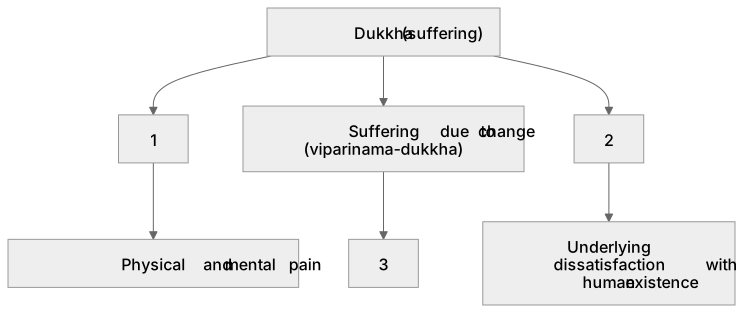
1Box 1
2Box 2
3Box 3
There is more to this lesson
The full lesson goes on to check your understanding and help you earn the marks. Create a free account to carry on, with your progress saved.
A week of Premium from your first lesson · Then the free plan continues · No card, no charge
Test your understanding of Key Beliefs: suffering (dukkha) including different types of suffering
Active recall beats re-reading. Take an instant quiz now to test what you’ve learned and lock it into long-term memory.
A week of Premium from your first lesson · Then the free plan continues · No card, no charge