AQA · GCSE · Sociology
Social stratification
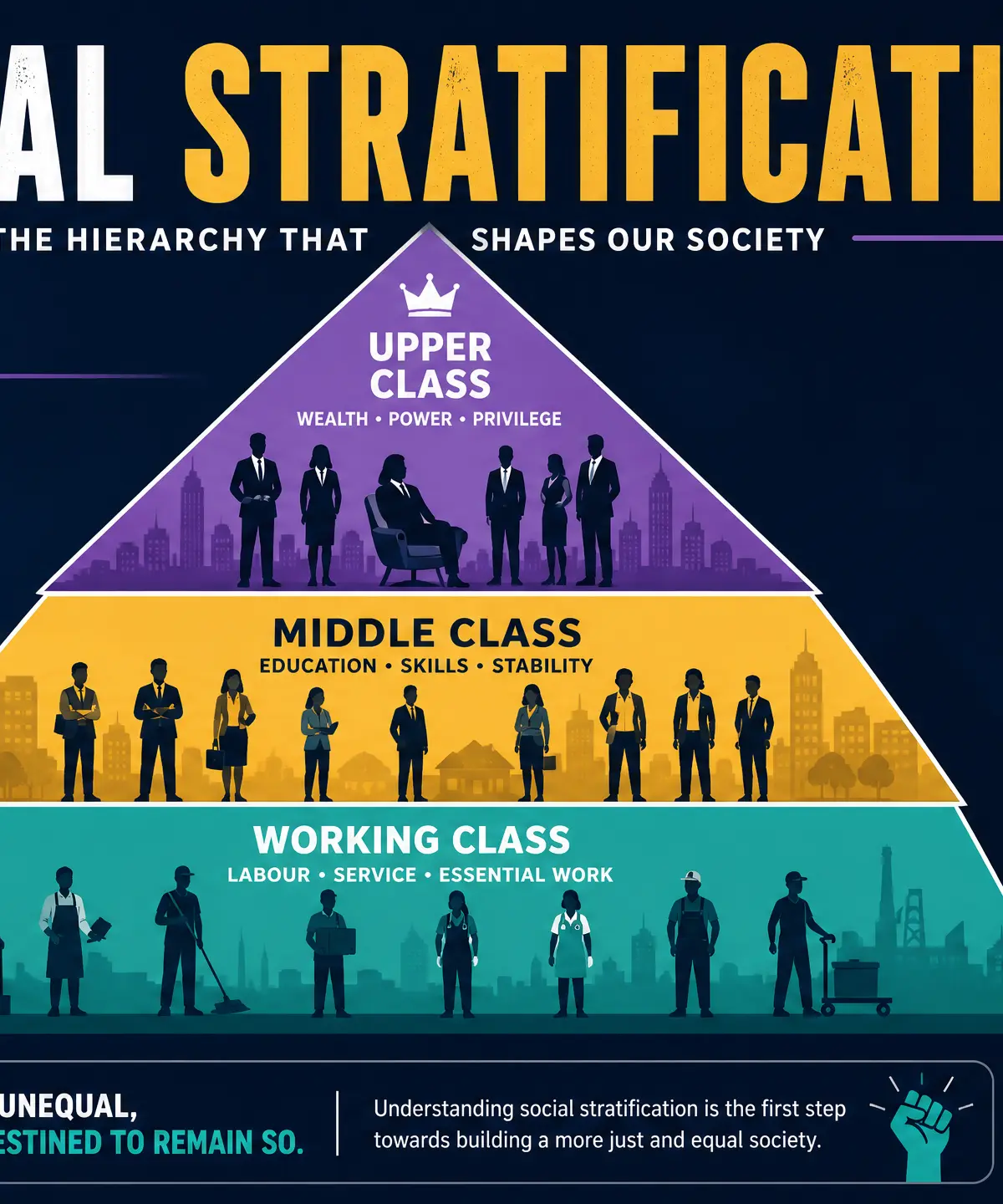
Social stratification explores how society is divided into hierarchical layers, affecting everyone's life chances based on wealth, power, and status. Understanding this is crucial for GCSE Sociology, as it underpins key debates about inequality, poverty, and whether society is truly meritocratic.
- 5 min read
- 3 worked examples
- 3 practice questions
- 7 key terms
Study Notes
Overview
The study of social stratification is central to sociology. It examines the hierarchical structure of society—how people are divided into different 'strata' or layers based on factors like class, wealth, power, and status. For your GCSE exam, you must understand how these divisions affect life chances (the opportunities people have to improve their quality of life). Examiners expect you to confidently compare major sociological perspectives, particularly the Functionalist view that stratification is necessary and meritocratic, versus the Marxist view that it is exploitative and based on class conflict. You will also need to apply these theories to real-world issues like poverty, gender inequality, and the distribution of power.
Key Theoretical Perspectives
Functionalism (Davis and Moore)
Key Ideas: Stratification is inevitable and functionally necessary for society.
What they argued: In 1945, Davis and Moore argued that society must ensure the most important roles (e.g., doctors, engineers) are filled by the most talented and qualified people. To motivate people to undertake long training, society must offer unequal rewards (higher pay and status).
Why it matters: This supports the idea of meritocracy—that people achieve their position based on talent and effort. Examiners often want you to contrast this optimistic view with Marxism.
Marxism (Karl Marx)
Key Ideas: Stratification is based on economic exploitation and class conflict.
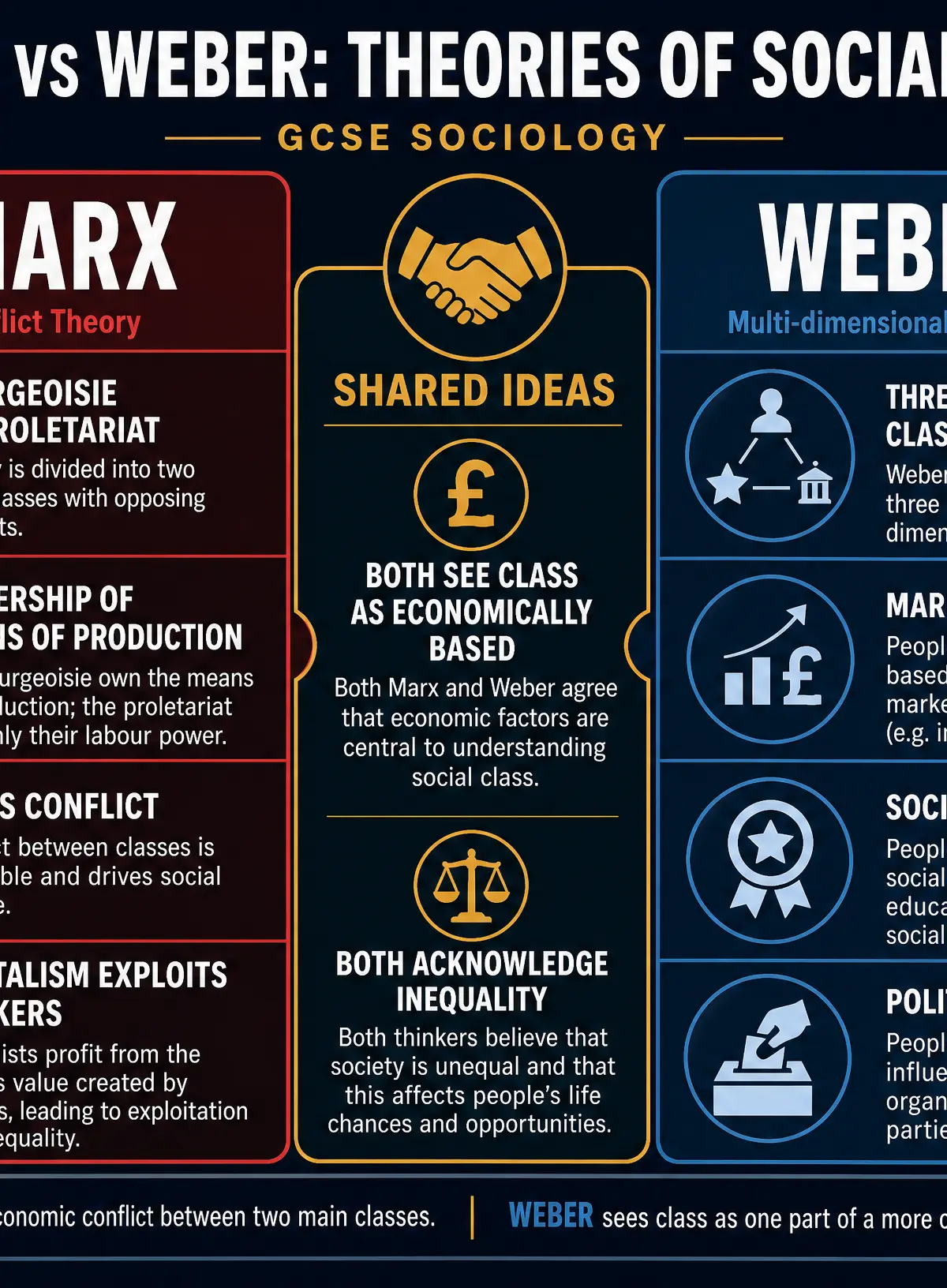
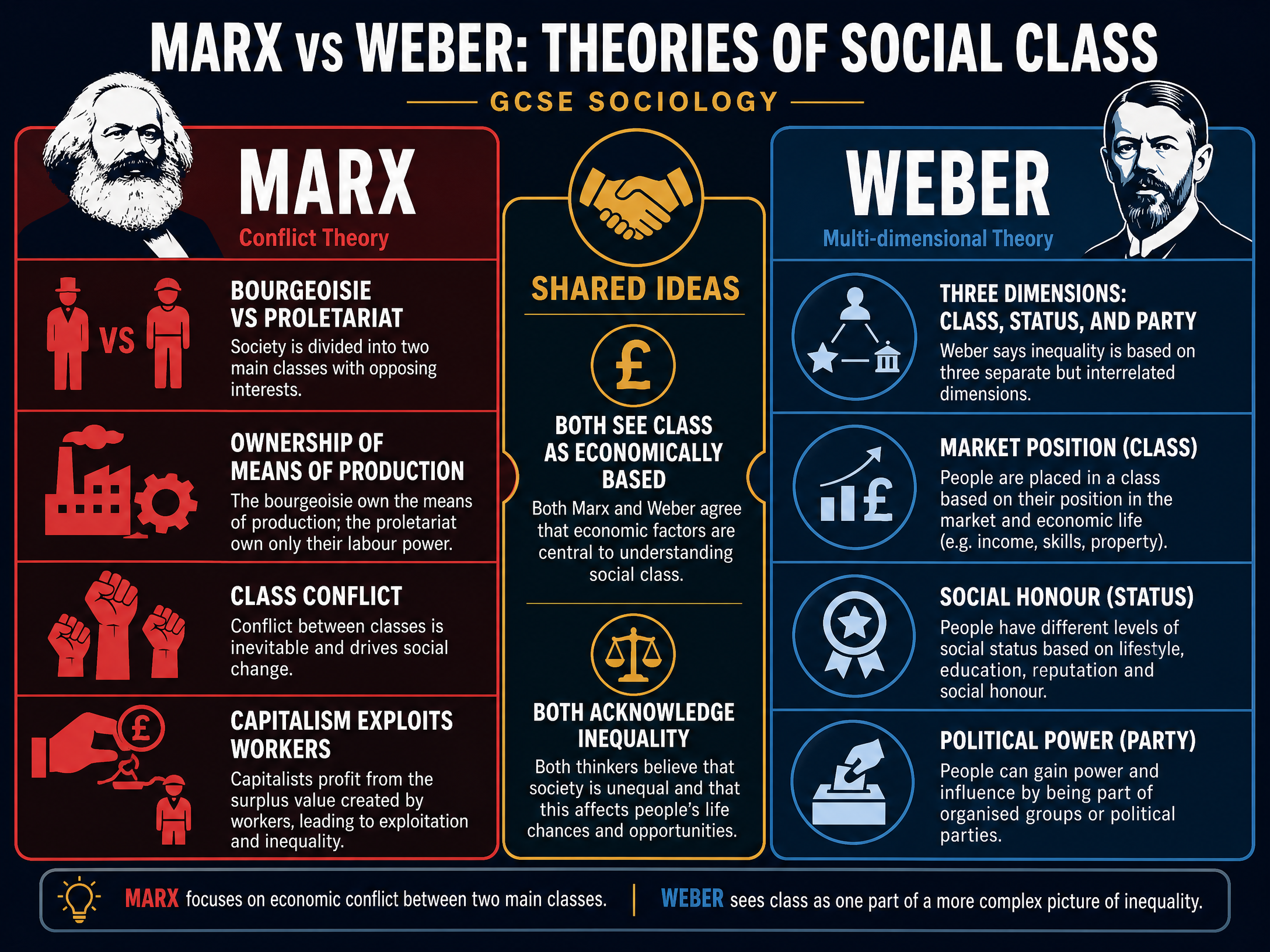
What he argued: Marx saw capitalist society divided into two main classes: the bourgeoisie (ruling class who own the means of production) and the proletariat (working class who sell their labour). The bourgeoisie exploit the proletariat to maximise profit.
Why it matters: Marx argues stratification is not fair or meritocratic; it serves to maintain the power of the wealthy elite.
Weberian Theory (Max Weber)
Key Ideas: Stratification is multi-dimensional, not just economic.
What he argued: Weber agreed with Marx that economics matters, but added two more dimensions: Status (social honour/prestige) and Party (political power/influence).
Why it matters: A person can have high status but low wealth (e.g., a priest), or high wealth but low status (e.g., a lottery winner). This nuanced view is highly rewarded by examiners.
Poverty and Inequality
Types of Poverty
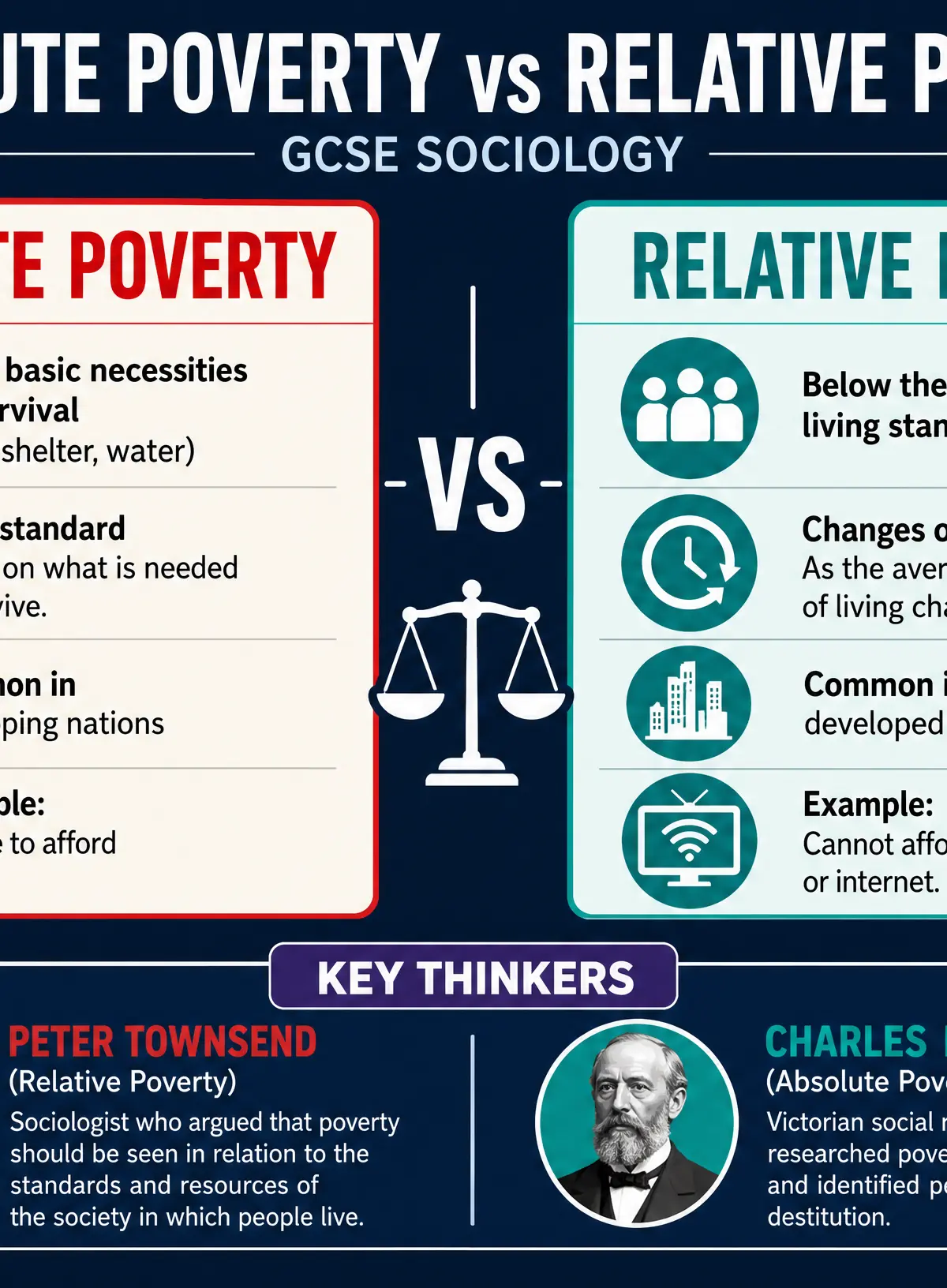
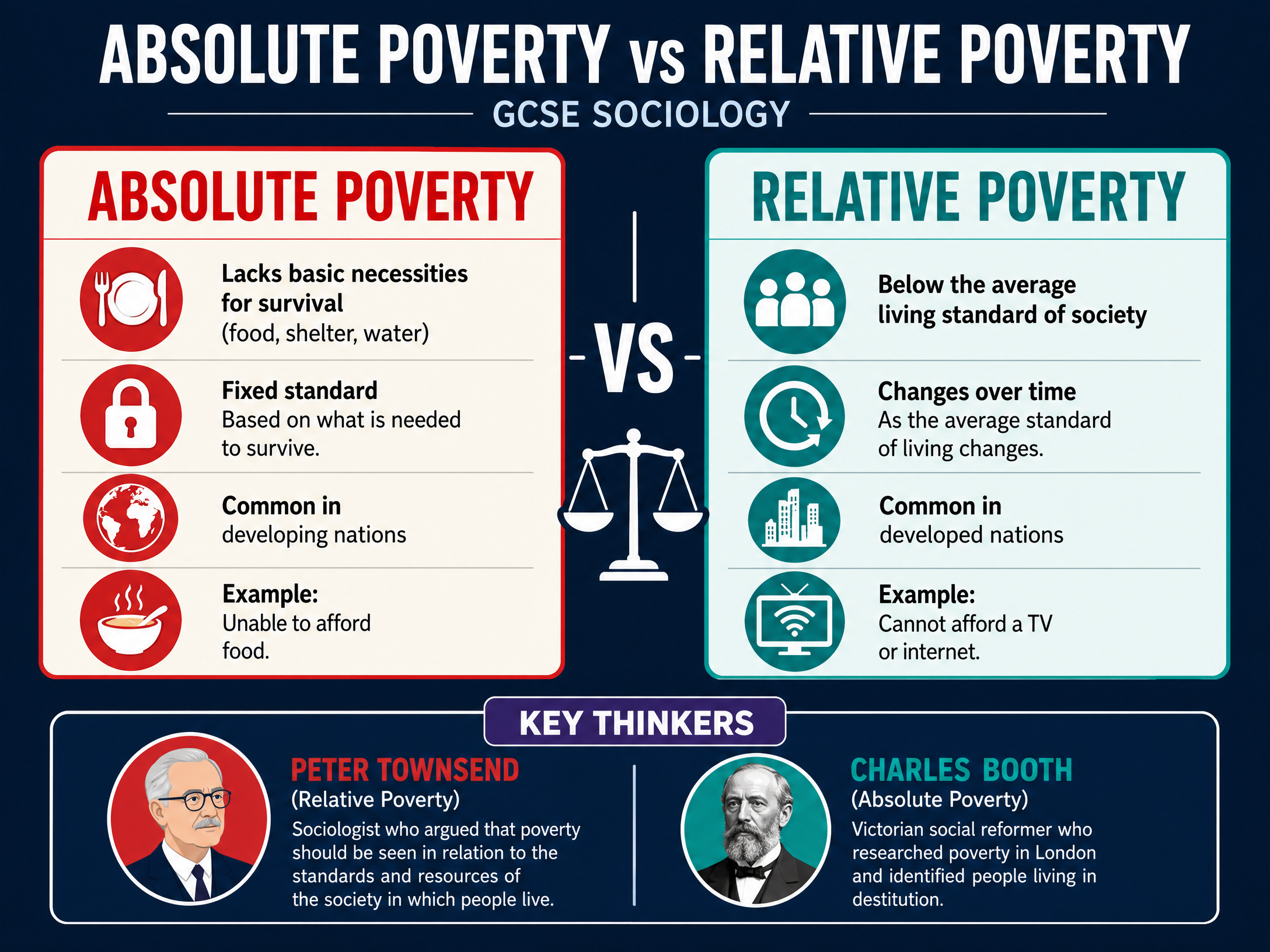
Absolute Poverty: Lacking the basic necessities for physical survival (food, clean water, shelter). Measured by a fixed standard.
Relative Poverty: Having significantly less than the average standard of living in a particular society. Defined by sociologist Peter Townsend as lacking the resources to participate in normal social activities.
Explanations of Poverty
Culture of Poverty: Argues that poverty is passed down through generations because the poor develop fatalistic values and attitudes (Oscar Lewis). Marxists strongly criticise this as 'blaming the victim'.
Structural Explanations: Argue poverty is caused by the structure of capitalist society, government policies, and economic shifts (like globalisation and deindustrialisation).
Power and Authority
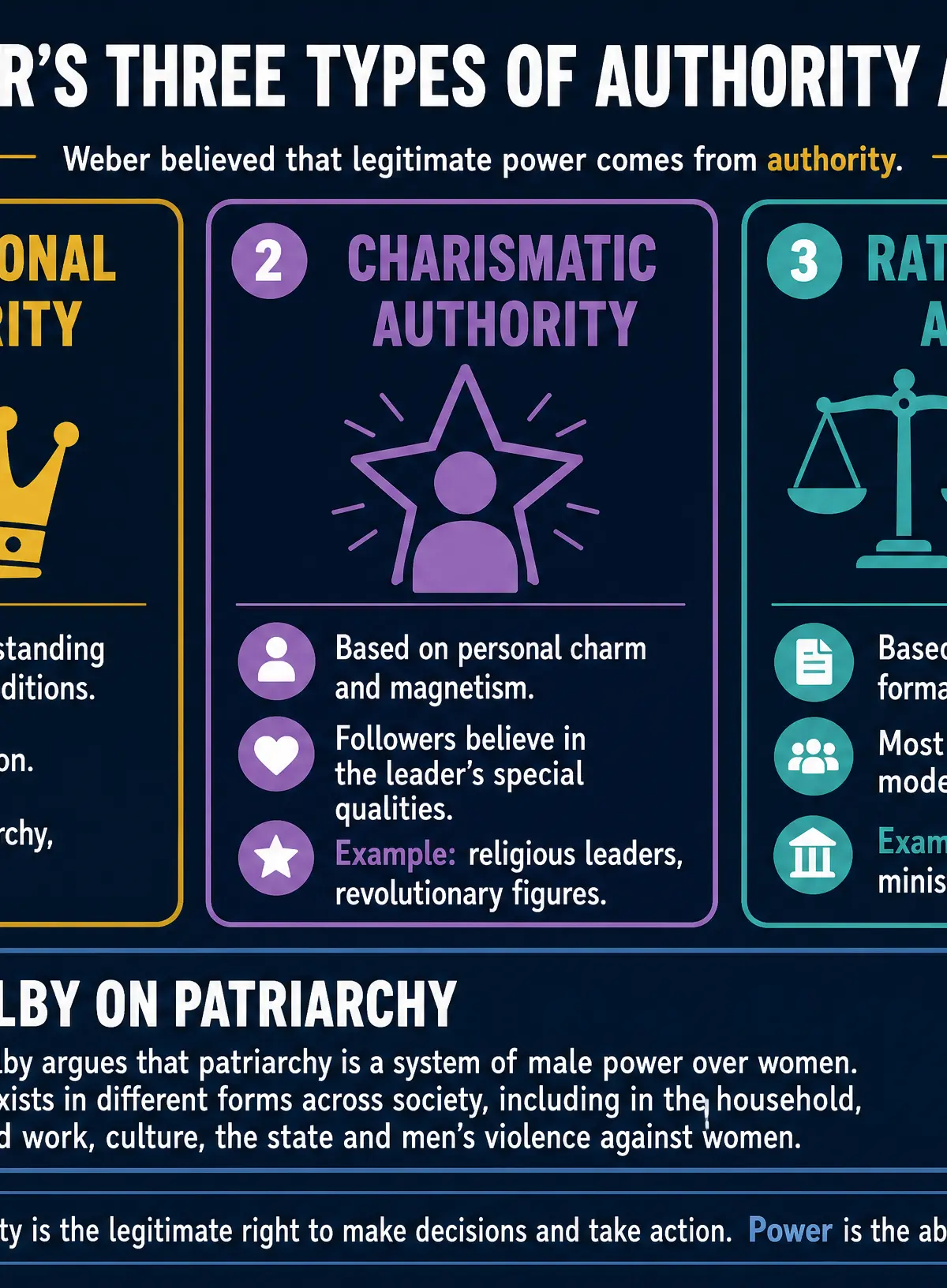
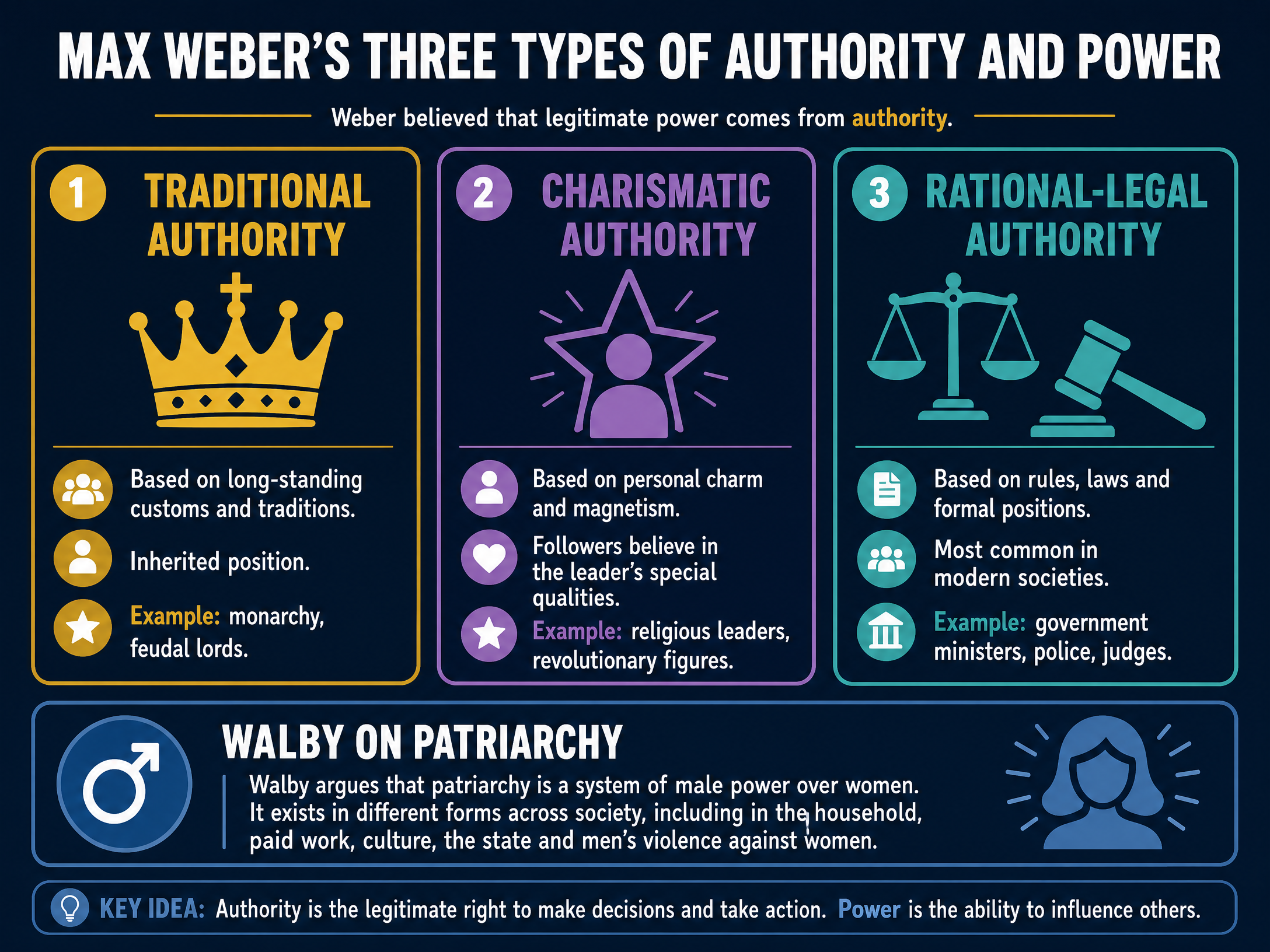
Max Weber identified three types of legitimate power, known as authority:
- Traditional Authority: Based on custom and inherited position (e.g., the Monarchy).
- Charismatic Authority: Based on the exceptional personal qualities of a leader (e.g., Martin Luther King Jr.).
- Rational-Legal Authority: Based on a system of rules, laws, and formal positions (e.g., the Prime Minister or a police officer).
Patriarchy
Sylvia Walby defines patriarchy as a system of social structures in which men dominate, oppress, and exploit women. She identified six structures: paid work, the household, the state, culture, sexuality, and male violence.
Listen to the Podcast
Listen to our 4-minute revision podcast covering all the essential theories, definitions, and exam tips for this topic.

Visual Resources
3 diagrams and illustrations
Interactive Diagrams
1 interactive diagram to visualise key concepts
Conceptual Flow Outline
Summary of Key Theoretical Perspectives on Stratification
Worked Examples
3 worked examples — open one to explore the question and available guidance.
Practice Questions
Test your understanding — click to reveal model answers
Describe one way in which gender affects life chances. (3 marks)
Hint: Think about the workplace, pay, or Sylvia Walby's concept of patriarchy.
Identify and explain one reason why some sociologists argue that society is not a meritocracy. (4 marks)
Hint: Use the Marxist perspective and think about inherited wealth or private education.
Discuss how far sociologists agree that poverty is caused by the behaviour of the poor themselves. (12 marks)
Hint: Contrast the 'Culture of Poverty' theory with structural/Marxist explanations.