10 Physics Quiz GCSE Sites for Exam-Style Practice
You've reread your notes twice. You still can't answer a density question without peeking. That's the gap a good quiz closes, and it's why just highlighting pages won't save you three weeks before the paper.
A useful physics quiz GCSE tool doesn't just ask easy recall. It makes you pick an equation, swap units, read a graph and explain a result. Those are the skills that earn marks when a question looks unfamiliar.
This list covers ten options, from one-topic checks to full written practice. I've judged each one on four plain things. Does it match your board and tier, do questions look like real paper questions, can you check your own answers, and is the free option enough to start?
You don't need all ten. Pick one weak topic, test it, fix what you missed, then test it again. If you want a broader science practice habit beyond physics, Integrated Science practice with Keybaki shows the same short, repeated approach in a different setting.
Start small tonight. Twenty minutes on one topic beats two hours of rereading everything and remembering nothing.
1. Density and States of Matter GCSE Physics Notes
Start here if density, the particle model and changes of state keep blurring together. Density and States of Matter: GCSE Physics Notes is built for Pearson Edexcel GCSE Physics, not for physics in general. That narrow focus is its strength.
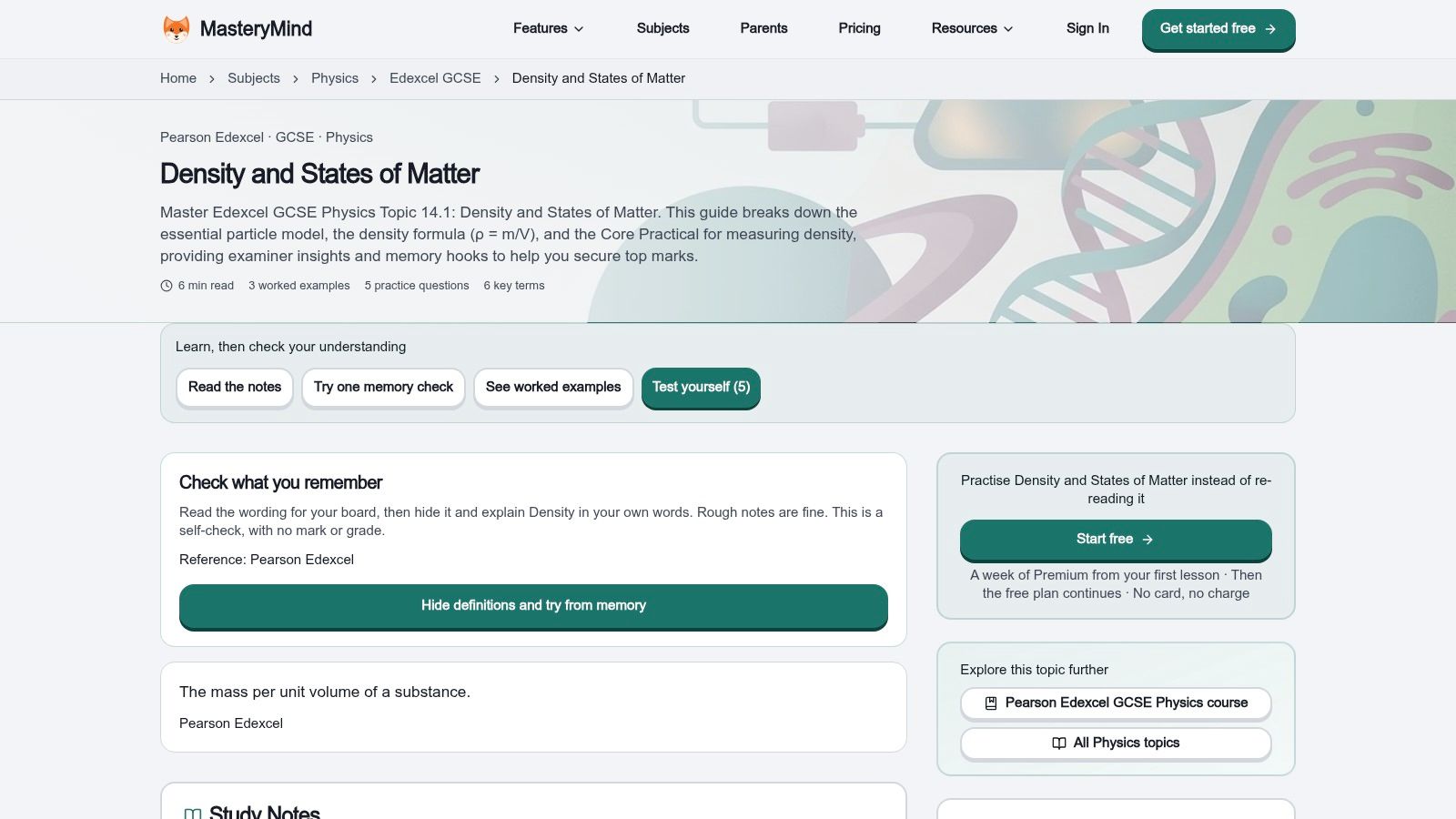
The page mixes clear explanations with worked examples, so you can see how a calculation is set out before you try one. Practice questions come at different difficulty levels, which helps if you're rebuilding confidence after a bad mock. An instant quiz then checks whether you can do it without the notes in front of you.
What it does well
- Board fit: It is designed to match the Pearson Edexcel specification, so you aren't wasting time on content you won't be asked.
- Linked ideas: It treats the particle model, density and changes of state together, the way exam questions often link them.
- Graduated practice: Easier questions build up to harder ones, instead of dropping you straight into multi-step work.
That said, know its limits. It covers a specific topic area, so it won't replace a complete GCSE Physics course. The page also doesn't state how many questions you'll get or how detailed the quiz explanations are, so check that before you rely on it alone.
Used well, it's a tidy rescue session for one shaky topic. Work through the examples, close the notes, take the quiz, then revisit only what you missed. To line this up with your other subjects, find subjects for your exam board before you build the rest of your plan.
2. Cognito
If you want to learn a topic and test it in the same place, Cognito is the tidy all-rounder. It puts topic quizzes next to lessons, notes, flashcards, exam questions and past papers. Content is mapped to AQA, Edexcel, OCR A and OCR B, with Foundation and Higher material.
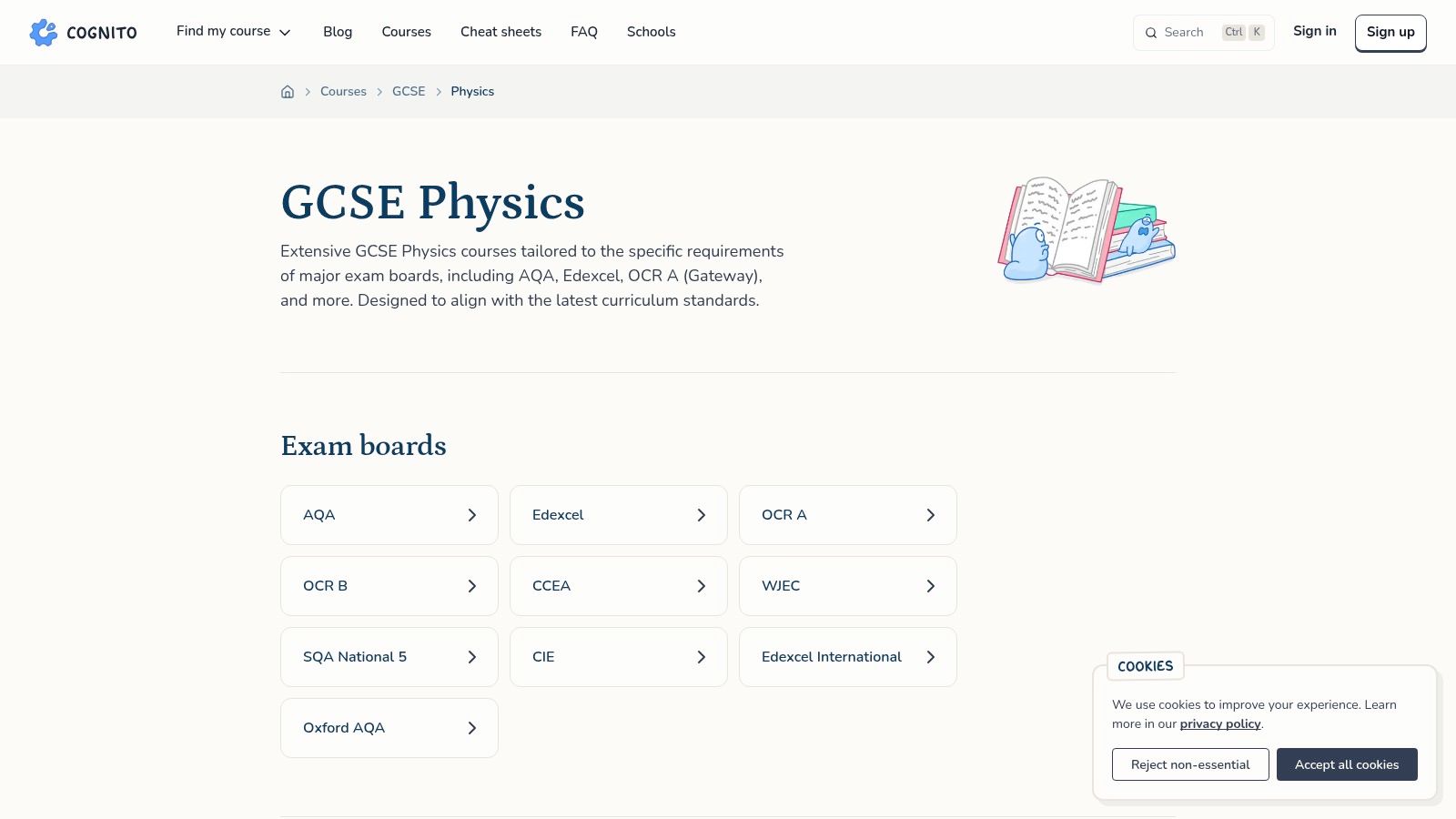
The quiz formats vary, which matters. You'll meet written answers and calculation hints, not only multiple choice. Some written exam-style answers use AI marking, so if you're a teacher, check a marked answer yourself before you trust the score with a whole class.
Practical rule: Use the lesson to fill a gap, then do the quiz straight away while the idea is still fresh. Don't watch three lessons and test none of them.
You can start for free and save progress with an account. Some features and question access sit behind Cognito Pro, so the free version may not stretch to everything you want in Year 11. The platform also feels busy if you only wanted a five minute check on one idea.
For a student who has left revision late, that busyness can help. You can move from energy to electricity without hunting for separate sites. For a student aiming high, pair the quizzes with timed written questions so your practice still looks like the actual paper.
3. BBC Bitesize
BBC Bitesize is the free option most of you already know. It offers topic quizzes, exam-style questions and short explanations across areas such as energy, electricity, forces, waves and atomic structure. It's handy for a quick session on the bus or between lessons.
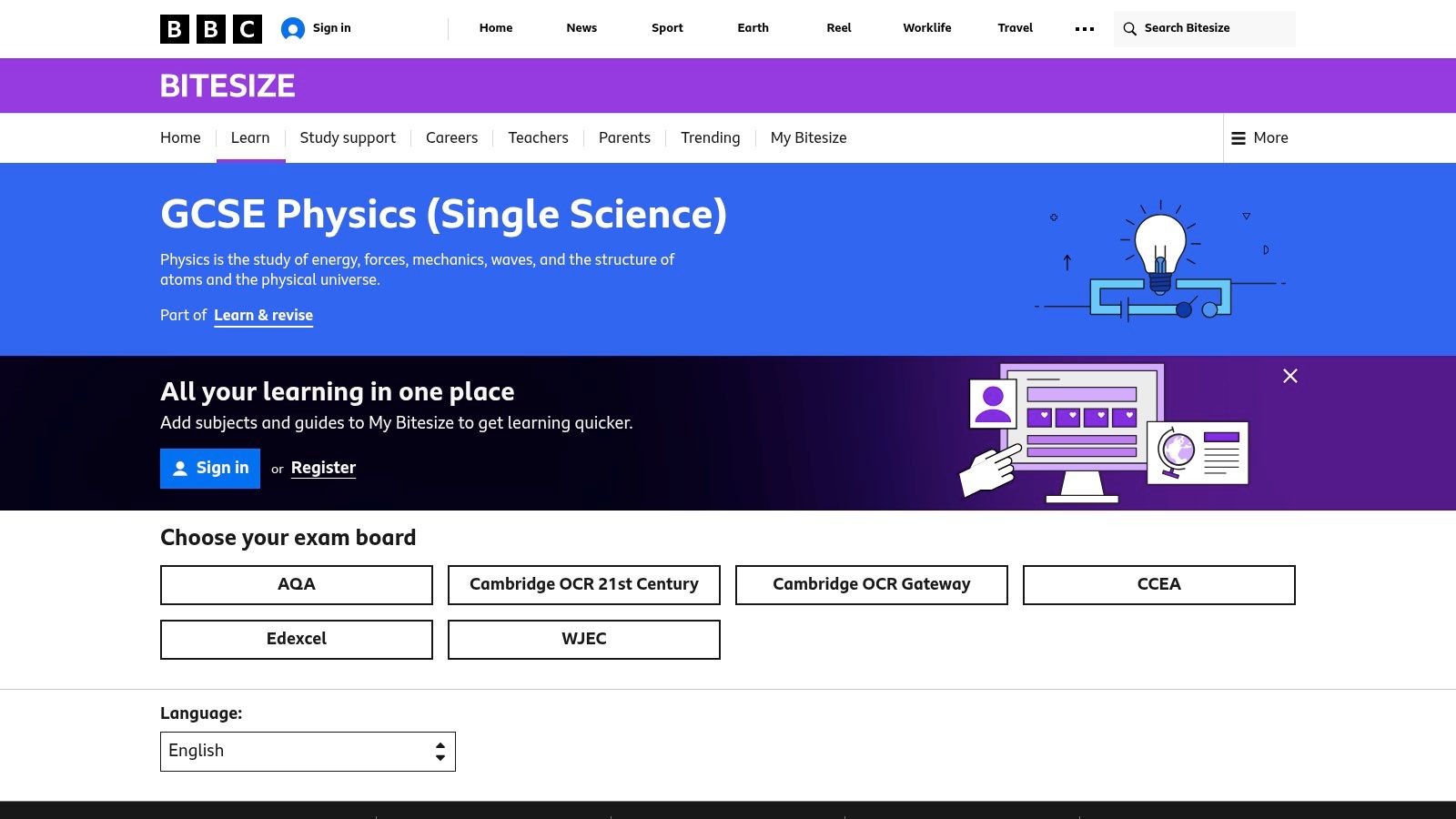
Its questions can include graphs and images, so you're practising how to read information, not just recall facts. Quick-fire sets suit a confidence check. Exam-style collections suit a longer sit-down session.
Where to be careful
Check the label on each resource. Not every page is a full assessment, and not every quiz is matched to your exact board. If you use a BBC account, you'll get some personalised learning features, but feedback won't be as detailed as on a paid platform built around marking.
That's fine if you know what you're using it for. I recommend Bitesize for core knowledge checks and for students who need a low-pressure place to restart. Don't treat a good score on a short quiz as proof you'd handle a six-mark question under time. Do the quiz, note the topic you missed, then find a written question on that same idea.
4. Seneca Learning
Long revision blocks don't work for everyone. Seneca Learning breaks GCSE Physics into short sections that mix a small chunk of explanation with questions straight away. You get instant feedback, so you find out quickly whether you understood the paragraph you just read.
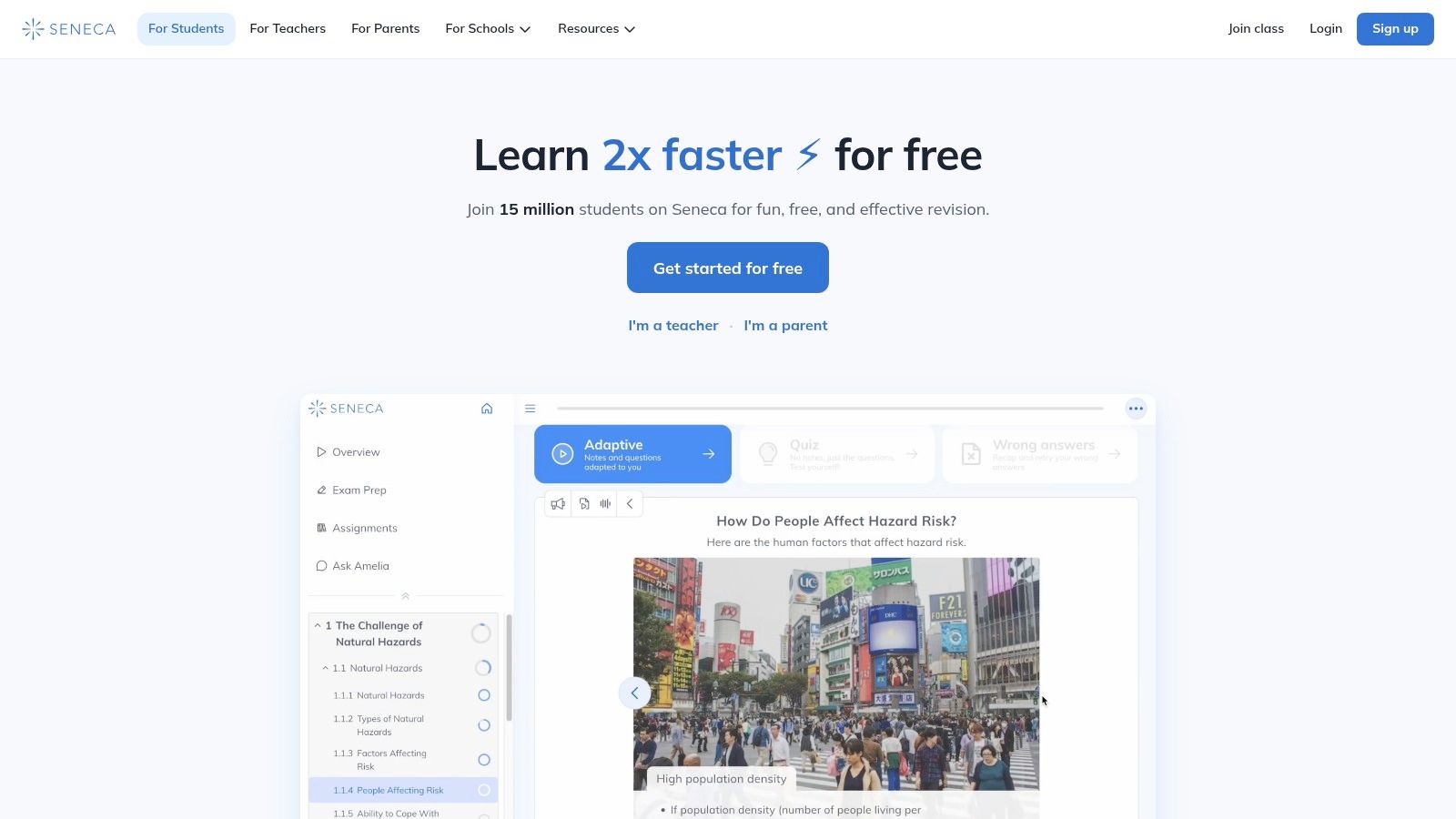
Courses can be searched by subject and exam board, and by tier where that's available. Core studying is free, which makes it easy to try tonight. Progress data helps you see which sections you've covered, though covered doesn't always mean secure.
The catch is simple. The question-only Quiz mode is Premium. If you're a keen student who wants to skip the lesson and go straight to testing, you'll hit that limit. The lesson-and-question flow also feels less like sitting a full paper, so it won't build exam stamina on its own.
Use Seneca to rebuild a topic in small steps, then switch to a tougher format. Students using Online Revision for GCSE alongside school work should still check that every course they open matches their board. Seneca is good for steady retrieval. It isn't a replacement for timed, written practice in the last few weeks.
5. SimpleStudy
SimpleStudy suits students who think in topics. Its GCSE Physics quizzes are organised by topic, with instant answers and progress tracking, and they sit alongside notes and other study materials. Resources are organised by subject and board, so you can aim at one weak area instead of scrolling through everything.
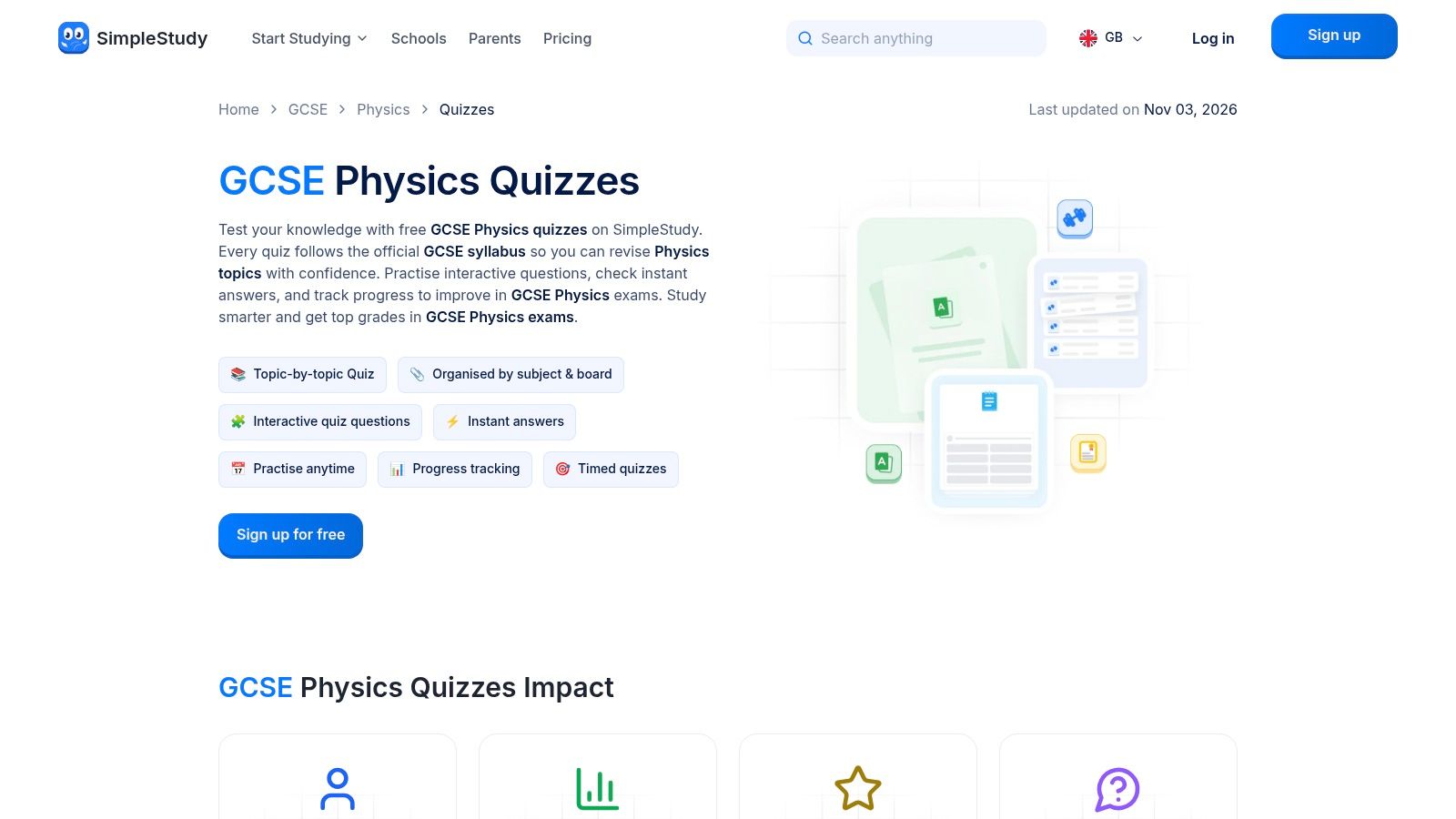
That structure helps after a mock. Say your paper shows you dropped marks on forces. You can go straight to forces, test it, read the answers, and watch whether your next attempt improves.
- Topic focus: You can target one area at a time without loading a whole course.
- Instant answers: You see what went wrong while the question is still in your head.
- Wider library: Notes and topic questions sit near the quizzes if you need to relearn first.
Check access before you plan around it. Its pricing information lists quizzes among paid-plan features, and there are multiple plan levels. Check the current plan details and confirm the course and board match your GCSE. A polished dashboard won't help if you're practising the wrong specification.
6. Educake
Educake focuses on quizzes rather than long lessons. Choose a board, with options including AQA, Edexcel, OCR Gateway, WJEC and CCEA, then answer Physics questions in different formats. Feedback appears straight away, and study-guide support is available alongside the questions.
Students who use Educake at school may already know its format. Home users can access a free trial before deciding whether to subscribe. It runs in a mobile browser, with no standalone app, which may matter if you prefer practising through an app.
Parents can receive progress updates, while teachers can use board selection to keep practice aligned with a course. The feedback is useful only if students review mistakes rather than guessing until they get an answer right.
Try a set, then return to missed questions a few days later. If the same ideas still cause trouble, relearn the topic before attempting more questions.
Educake suits short, regular retrieval practice. Use written past-paper questions as well to practise longer answers.
7. Isaac Science (Isaac Physics)
Confident students often outgrow simple recall quizzes. Isaac Science gives you free GCSE Physics questions, tests, concept pages and online books, including Essential GCSE Physics. A free account gives full student access and progress tracking.
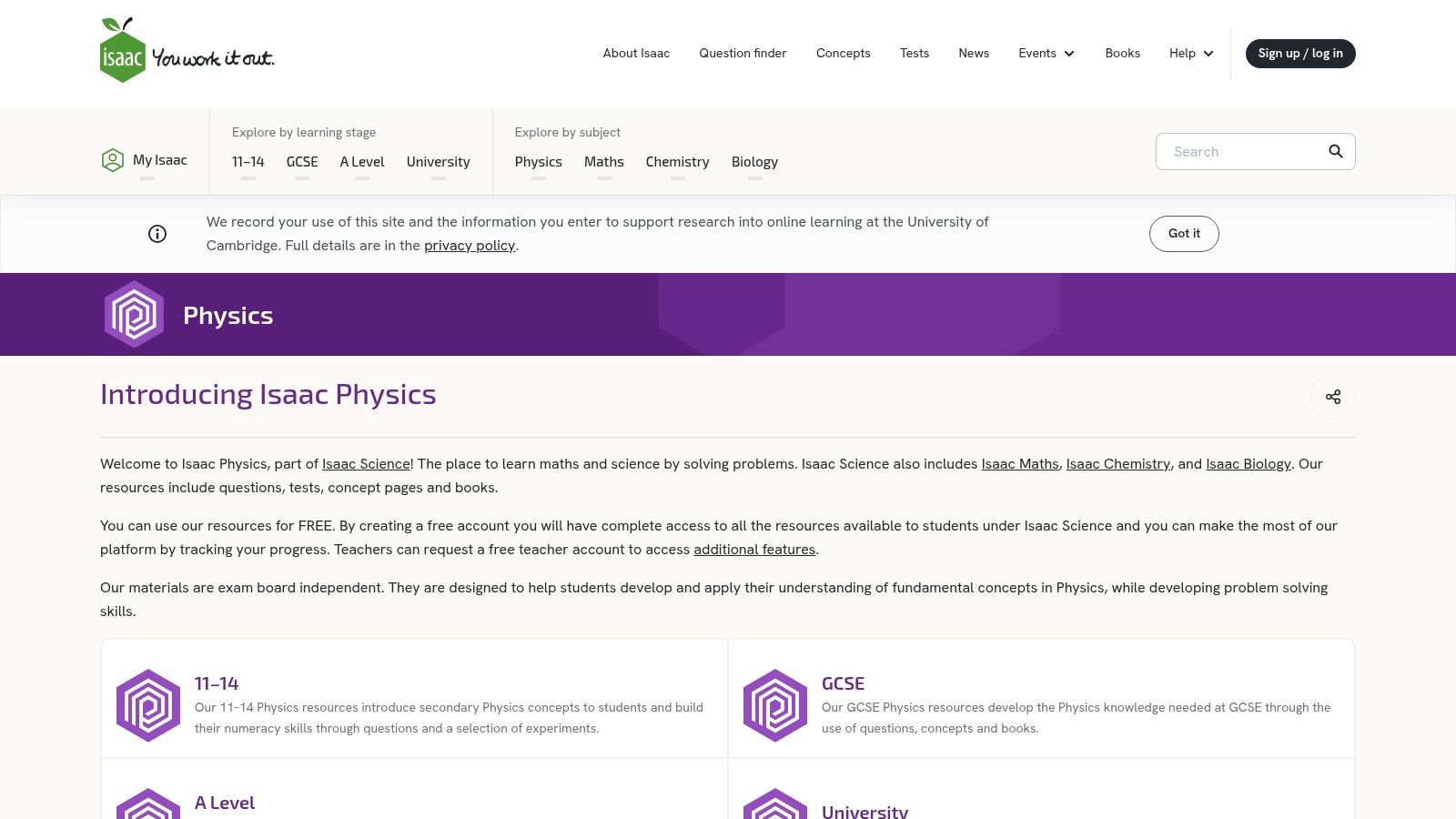
Its split is honest and useful. Practice questions usually use one concept or equation. Challenge questions combine ideas and demand more problem-solving. That second group is where grade 7 to 9 students should spend time once the basics are secure.
The limit is board fit. Materials are independent of exam boards, so they may not match your specification exactly. Some questions also lean toward problem-solving rather than quick recall, which is great training, but it won't tell you whether you can state a definition the way your mark scheme wants it.
Be careful with calculator habits while you practise. The JCQ calculator guidance states that an exam calculator cannot provide symbolic algebra manipulation, communication with another device or access to stored formulae. Practise powers of ten and unit checks now, without relying on stored equations. Isaac will stretch your thinking. Your board's past papers will keep that thinking exam-shaped.
8. Physics & Maths Tutor (PMT)
Not every good practice tool marks itself. Physics & Maths Tutor is mainly a library of questions by topic, past papers, notes, mind maps, flashcards and practical-skills materials, organised by exam board and topic. Many resources are free.
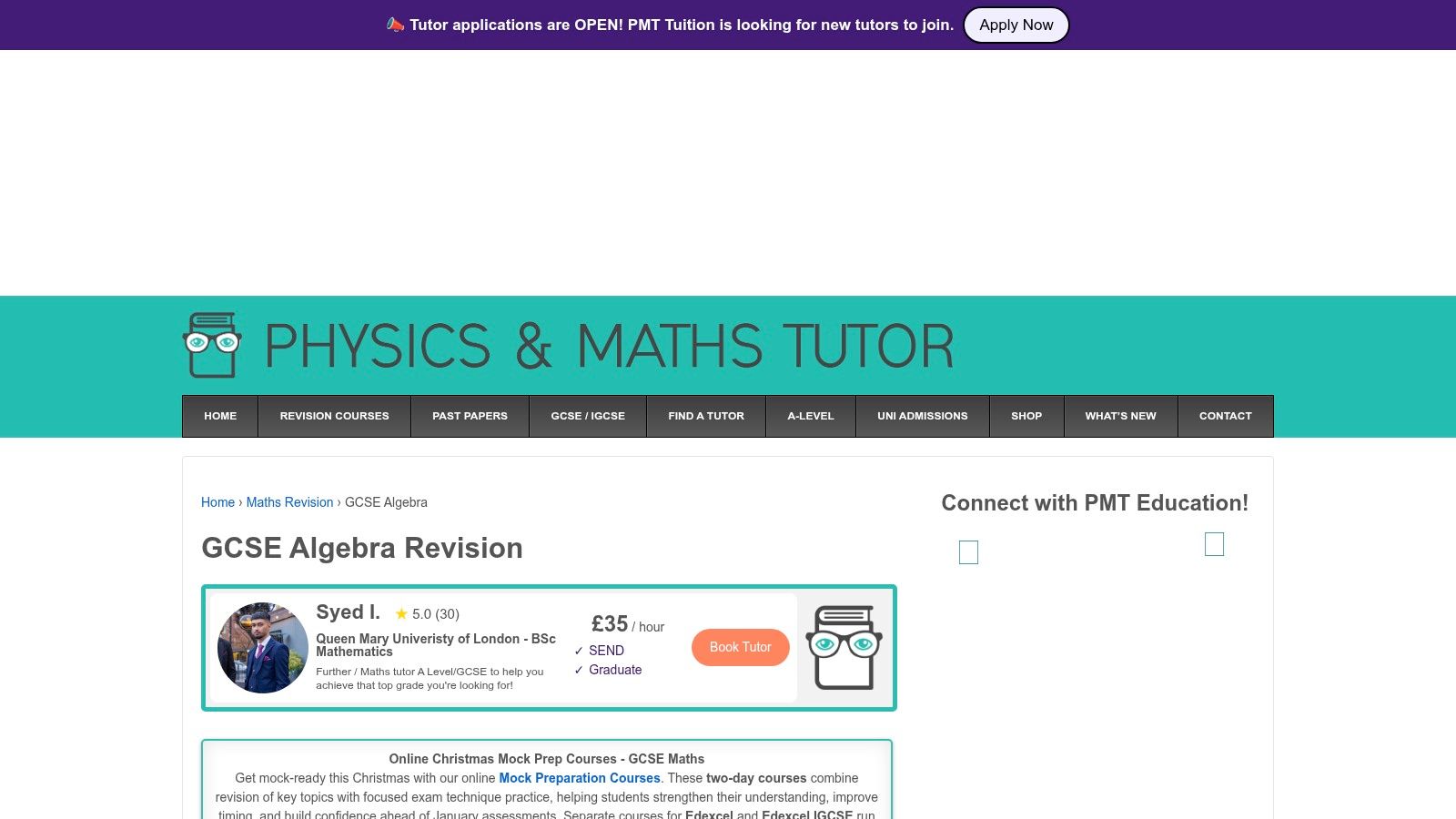
That makes PMT the natural next step after a quiz. A quiz tells you that you can't handle required practical questions. PMT gives you written questions where you must show it on paper. You'll usually mark your own work with the supplied mark schemes, which takes discipline but teaches you how marks are awarded.
Why practical practice matters here
Practical work isn't background. The AQA GCSE Physics specification material sets out eight required practicals for AQA GCSE Physics, and practical questions can appear in the written exams. You need variables, apparatus, risks, data handling and ways to improve a method.
PMT is less interactive and much of it is printable, so it's poor if you want instant tapping practice on your phone. It's excellent if your quiz scores look fine but your written answers leak marks. Print a topic set, time yourself, then mark it hard.
9. GCSE Perfect
GCSE Perfect takes a different route. It offers original exam-style questions with mark schemes across 34 topics, rather than past-paper questions. Its content is described as aligned with UK Department for Education GCSE subject content and suitable for any UK GCSE exam board.
That board-wide claim is both the appeal and the thing to check. If your school hasn't settled your revision around one board's wording yet, broad coverage helps. If you're in Year 11, compare a sample against your own board's papers before you trust the style.
- Question bank: The site lists 670 questions across its physics topics.
- Response styles: Practice includes several response styles, not just multiple choice.
- Study tools: It also offers spaced repetition and adaptive practice features, plus AI-generated practice.
- Free sample: Sample questions are available without a credit card.
Teachers should note the obvious point. These are practice resources, not official exam-board materials. AI-generated questions need a sanity check for units, sensible values and mark scheme wording.
Try the free sample first, then sit real GCSE Past Papers to confirm the standard matches. Use GCSE Perfect for extra volume once you've used up topic questions elsewhere. Don't let a big question count replace careful checking.
10. Physics Tutor Revision Quizzes
Circuits, motion graphs or density giving you trouble? Physics Tutor offers free, self-marking GCSE and IGCSE Physics quizzes with instant feedback and unlimited attempts. Topics include electrical circuits, motion graphs, forces, momentum, density, pressure, particle theory and waves.
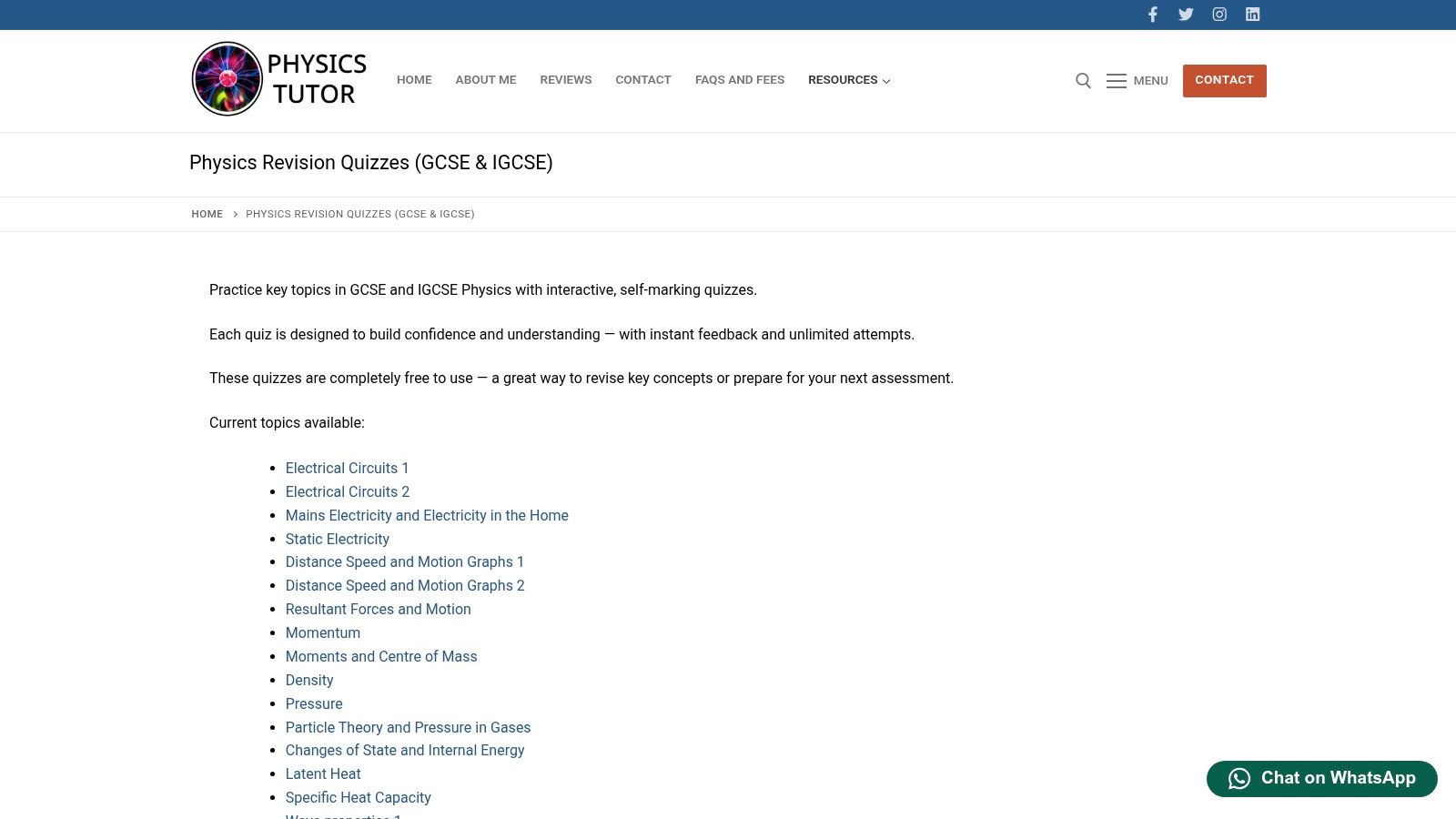
The short, focused sets make it easy to practise when you have limited time. Repeating a quiz can help you spot whether you understand a topic or are relying on familiar wording. Circuits and motion graphs deserve careful checking: you need to interpret diagrams and work through them, not just recognise the terms.
Coverage is narrower than on larger platforms, and quiz labels may not identify a specific exam board. Check the questions against your specification. For classroom practice, comparing them with science quiz questions with rationales highlights the difference between a right-or-wrong score and feedback that explains an answer.
Use Physics Tutor for quick checks, then move on to longer, timed exam-style practice and mark your own work. Exam Practice for GCSE can be part of that next step.
How the Ten Options Compare on Cost, Board Matching and Question Style
| Item | Free access | Exam-board matching | Question formats | Best for |
|---|---|---|---|---|
| Density and States of Matter: GCSE Physics Notes | Access details not specified | Pearson Edexcel GCSE Physics | Worked examples, practice questions, instant quiz | Targeted revision of density and states of matter |
| Cognito | Free starting access; some features may require Pro | AQA, Edexcel, OCR A and OCR B; Foundation and Higher | Topic quizzes, written answers, calculations, exam questions | Learning and practising across a broad range of GCSE Physics topics |
| BBC Bitesize | Free | Check course and exam-board labels on individual resources | Interactive quizzes, exam-style questions, graphs and images | Short revision sessions and core-knowledge checks |
| Seneca Learning | Free courses; Quiz mode requires Premium | Courses searchable by exam board and tier where available | Embedded lesson questions; Premium question-only quizzes | Revision in short sections with immediate feedback |
| SimpleStudy | Quiz access may require a paid plan | Resources organised by subject and exam board | Interactive topic quizzes with instant answers | Topic-focused practice with progress tracking |
| Educake | Seven-day free trial at home; subscription afterward | Selectable boards including AQA, Edexcel, OCR Gateway, WJEC and CCEA | Multiple question types with instant feedback | Board-matched retrieval practice and repeat attempts |
| Isaac Science (Isaac Physics) | Free student access with an account | Independent of exam boards | Practice and Challenge questions, tests and calculations | Applying concepts and tackling challenging problems |
| Physics & Maths Tutor (PMT) | Many resources are free | Resources organised by exam board and topic | Printable topic questions, past papers and practical-skills materials | Written exam practice alongside online quizzes |
| GCSE Perfect | Free sample practice; full access details should be checked | Aligned with UK GCSE subject content; suitable across UK boards | Original exam-style questions with mark schemes | Varied practice across topics and exam boards |
| Physics Tutor, Revision Quizzes | Free | GCSE and IGCSE topics; specific board mapping may vary | Self-marking topic quizzes with instant feedback and unlimited attempts | Repeated practice on specific physics topics |
Start Small, Test Often, Check Your Answers
Pick one weak topic this week, not the whole syllabus. Run a short quiz, read every explanation, then return to the questions you got wrong until you can answer them cold. That's dull advice. It's also the advice that works when time is short.
Don't judge yourself on recall alone. The June 2025 AQA GCSE Physics examiner report found that more than 90% of students selected the correct equation in several items, yet only about 5% correctly calculated uncertainty from a range or mean. Knowing the formula isn't the same as using data well.
The same report pattern shows up in graph work and practical safety, where far fewer students gained full marks. So choose quizzes that score more than the final answer. Look for feedback on substitution, units, graph reading and your written reason. If a tool only tells you right or wrong, add your own check by writing one sentence on why the correct answer works.
Grade range matters too. The AQA June 2024 GCSE results statistics list 143,043 candidates for GCSE Physics, with 90.1% at grade 4 or higher and 43.9% at grade 7 or higher. Students chasing a pass and students chasing a grade 9 shouldn't do identical practice every day.
If you're working toward grades 4 and 5, start with equation choice, unit swaps and short definitions. Get those automatic. If you're aiming for grades 7 to 9, spend more time on multi-step calculations, unfamiliar contexts, evaluation and practical data. A good physics quiz GCSE set lets you change difficulty instead of keeping you on easy wins.
Teachers have a fair reason to be sceptical of AI-marked or AI-generated questions. Check the science, check the units, and check whether the mark scheme rewards what your board rewards. A quiz score describes that practice attempt. It is not a predicted exam grade, and treating it as one will mislead students who need clear next steps.
Before you commit to any platform, confirm it covers your exact board and tier, since quiz formats and topics depend on the subject, board and course version you choose. Use a free option to start. When your scores stop being a surprise, move to a timed past paper and mark it properly.
One topic. One quiz. Every explanation read. Do that tonight, and you've already done more than another hour of rereading would give you.
If you want your physics practice matched to your board and tier from the start, try the topic quizzes, worked examples and timed exam practice at MasteryMind and begin with the one topic you'd least like to see on the paper. Work through the feedback, retry what you missed, and build from there, one secure topic at a time.
Choose your next course task
Use this idea with Physics. Confirm the qualification, awarding organisation and course version before choosing practice, assignment preparation or evidence planning.
Choose your Physics course