OCR · GCSE · Art and Design
Packaging Design
This guide provides a comprehensive overview of Packaging Design for OCR GCSE Art and Design, focusing on the synthesis of structural design and surface graphics. It covers key knowledge, practical skills, and portfolio guidance to help candidates achieve top marks.
- 5 min read
- 3 worked examples
- 4 practice questions
- 6 key terms
Study Notes
Overview
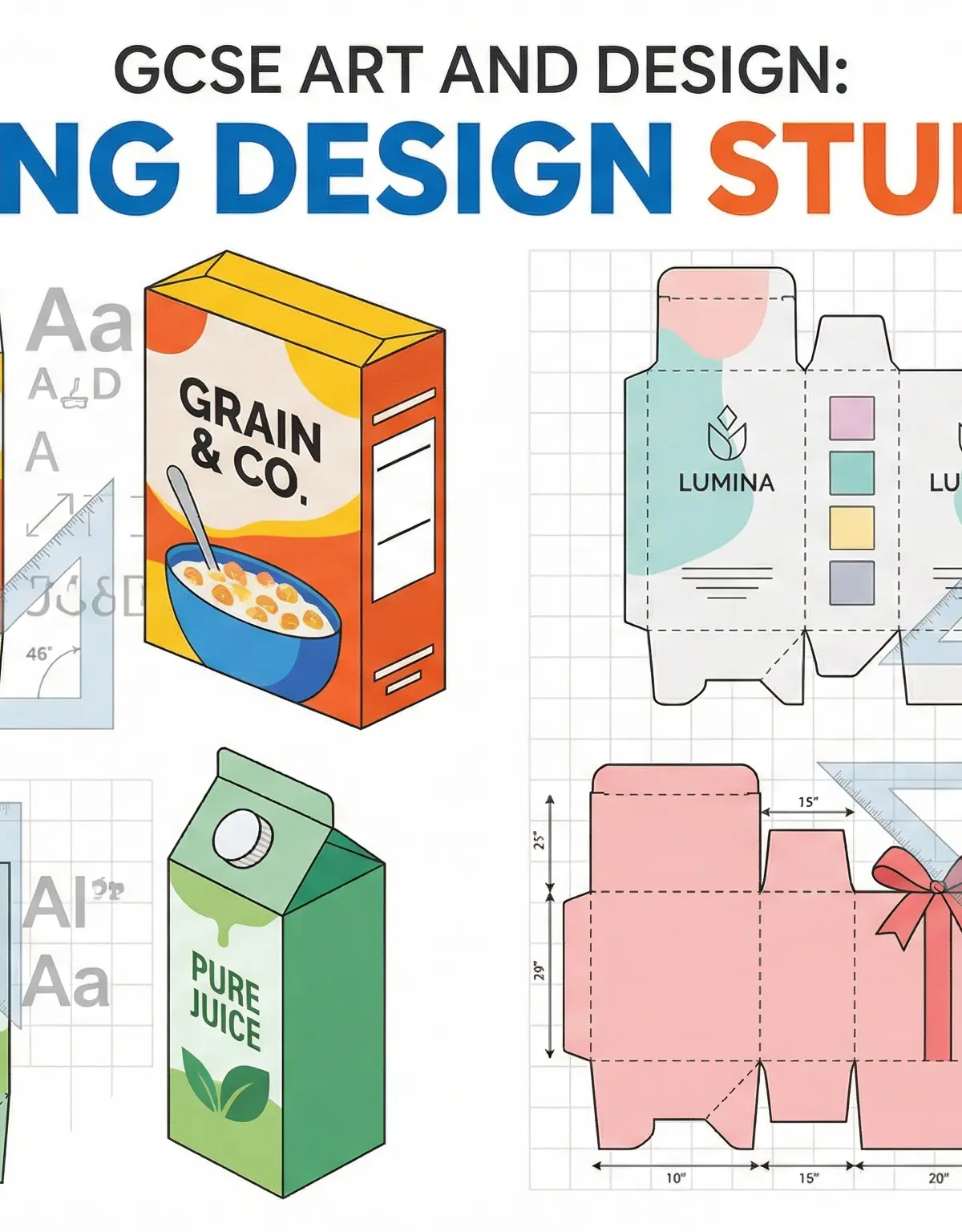
Packaging Design is a core component of the Graphic Communication endorsement for OCR GCSE Art and Design. It challenges candidates to create functional and aesthetically pleasing packaging solutions by integrating 3D structural design with 2D surface graphics. This topic requires a deep understanding of brand identity, target audiences, and material properties. Success in this area demonstrates a candidate's ability to manage a full design cycle, from initial research and concept development to the production of a high-quality, professional final outcome.

Key Knowledge & Theory
Core Concepts
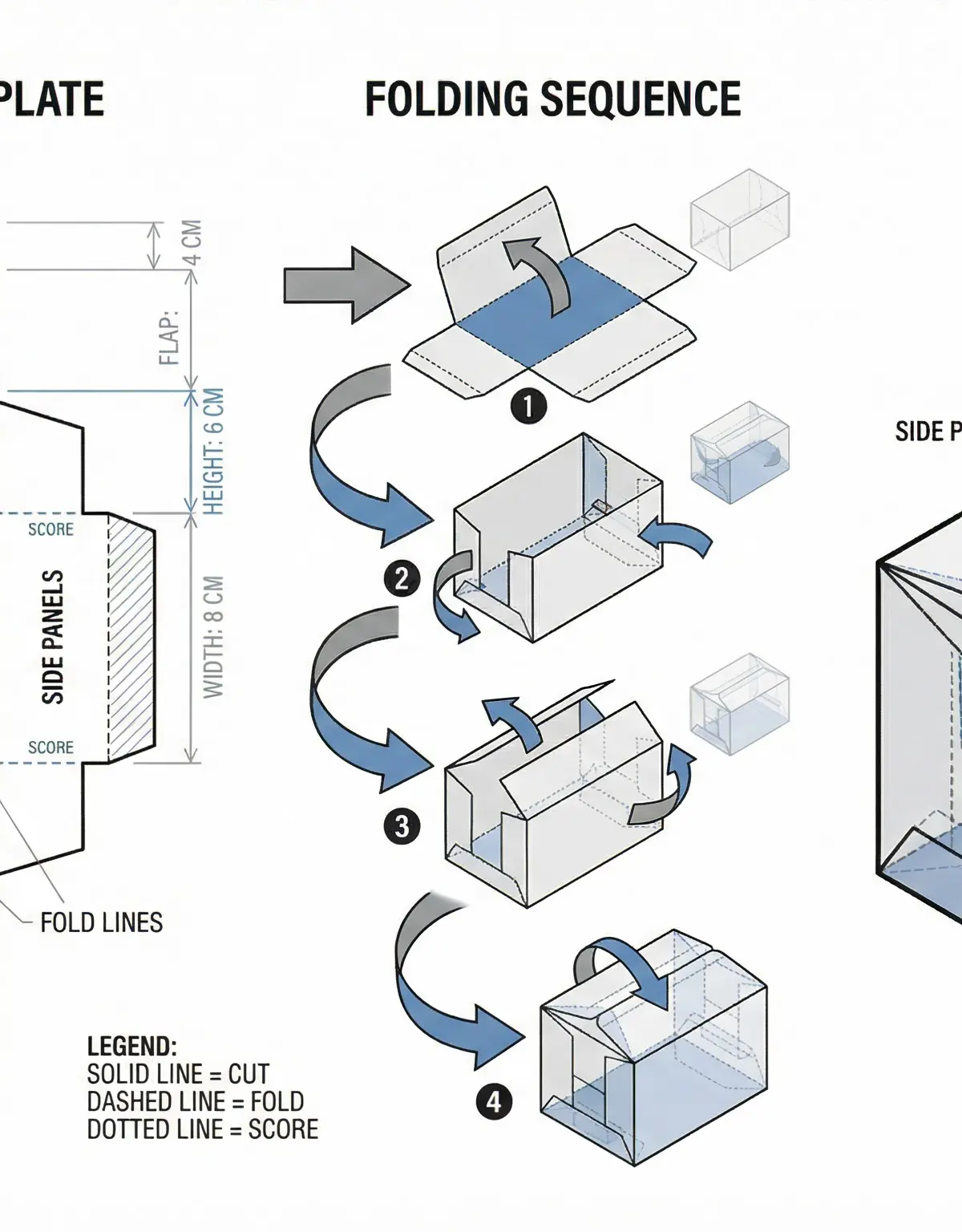
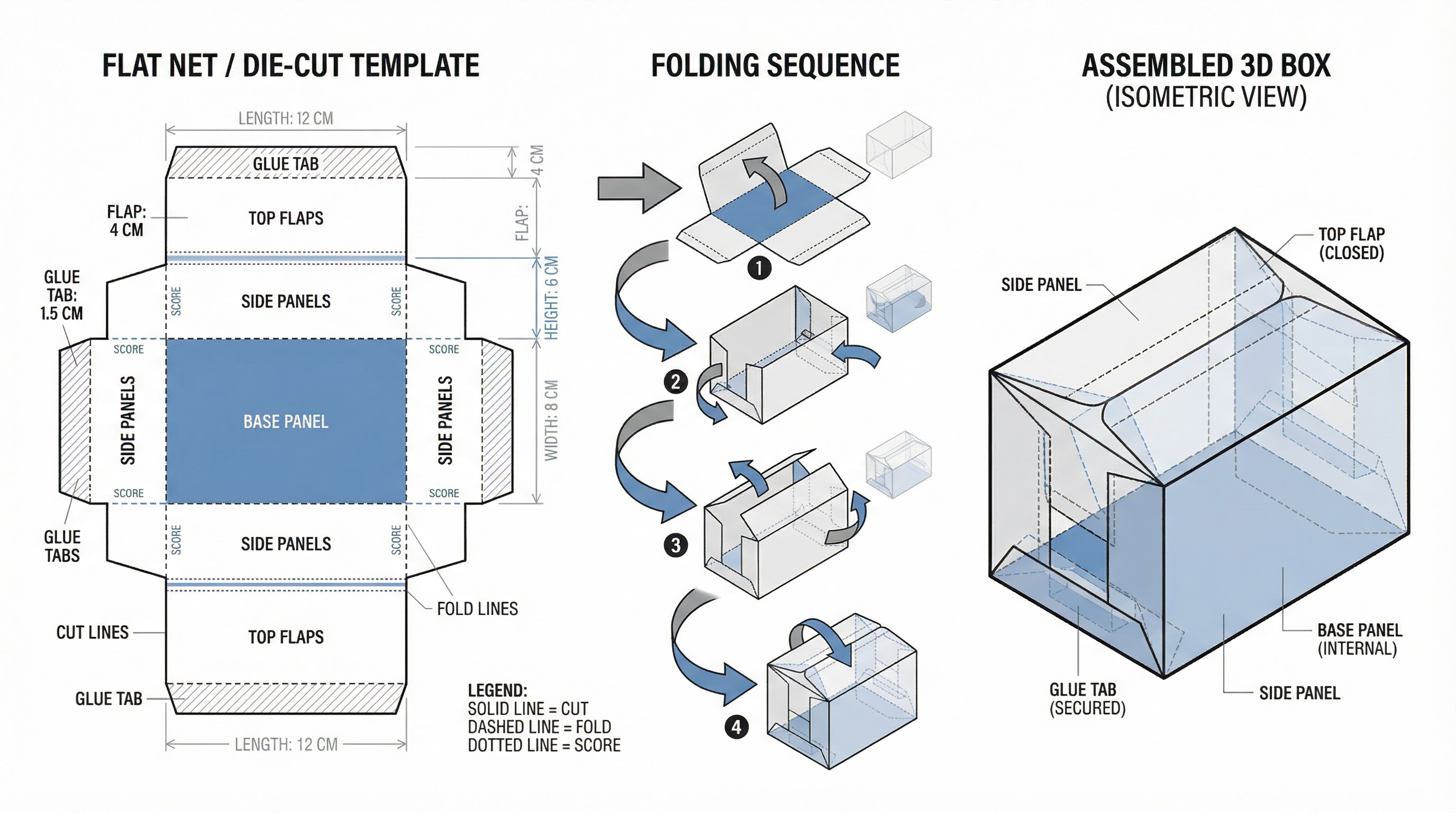
Packaging design is a multidisciplinary field that blends graphic design, typography, and industrial design. The core challenge is to create a form that is both visually appealing and structurally sound. Candidates must demonstrate an understanding of how nets (flat templates) are constructed and assembled into 3D forms. This includes the correct use of cut lines, fold lines, and glue tabs. Furthermore, surface graphics must be applied with a clear understanding of visual hierarchy, branding, and typography. The choice of materials is also a key consideration, with properties such as weight, durability, and sustainability directly impacting the success of the final design.
Key Practitioners/Artists/Composers
| Name | Period/Style | Key Works | Relevance |
|---|---|---|---|
| Paul Rand | Mid-Century Modern | IBM, UPS, ABC logos | A master of corporate identity, his work shows how powerful, simple graphics can define a brand. |
| Tom Dixon | Contemporary | Own-brand packaging | His work often blurs the lines between product and packaging, showing how packaging can be an integral part of the user experience. |
| The Bauhaus | 1919-1933 | Various | The 'form follows function' principle is fundamental to packaging design. Bauhaus work emphasizes clean lines, geometric shapes, and a rejection of unnecessary ornamentation. |
Technical Vocabulary
- Net/Die-cut: The 2D template for a 3D form.
- Mock-up: A scale or full-size model of a design, used for testing.
- Prototype: A working model of a design used for testing and refinement.
- Typography: The art and technique of arranging type.
- Hierarchy: The arrangement of visual elements to imply importance.
- Brand Identity: The collection of all elements that a company creates to portray the right image to its consumer.
Practical Skills
Techniques & Processes
Candidates must demonstrate proficiency in both digital and manual processes. This includes using software like Adobe Illustrator to create precise nets and apply graphics, as well as hands-on skills in cutting, scoring, and assembling mock-ups. Photographic evidence of this process is crucial for assessment.
Materials & Equipment
- Cardboard: A versatile material with various weights and finishes (e.g., corrugated, solid white board).
- Craft knife/scalpel: For precise cutting.
- Scoring tool/bone folder: To create clean folds.
- Adhesives: PVA glue, double-sided tape.
- Digital tools: Adobe Creative Suite (Illustrator, Photoshop).
Portfolio/Coursework Guidance
Assessment Criteria
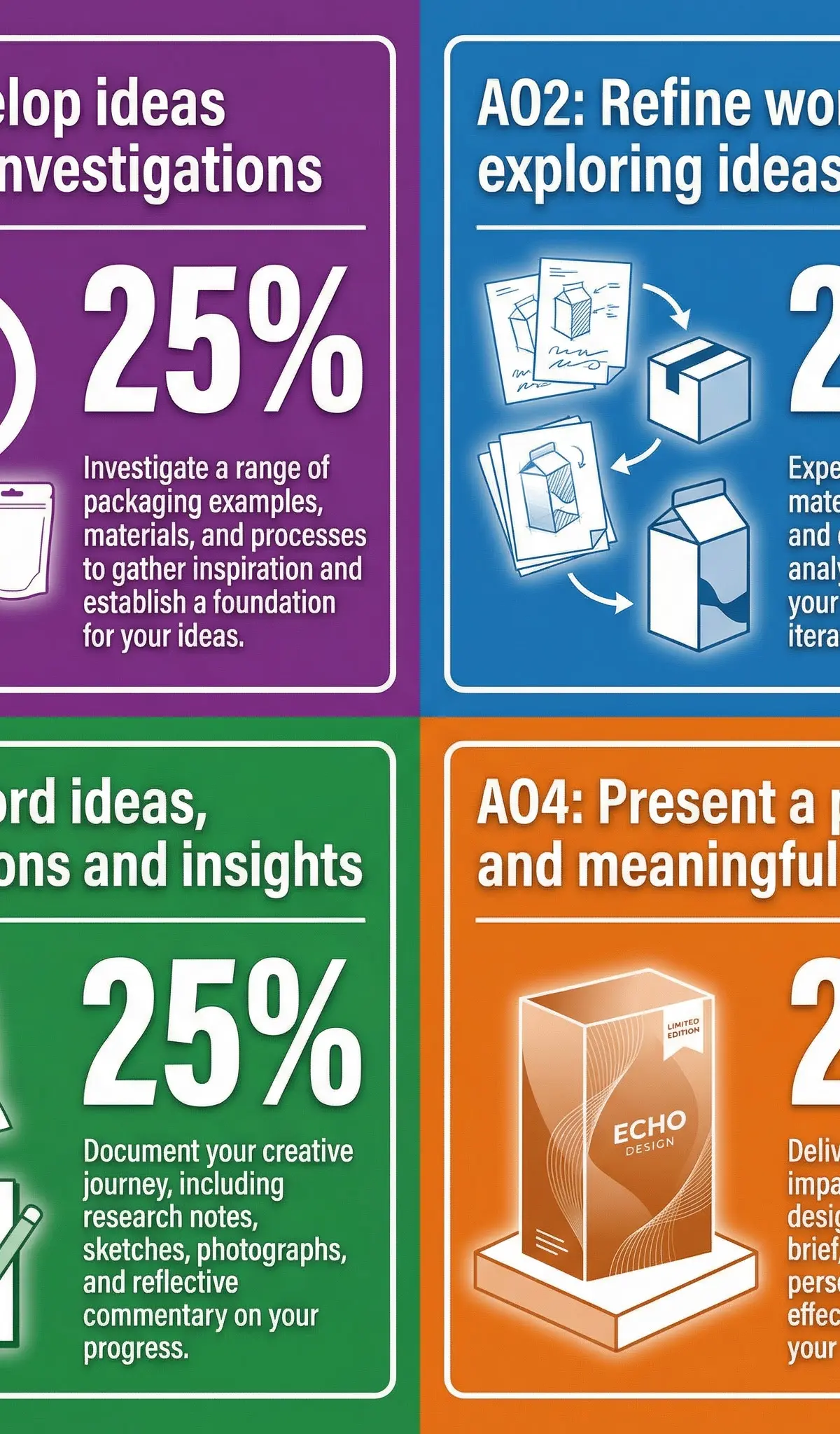
Examiners assess work against four Assessment Objectives (AOs), each worth 25%:
- AO1: Develop: Investigating sources and developing ideas.
- AO2: Refine: Experimenting with media, materials, and techniques.
- AO3: Record: Documenting the creative process.
- AO4: Present: Producing a personal and meaningful final outcome.
Building a Strong Portfolio
A successful portfolio tells the story of your design journey. It should include:
- Research: Analysis of existing packaging, designers, and movements.
- Experimentation: Sketches, digital iterations, and material tests.
- Development: Photographs of mock-ups and prototypes (both successful and unsuccessful).
- Annotation: Explanations of your design choices, linking them to your research and intentions.
Exam Component
Written Exam Knowledge
While the majority of marks are for coursework, the written exam may include questions on design history, theory, and the work of other designers. Candidates should be prepared to analyze and evaluate existing design work, using appropriate technical vocabulary.
Practical Exam Preparation
The externally set task requires candidates to respond to a brief within a set time frame. Preparation should involve practicing rapid idea generation, creating quick mock-ups, and managing time effectively to produce a resolved outcome.
Visual Resources
2 diagrams and illustrations
Interactive Diagrams
1 interactive diagram to visualise key concepts
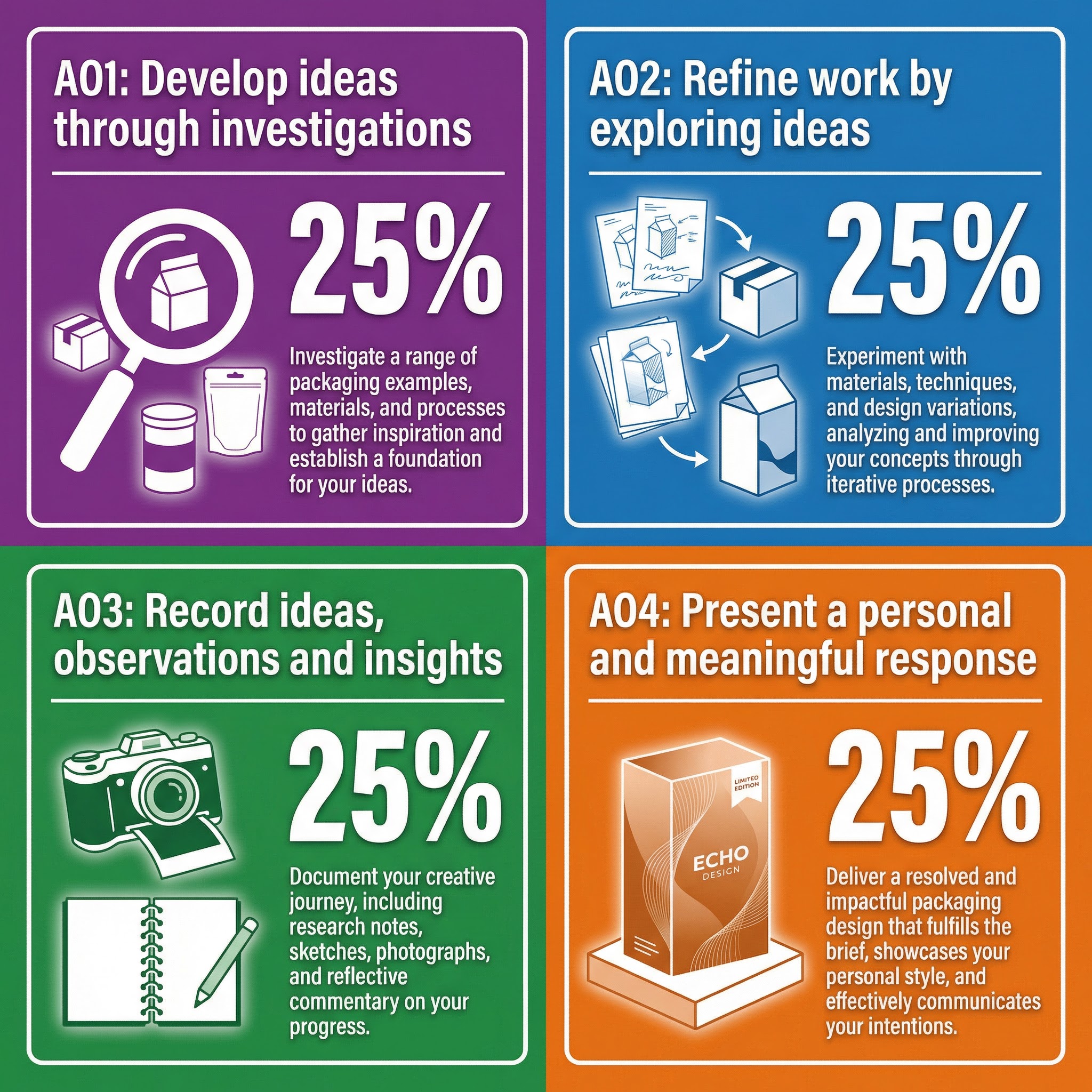
Conceptual Flow Outline
The iterative design process mapped to the four Assessment Objectives.
Worked Examples
3 worked examples — open one to explore the question and available guidance.
Practice Questions
Test your understanding — click to reveal model answers
Identify two reasons why a designer might choose to use corrugated cardboard for packaging.
Hint: Think about the physical properties of the material.
Describe the process of creating a high-fidelity prototype for a packaging design.
Hint: List the steps in a logical order, from digital file to finished object.
Analyse how the packaging for a product of your choice communicates its brand values.
Hint: Choose a product and analyse its packaging in detail. Consider typography, colour, imagery, material, and structure.
Evaluate the effectiveness of a piece of packaging you have studied, suggesting one potential improvement.
Hint: Make a judgement on the overall success of the design, considering both its strengths and weaknesses.