OCR · GCSE · Art and Design
Portraiture
This guide provides a comprehensive overview of Portraiture for OCR GCSE Art and Design. It covers everything from core concepts and key artists to practical skills and portfolio development, all tailored to help you excel in your coursework and exams.
- 7 min read
- 3 worked examples
- 4 practice questions
- 6 key terms
Study Notes
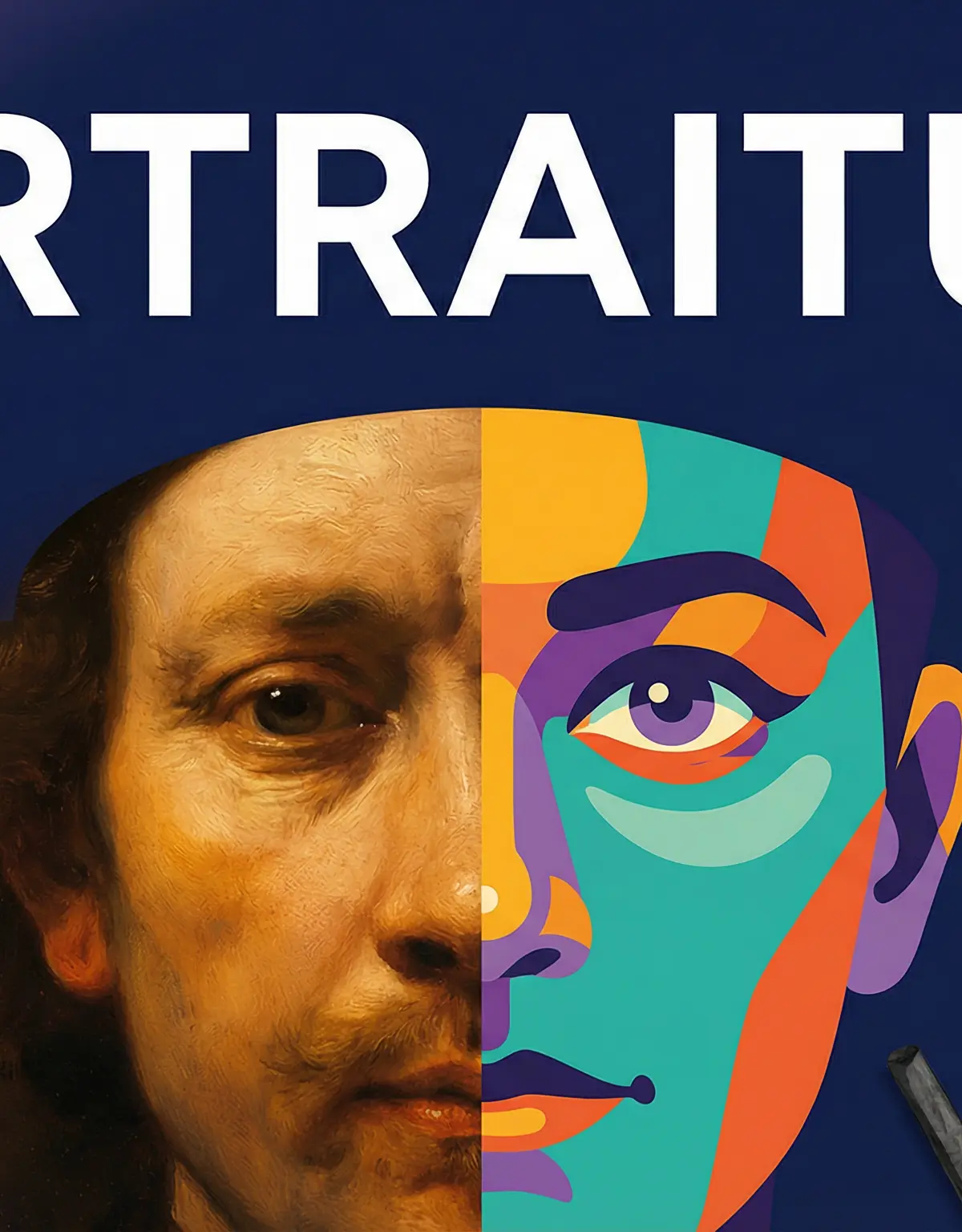
Overview
Portraiture in OCR GCSE Art and Design is a sustained investigation into identity, anatomy, or expression. It moves beyond simply creating a likeness to a conceptual interpretation of the subject. Candidates are expected to integrate primary observation with critical analysis of contextual sources, demonstrating a clear and iterative journey from initial research to a resolved personal response. This topic offers a unique opportunity to develop both technical skills and a personal artistic voice.

Key Knowledge & Theory
Core Concepts
- Likeness vs. Essence: While capturing a likeness is a technical skill, the focus of GCSE Portraiture is on capturing the essence of the sitter. This means communicating their personality, mood, or story through your artistic choices.
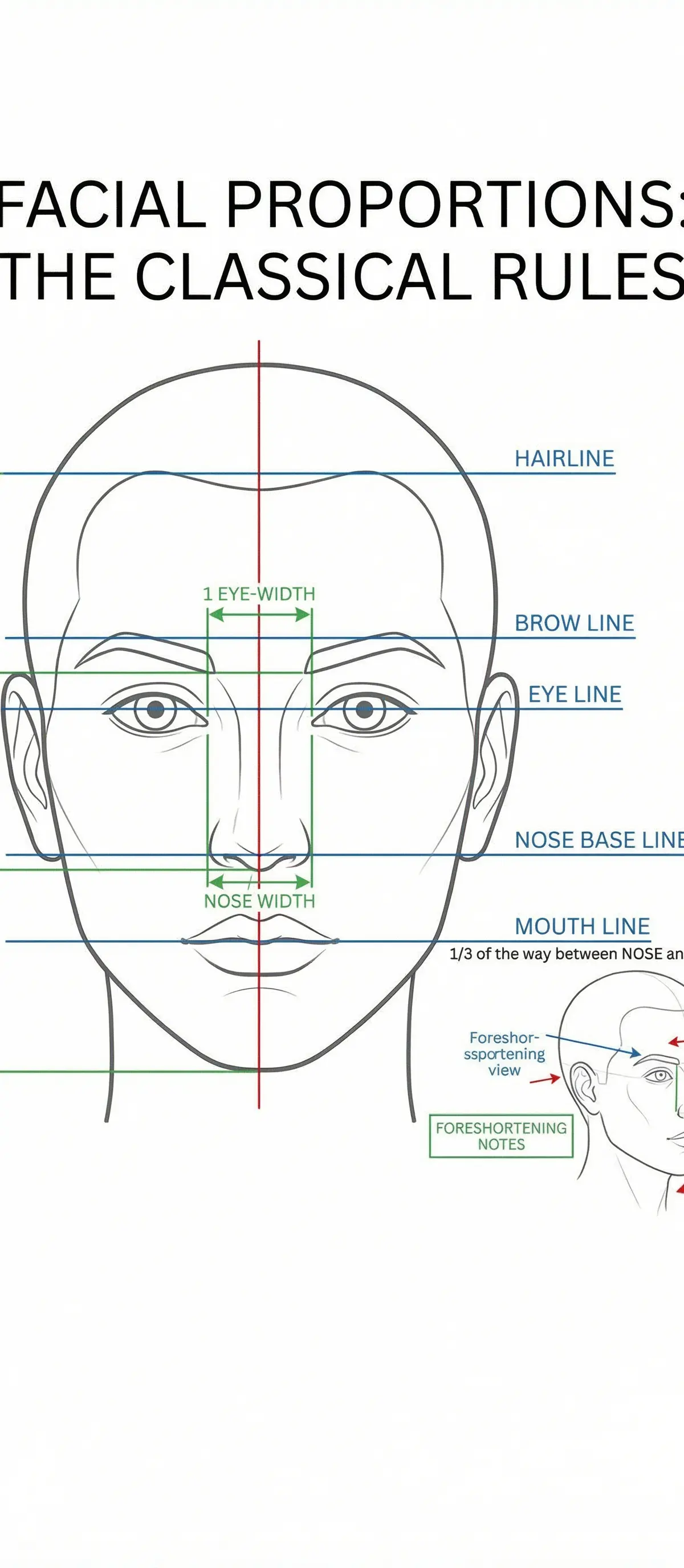
- Anatomy and Proportion: A solid understanding of facial anatomy and classical proportions is the foundation for all portraiture, whether realistic or abstract. It allows you to create believable and well-structured portraits.
- Chiaroscuro: This technique, mastered by artists like Rembrandt and Caravaggio, uses strong contrasts between light and dark to model three-dimensional forms and create dramatic mood. It is a highly effective tool in portraiture.
- Impasto: A painting technique where paint is laid on an area of the surface in very thick layers, usually thick enough that the brush or painting-knife strokes are visible. When used in portraiture, it can add a sense of texture, energy, and psychological weight.
Key Practitioners/Artists/Composers
| Name | Period/Style | Key Works | Relevance |
|---|---|---|---|
| Lucian Freud | Contemporary (1922-2011) | Girl with a White Dog, Benefits Supervisor Sleeping | Master of the psychological portrait. His use of impasto and unflinching realism provides a powerful example of how to convey the inner life of a sitter. |
| Paula Rego | Contemporary (1935-2022) | The Family, The Maids | Known for her narrative and often unsettling portraits that explore themes of power, gender, and psychology. Her work shows how portraiture can be used for storytelling. |
| Kehinde Wiley | Contemporary (b. 1977) | Napoleon Leading the Army Over the Alps, Rumors of War | Reimagines the grand tradition of portraiture by placing Black subjects in the heroic poses of Old Master paintings, challenging the historical canon and exploring themes of identity and representation. |
Technical Vocabulary
- Sitter: The person who is the subject of a portrait.
- Primary Observation: Drawing or recording from a real-life source, such as a live model or a photograph you have taken yourself.
- Secondary Source: An image or artwork that you have not created yourself, such as a photograph from the internet or a book.
- Annotation: Written notes in your sketchbook that explain your ideas, processes, and reflections.
- Conceptual: Relating to ideas and concepts, rather than just the visual appearance of something.
- Iterative: A process of repeating a series of steps, refining and improving with each repetition.
Practical Skills
Techniques & Processes
- Observational Drawing: The foundation of all portraiture. Practice drawing from life as much as possible, focusing on capturing accurate proportions and tonal values.
- Tonal Shading: Use a range of pencils (from 2H to 6B) to create a full spectrum of tones, from light to dark. This will give your portraits a sense of three-dimensionality.
- Media Experimentation: Don't be afraid to experiment with a wide range of media, including charcoal, pastels, paint, and mixed media. Each medium will create a different effect and can be used to convey different moods and ideas.
- Digital Portraiture: Software like Procreate and Photoshop offer powerful tools for creating portraits, including layers, blend modes, and a vast array of brushes. Experiment with these tools to see how they can enhance your work.
Materials & Equipment
- Sketchbook: Your most important tool. Use it to record your ideas, experiments, and reflections.
- Pencils: A range of graphite pencils (e.g., 2H, HB, 2B, 4B, 6B) is essential for tonal drawing.
- Charcoal: Willow and compressed charcoal are excellent for expressive, large-scale drawings.
- Paints: Acrylics or oils are ideal for portraiture. Acrylics are fast-drying and versatile, while oils allow for more subtle blending and layering.
- Camera: A good quality camera is invaluable for taking your own primary source photographs.
Portfolio/Coursework Guidance
Assessment Criteria
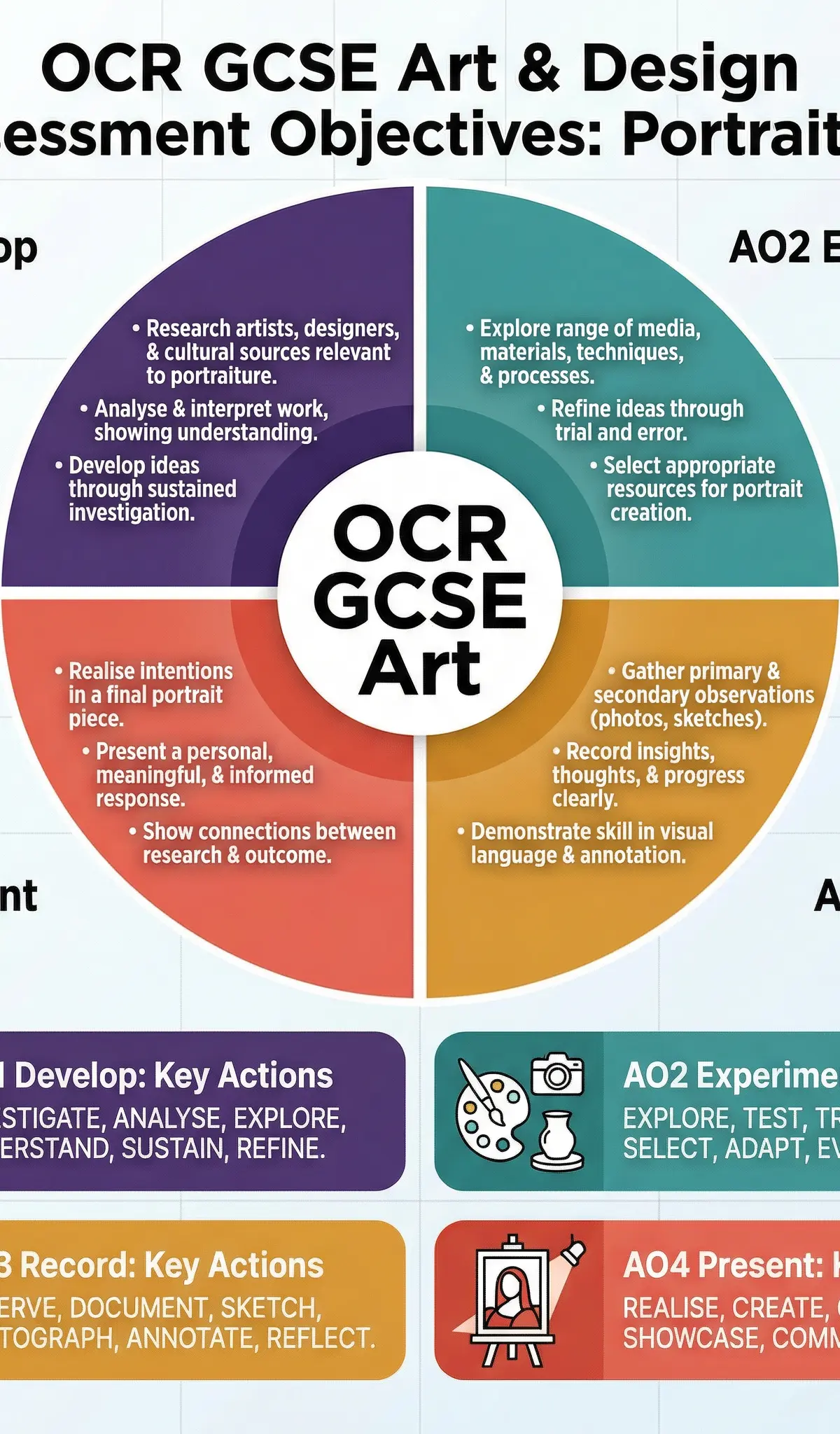
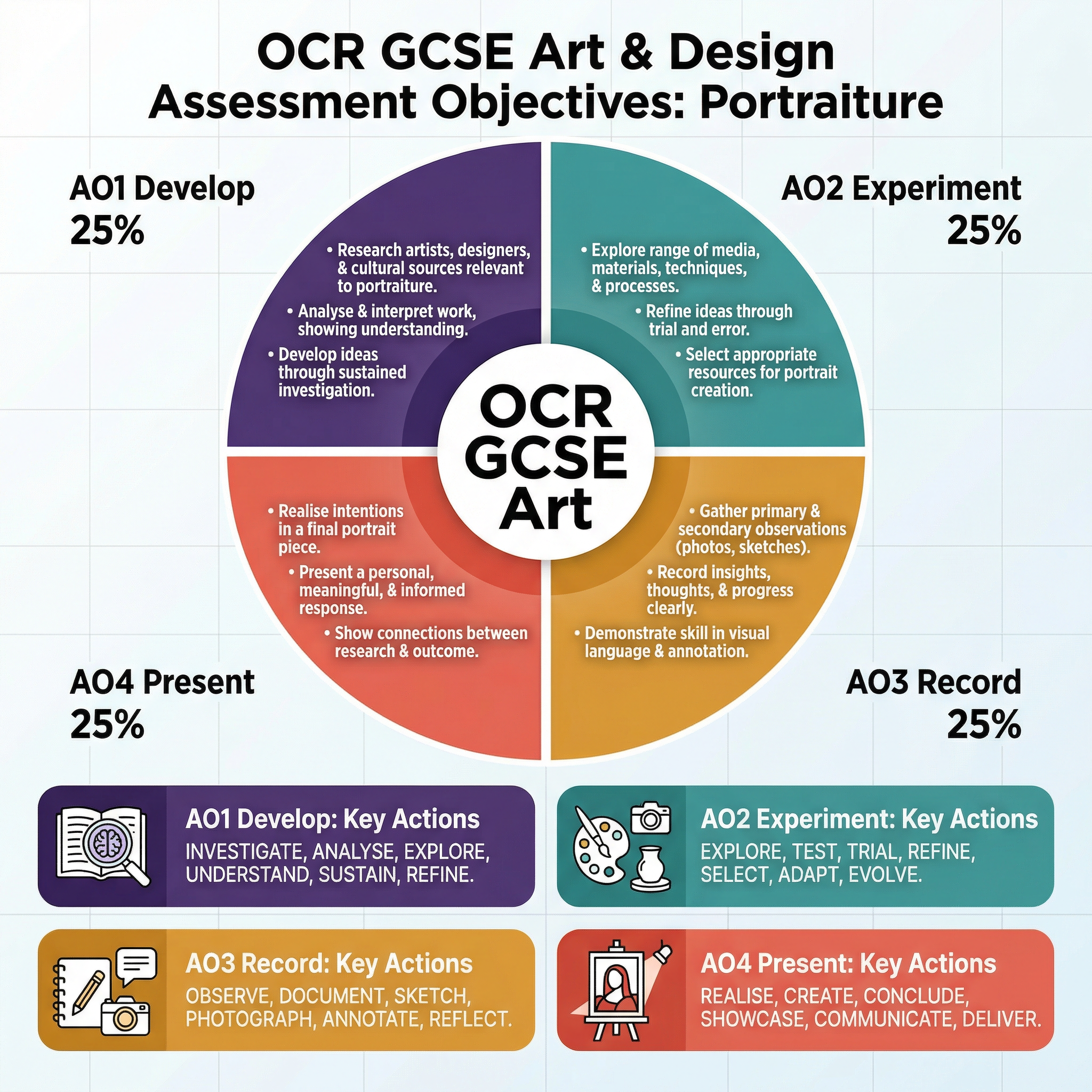
- AO1: Develop: Show a clear and sustained investigation, informed by the work of other artists. Your research should be analytical, not just descriptive.
- AO2: Experiment: Explore a range of media, techniques, and processes. Show how you have refined your ideas and techniques over time.
- AO3: Record: Record your observations and ideas through drawing, photography, and annotation. Your annotations should be analytical and reflective.
- AO4: Present: Create a personal and meaningful final outcome that successfully realizes your intentions.
Building a Strong Portfolio
- Tell a Story: Your portfolio should tell the story of your creative journey, from your initial ideas to your final piece.
- Show Your Thinking: Use your sketchbook to document your thought processes. Explain why you have made certain decisions and what you have learned from your experiments.
-- Quality over Quantity: It's better to have a small number of high-quality pieces than a large number of mediocre ones. - Reflect and Refine: Constantly reflect on your work and look for ways to improve it. Show evidence of this refinement process in your sketchbook.
Exam Component
Written Exam Knowledge
While the majority of your marks will come from your portfolio, there is also a written component to the exam. You will be expected to write about your own work and the work of other artists, using appropriate technical and critical vocabulary. You will need to be able to:
- Analyse and evaluate your own work and the work of others.
- Compare and contrast different artists and artworks.
- Explain how your work has been influenced by your research.
Practical Exam Preparation
The practical exam, or Externally Set Assignment, requires you to produce a final outcome in response to a chosen starting point. You will have a preparatory period to develop your ideas and a timed period (usually 10 hours) to create your final piece. To prepare for this:
- Choose your starting point carefully: Select a theme that genuinely interests you and that you feel you can explore in depth.
- Manage your time effectively: Plan your preparatory work carefully to ensure you have enough time to develop your ideas and experiment with media.
- Practice under timed conditions: Do a mock exam to get a feel for the pressure of working under timed conditions.
Visual Resources
2 diagrams and illustrations
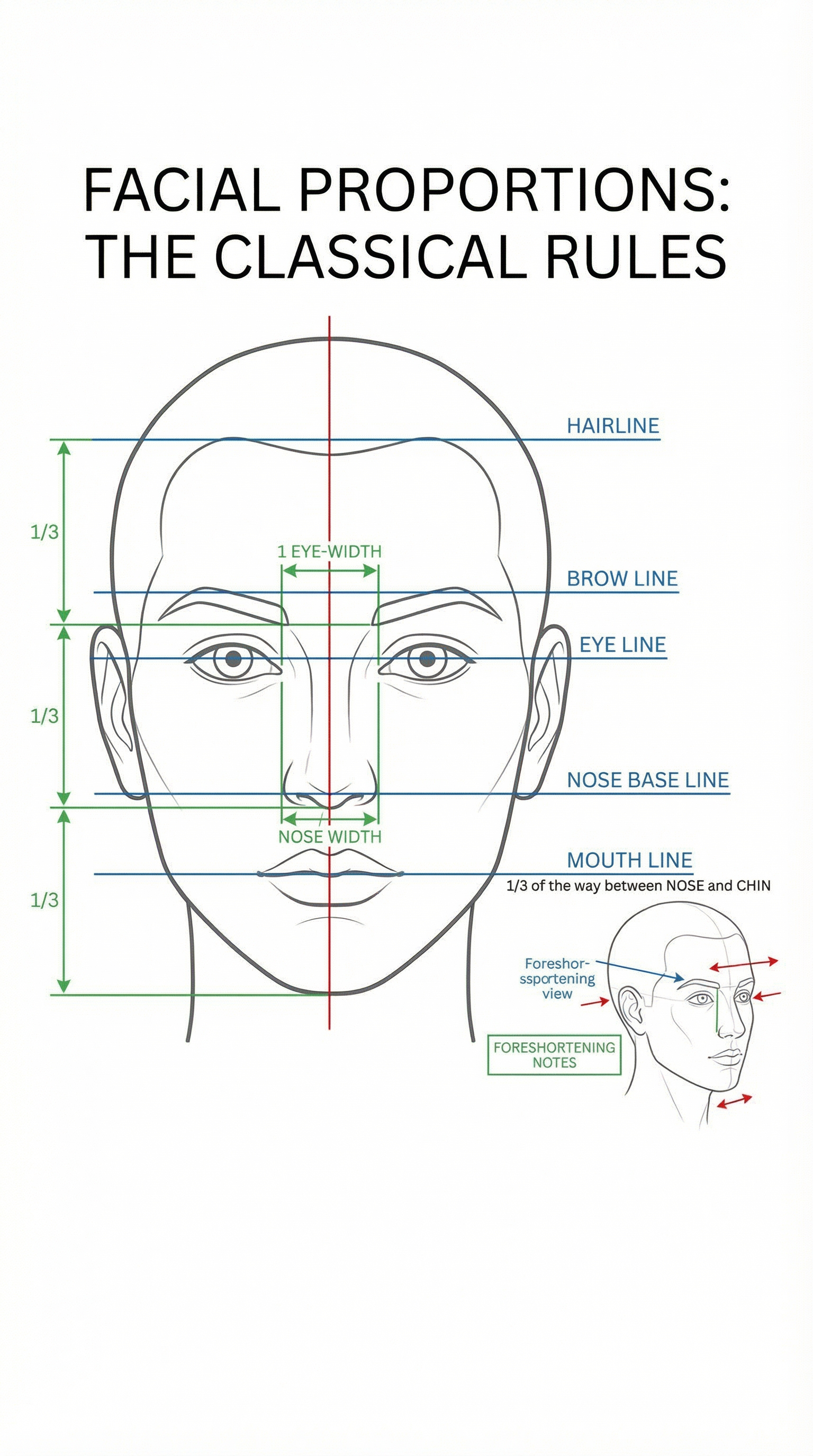
Interactive Diagrams
1 interactive diagram to visualise key concepts
Conceptual Flow Outline
The OCR GCSE Art & Design Creative Process
Worked Examples
3 worked examples — open one to explore the question and available guidance.
Practice Questions
Test your understanding — click to reveal model answers
Identify two artists who have explored the theme of identity in their work.
Hint: Think about artists who have used self-portraiture or who have challenged traditional ideas of representation.
Describe the technique of chiaroscuro and explain how it can be used to create mood in a portrait.
Hint: Think about the relationship between light and shadow.
Analyse how Kehinde Wiley uses iconography to challenge the traditions of portraiture.
Hint: Think about the symbols and visual codes that Wiley uses in his work.
Evaluate the effectiveness of your own portfolio in meeting the assessment objectives for your portraiture project.
Hint: Be honest and self-critical. Identify both the strengths and weaknesses of your work.