AQA · A-Level · Biology
Course version: 7402 · Version from Sept 2016
The primary source of genetic variation is mutation.
Full specification wording
Evolution may lead to speciation (A-level only): The primary source of genetic variation is mutation.
Mutation is a change in the DNA base sequence and the sole source of new alleles.
Checked against the AQA 7402 specification (opens in a new tab) on .
- Point 3 of 14
Study notes
From the checked teaching notes for this specification point.
The idea
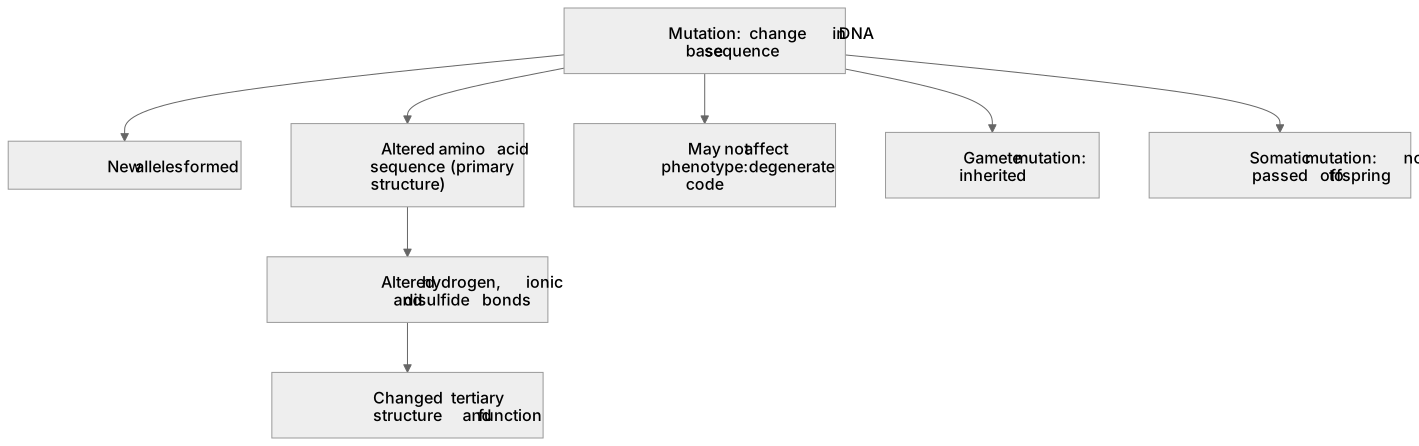
Mutation is a change in the DNA base sequence and the sole source of new alleles. Other processes merely rearrange existing alleles. Mutations are random, arising spontaneously during DNA replication or via mutagens. They do not occur because an organism needs them; for example, antibiotics do not create resistance alleles but select for existing ones. A mutation can alter the amino acid sequence, changing a protein's tertiary structure and function. However, not all mutations affect the phenotype. The genetic code is degenerate, so substitutions may code for the same amino acid. Furthermore, while mutations in gametes are inherited, somatic (body) cell mutations are not passed to offspring, though they may still affect the individual.
What earns the marks
- Mutation is a change in the base sequence of DNA resulting in the formation of new alleles.
- A change in the base sequence alters the sequence of amino acids (primary structure) in the encoded polypeptide.
- Mutations occur randomly and spontaneously, rather than being directed by environmental needs.
- Only mutations occurring during gamete formation can be inherited by the next generation.
Common mistakes and how to put them right
Stating that organisms mutate 'in order to adapt' or 'because they need to'.
Put it right: Mutations are random and spontaneous; the environment (e.g., antibiotics) selects for existing advantageous alleles rather than causing them.
Writing that a mutation 'produces different amino acids'.
Put it right: State that the sequence of amino acids changes, not the amino acids themselves.
Assuming all mutations alter the phenotype.
Put it right: The genetic code is degenerate, so a base substitution may still code for the same amino acid, resulting in no phenotypic change.
Believing mutations in non-coding DNA cannot affect the phenotype.
Put it right: Mutations in regulatory non-coding regions can alter gene expression, affecting the phenotype.
Exam tips
- Always link the chain of events logically: altered DNA base sequence -> altered amino acid sequence -> altered tertiary structure -> non-functional protein.
- If asked for the source of new alleles, specify mutation; if asked for new combinations of alleles, specify meiosis or random fertilisation.
Try the lesson
The start of the Evolution may lead to speciation (A-level only): The primary source of genetic variation is mutation. lesson, made from checked teaching notes for this specification point.
Have a go first
Which process is the primary source of genetic variation?
Listen
Mutation is a change in the DNA base sequence and the sole source of new alleles. Other processes merely rearrange existing alleles. Mutations are random, arising spontaneously during DNA replication or via mutagens. They do not occur because an organism needs them; for example, antibiotics do not create resistance alleles but select for existing ones. A mutation can alter the amino acid sequence, changing a protein's tertiary structure and function. However, not all mutations affect the phenotype. The genetic code is degenerate, so substitutions may code for the same amino acid. Furthermore, while mutations in gametes are inherited, somatic (body) cell mutations are not passed to offspring, though they may still affect the individual. A strong answer earns marks for these points. Mutation is a change in the base sequence of DNA resulting in the formation of new alleles. A change in the base sequence alters the sequence of amino acids (primary structure) in the encoded polypeptide. Mutations occur randomly and spontaneously, rather than being directed by environmental needs. Only mutations occurring during gamete formation can be inherited by the next generation. A common slip: Stating that organisms mutate 'in order to adapt' or 'because they need to'. Instead, Mutations are random and spontaneous; the environment (e.g., antibiotics) selects for existing advantageous alleles rather than causing them. Exam tip: Always link the chain of events logically: altered DNA base sequence -> altered amino acid sequence -> altered tertiary structure -> non-functional protein.
See it
Label the diagram
Some boxes have lost their names. Pick the right name for each number.
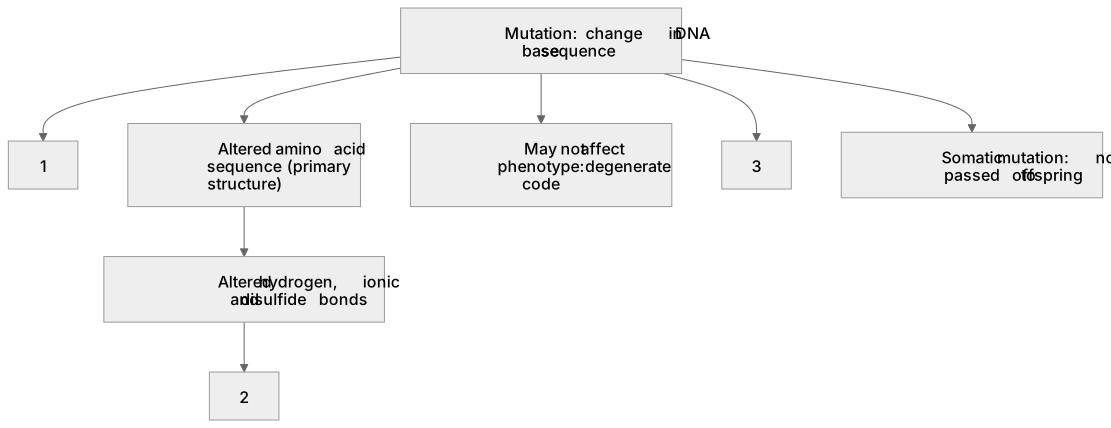
1Box 1
2Box 2
3Box 3
There is more to this lesson
The full lesson goes on to check your understanding and help you earn the marks. Create a free account to carry on, with your progress saved.
A week of Premium from your first lesson · Then the free plan continues · No card, no charge
Test your understanding of Evolution may lead to speciation (A-level only): The primary source of genetic variation is mutation.
Active recall beats re-reading. Take an instant quiz now to test what you’ve learned and lock it into long-term memory.
A week of Premium from your first lesson · Then the free plan continues · No card, no charge