AQA · A-Level · Biology
Course version: 7402 · Version from Sept 2016
In all living cells, DNA holds genetic information and RNA transfers…
Full specification wording
Structure of DNA and RNA: In all living cells, DNA holds genetic information and RNA transfers genetic information from DNA to the ribosomes.
In all living cells, DNA holds genetic information, coding for polypeptides.
Checked against the AQA 7402 specification (opens in a new tab) on .
- Point 2 of 7
Study notes
From the checked teaching notes for this specification point.
The idea
In all living cells, DNA holds genetic information, coding for polypeptides. Because DNA is large and stable, RNA transfers this information to ribosomes for translation. In eukaryotes, nuclear DNA is transcribed into messenger RNA (mRNA), which leaves via nuclear pores. Photosynthetic eukaryotes also contain DNA in chloroplasts, while all eukaryotes have mitochondrial DNA. In prokaryotes, which lack a nucleus, transcription and translation occur together in the cytoplasm. During translation, mRNA attaches to a ribosome. Transfer RNA (tRNA) molecules, carrying specific amino acids, bind to the mRNA via complementary anticodons. The ribosome catalyses peptide bond formation.
What earns the marks
- DNA holds genetic information, acting as the code for the sequence of amino acids in polypeptides.
- RNA transfers genetic information from the DNA to the ribosomes for protein synthesis.
- In eukaryotes, messenger RNA carries the genetic code from nuclear DNA through a nuclear pore to ribosomes in the cytoplasm.
- Transfer RNA brings specific amino acids to the ribosome, matching its anticodon to the messenger RNA codon.
- In prokaryotes, transcription and translation occur in the cytoplasm as they lack a nucleus.
Common mistakes and how to put them right
Assuming all eukaryotic DNA is in the nucleus.
Put it right: Mitochondria and, in photosynthetic eukaryotes, chloroplasts also contain their own DNA.
Stating that DNA travels to the ribosome.
Put it right: DNA remains in the nucleus (in eukaryotes) or nucleoid region, and it is messenger RNA that transfers the information to the ribosome.
Writing that RNA makes the protein.
Put it right: RNA carries the genetic code and brings amino acids, but the ribosome catalyses the formation of peptide bonds.
Exam tips
- When discussing the role of DNA, specify that it codes for polypeptides or the amino acid sequence, rather than just saying it holds 'information'.
- Always qualify statements about transcription occurring in the nucleus by specifying that this applies to eukaryotic cells, as prokaryotes lack a nucleus.
Try the lesson
The start of the Structure of DNA and RNA: In all living cells, DNA holds genetic information and RNA transfers genetic information from DNA to the ribosomes. lesson, made from checked teaching notes for this specification point.
Have a go first
Which molecule holds the genetic information in a living cell?
Listen
In all living cells, DNA holds genetic information, coding for polypeptides. Because DNA is large and stable, RNA transfers this information to ribosomes for translation. In eukaryotes, nuclear DNA is transcribed into messenger RNA (mRNA), which leaves via nuclear pores. Photosynthetic eukaryotes also contain DNA in chloroplasts, while all eukaryotes have mitochondrial DNA. In prokaryotes, which lack a nucleus, transcription and translation occur together in the cytoplasm. During translation, mRNA attaches to a ribosome. Transfer RNA (tRNA) molecules, carrying specific amino acids, bind to the mRNA via complementary anticodons. The ribosome catalyses peptide bond formation. A strong answer earns marks for these points. DNA holds genetic information, acting as the code for the sequence of amino acids in polypeptides. RNA transfers genetic information from the DNA to the ribosomes for protein synthesis. In eukaryotes, messenger RNA carries the genetic code from nuclear DNA through a nuclear pore to ribosomes in the cytoplasm. Transfer RNA brings specific amino acids to the ribosome, matching its anticodon to the messenger RNA codon. A common slip: Assuming all eukaryotic DNA is in the nucleus. Instead, mitochondria and, in photosynthetic eukaryotes, chloroplasts also contain their own DNA. Exam tip: When discussing the role of DNA, specify that it codes for polypeptides or the amino acid sequence, rather than just saying it holds 'information'.
See it
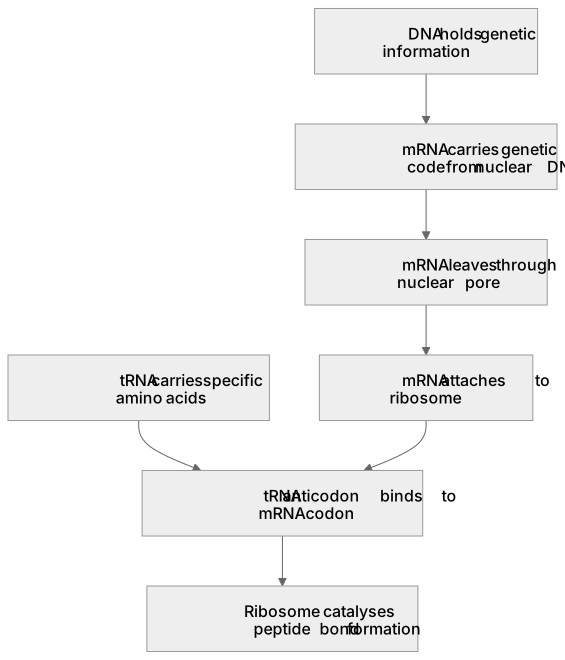
Label the diagram
Some boxes have lost their names. Pick the right name for each number.
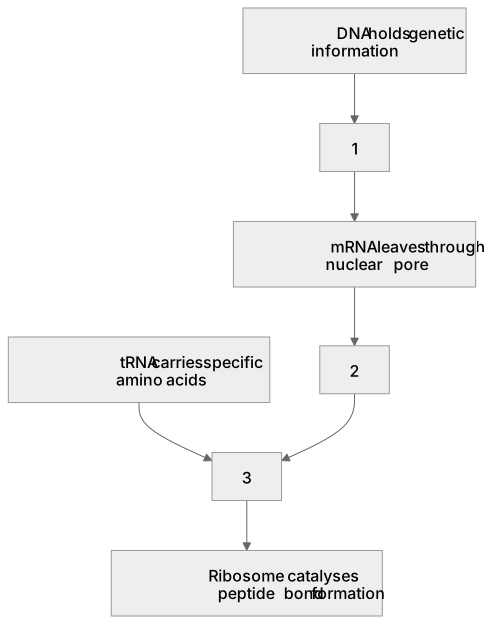
1Box 1
2Box 2
3Box 3
There is more to this lesson
The full lesson goes on to check your understanding and help you earn the marks. Create a free account to carry on, with your progress saved.
A week of Premium from your first lesson · Then the free plan continues · No card, no charge
Test your understanding of Structure of DNA and RNA: In all living cells, DNA holds genetic information and RNA transfers genetic information from DNA to the ribosomes.
Active recall beats re-reading. Take an instant quiz now to test what you’ve learned and lock it into long-term memory.
A week of Premium from your first lesson · Then the free plan continues · No card, no charge