AQA · GCSE · Biology
Course version: 8461 · Version from Sept 2018
It is important that specific bacteria should be treated by specific…
Full specification wording
Antibiotics and painkillers: It is important that specific bacteria should be treated by specific antibiotics.
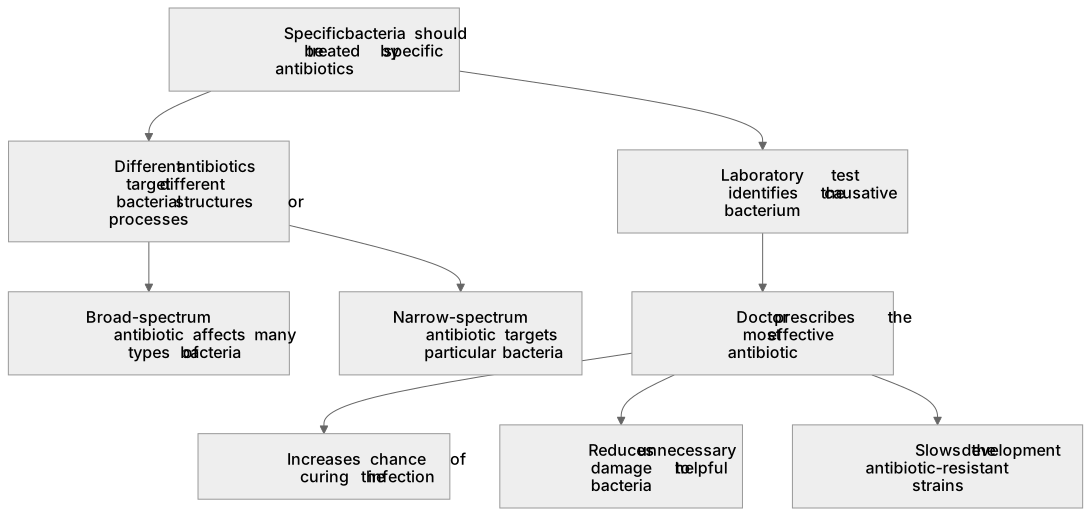
Different antibiotics act on different bacterial structures or processes, so they are not interchangeable.
Checked against the AQA 8461 specification (opens in a new tab) on .
- Point 3 of 8
Study notes
From the checked teaching notes for this specification point.
The idea
Different antibiotics act on different bacterial structures or processes, so they are not interchangeable. A broad-spectrum antibiotic affects many types of bacteria, while a narrow-spectrum antibiotic targets particular bacteria. Identifying the causative bacterium through a laboratory test allows a doctor to prescribe the most effective antibiotic. Using the right antibiotic increases the chance of curing the infection and reduces unnecessary damage to helpful bacteria. It also slows the development of antibiotic-resistant strains. Mutations occur randomly, but using the correct medicine at the right dose for the full course ensures targeted bacteria are killed, preventing the survival and reproduction of resistant mutants.
What earns the marks
- Different antibiotics are effective against different types of bacteria because they target different bacterial structures or processes.
- Identifying the specific bacterium causing an infection helps a doctor choose the most effective antibiotic.
- Using the correct antibiotic improves the chance of curing the infection and reduces harm to useful bacteria.
- Targeted use of specific antibiotics helps slow the development of antibiotic-resistant bacteria.
- Broad-spectrum antibiotics affect many bacteria, whereas narrow-spectrum antibiotics target particular bacteria.
Common mistakes and how to put them right
Assuming any antibiotic will treat any bacterial infection.
Put it right by explaining that different antibiotics target different bacteria.
Thinking resistance develops because the human body becomes resistant.
Put it right by stating that bacteria become resistant through selection.
Believing a stronger or larger dose always works better.
Put it right by explaining that the correct antibiotic at the prescribed dose for the full course is what matters.
Exam tips
- Use the phrase 'specific bacteria should be treated by specific antibiotics' and then explain why.
- Refer to identifying the pathogen before prescribing to show understanding of targeted treatment.
- Link correct antibiotic choice to slowing antibiotic resistance for higher-level answers.
Try the lesson
The start of the Antibiotics and painkillers: It is important that specific bacteria should be treated by specific antibiotics. lesson, made from checked teaching notes for this specification point.
Have a go first
Why is it important that a specific bacterium is treated with a specific antibiotic?
Listen
Different antibiotics act on different bacterial structures or processes, so they are not interchangeable. A broad-spectrum antibiotic affects many types of bacteria, while a narrow-spectrum antibiotic targets particular bacteria. Identifying the causative bacterium through a laboratory test allows a doctor to prescribe the most effective antibiotic. Using the right antibiotic increases the chance of curing the infection and reduces unnecessary damage to helpful bacteria. It also slows the development of antibiotic-resistant strains. Mutations occur randomly, but using the correct medicine at the right dose for the full course ensures targeted bacteria are killed, preventing the survival and reproduction of resistant mutants. A strong answer earns marks for these points. Different antibiotics are effective against different types of bacteria because they target different bacterial structures or processes. Identifying the specific bacterium causing an infection helps a doctor choose the most effective antibiotic. Using the correct antibiotic improves the chance of curing the infection and reduces harm to useful bacteria. Targeted use of specific antibiotics helps slow the development of antibiotic-resistant bacteria. A common slip: Assuming any antibiotic will treat any bacterial infection. Instead, explaining that different antibiotics target different bacteria. Exam tip: Use the phrase 'specific bacteria should be treated by specific antibiotics' and then explain why.
See it
Label the diagram
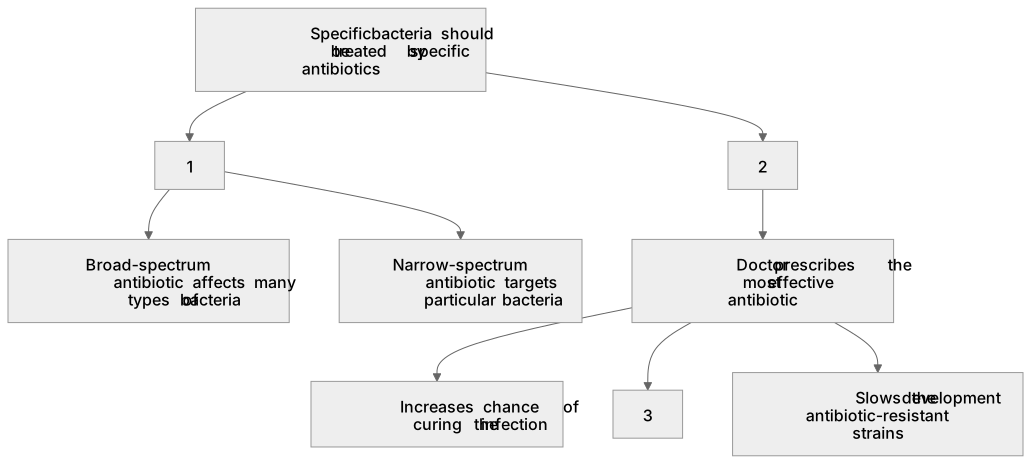
Some boxes have lost their names. Pick the right name for each number.
1Box 1
2Box 2
3Box 3
There is more to this lesson
The full lesson goes on to check your understanding and help you earn the marks. Create a free account to carry on, with your progress saved.
A week of Premium from your first lesson · Then the free plan continues · No card, no charge
Test your understanding of Antibiotics and painkillers: It is important that specific bacteria should be treated by specific antibiotics.
Active recall beats re-reading. Take an instant quiz now to test what you’ve learned and lock it into long-term memory.
A week of Premium from your first lesson · Then the free plan continues · No card, no charge