AQA · GCSE · Biology
Course version: 8461 · Version from Sept 2018
Painkillers and other medicines are used to treat the symptoms of disease…
Full specification wording
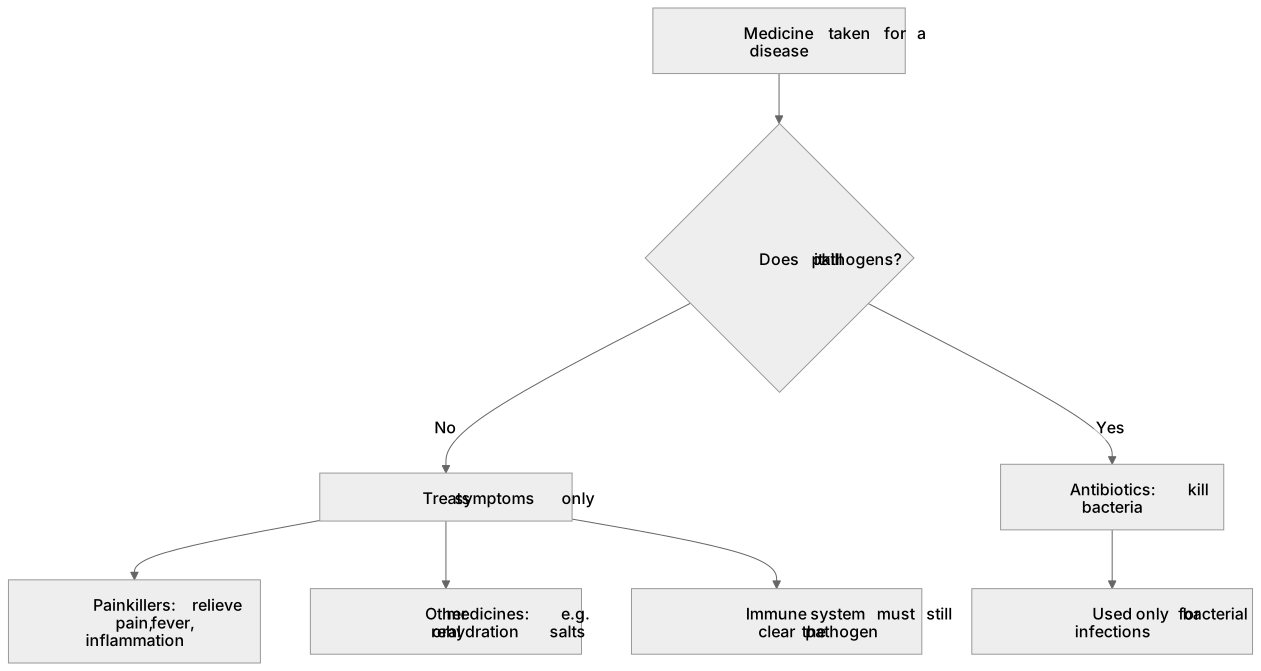
Antibiotics and painkillers: Painkillers and other medicines are used to treat the symptoms of disease but do not kill pathogens.
Painkillers such as paracetamol and aspirin relieve symptoms including pain, fever and inflammation, but they do not kill the pathogens causing the disease.
Checked against the AQA 8461 specification (opens in a new tab) on .
- Point 7 of 8
- 4 key terms
Study notes
From the checked teaching notes for this specification point.
The idea
Painkillers such as paracetamol and aspirin relieve symptoms including pain, fever and inflammation, but they do not kill the pathogens causing the disease. They act on the body's pain and temperature pathways rather than on bacteria or viruses. Other medicines also treat symptoms or manage conditions without killing pathogens; for example, oral rehydration salts replace water and ions lost through diarrhoea, and antihistamines reduce allergic symptoms. Because these medicines do not remove the pathogen, the immune system must still clear the infection, and antibiotics are needed only when the pathogen is a bacterium. This distinction matters because using painkillers for an infection does not cure it, and using antibiotics for a viral infection does not help.
What earns the marks
- Painkillers relieve symptoms such as pain, fever or inflammation but do not kill pathogens.
- Painkillers act on the body's own pain and temperature pathways, not on the pathogen.
- Other medicines, such as oral rehydration salts, treat the effects of disease without killing pathogens.
- The immune system still has to clear the pathogen when only symptom-relieving medicines are used.
- Antibiotics are the medicines that kill bacteria, so they are used only for bacterial infections.
- Treating symptoms can make a patient more comfortable but does not remove the cause of the disease.
Common mistakes and how to put them right
Saying painkillers cure the infection.
Put it right by stating they only relieve symptoms while the immune system clears the pathogen.
Believing all medicines kill pathogens.
Put it right by distinguishing symptom-relieving medicines from antibiotics.
Thinking antibiotics should be given alongside painkillers for every infection.
Put it right by stating antibiotics are used only for bacterial infections.
Exam tips
- Use the terms symptom and pathogen precisely so the distinction between treating effects and killing causes is clear.
- Give a named example such as paracetamol for pain or oral rehydration salts for diarrhoea.
- Explain that the immune system clears the pathogen when only symptom-relieving medicines are used.
Try the lesson
The start of the Antibiotics and painkillers: Painkillers and other medicines are used to treat the symptoms of disease but do not kill pathogens. lesson, made from checked teaching notes for this specification point.
Have a go first
A person has a headache caused by a viral infection. What is the purpose of taking a painkiller?
Listen
Painkillers such as paracetamol and aspirin relieve symptoms including pain, fever and inflammation, but they do not kill the pathogens causing the disease. They act on the body's pain and temperature pathways rather than on bacteria or viruses. Other medicines also treat symptoms or manage conditions without killing pathogens; for example, oral rehydration salts replace water and ions lost through diarrhoea, and antihistamines reduce allergic symptoms. Because these medicines do not remove the pathogen, the immune system must still clear the infection, and antibiotics are needed only when the pathogen is a bacterium. This distinction matters because using painkillers for an infection does not cure it, and using antibiotics for a viral infection does not help. A strong answer earns marks for these points. Painkillers relieve symptoms such as pain, fever or inflammation but do not kill pathogens. Painkillers act on the body's own pain and temperature pathways, not on the pathogen. Other medicines, such as oral rehydration salts, treat the effects of disease without killing pathogens. The immune system still has to clear the pathogen when only symptom-relieving medicines are used. A common slip: Saying painkillers cure the infection. Instead, stating they only relieve symptoms while the immune system clears the pathogen. Exam tip: Use the terms symptom and pathogen precisely so the distinction between treating effects and killing causes is clear.
See it
Key words
Say what each word means before you turn the card.
Painkillers
Try answering aloud or in your head before turning the card.
Symptom relief versus pathogen killing
Try answering aloud or in your head before turning the card.
Role of the immune system
Try answering aloud or in your head before turning the card.
Appropriate use of antibiotics
Try answering aloud or in your head before turning the card.
See every definition
- Painkillers
- Medicines that relieve symptoms such as pain, fever or inflammation but do not kill pathogens.
- Symptom relief versus pathogen killing
- Treating the effects of disease makes a patient more comfortable but does not remove the cause of the disease.
- Role of the immune system
- The immune system still has to clear the pathogen when only symptom-relieving medicines are used.
- Appropriate use of antibiotics
- Antibiotics are the medicines that kill bacteria, so they are used only for bacterial infections.
There is more to this lesson
The full lesson goes on to check your understanding and help you earn the marks. Create a free account to carry on, with your progress saved.
A week of Premium from your first lesson · Then the free plan continues · No card, no charge
Test your understanding of Antibiotics and painkillers: Painkillers and other medicines are used to treat the symptoms of disease but do not kill pathogens.
Active recall beats re-reading. Take an instant quiz now to test what you’ve learned and lock it into long-term memory.
A week of Premium from your first lesson · Then the free plan continues · No card, no charge