AQA · GCSE · Biology
Course version: 8461 · Version from Sept 2018
Many human activities are reducing biodiversity and only recently have…
Full specification wording
Biodiversity: Many human activities are reducing biodiversity and only recently have measures been taken to try to stop this reduction.
Biodiversity is the variety of different species living in an ecosystem, and also the genetic variation within those species.
Checked against the AQA 8461 specification (opens in a new tab) on .
- Point 4 of 4
- 3 key terms
Study notes
From the checked teaching notes for this specification point.
The idea
Biodiversity is the variety of different species living in an ecosystem, and also the genetic variation within those species. Human activities reduce it in several ways. Deforestation removes habitats and the species that depend on them. Pollution of water, air and land damages organisms and food chains. Overfishing and hunting remove species faster than they can reproduce. Building roads, houses and farms fragments habitats so populations become small and isolated. Introduced species may outcompete or eat native organisms. Only recently have people acted to slow this loss, for example by creating nature reserves, protecting endangered species by law, replanting woodland, reducing pollution and recycling resources. These measures aim to maintain the variety of life for future generations.
What earns the marks
- Biodiversity means the variety of species in an ecosystem and the genetic variation within each species.
- Human activities such as deforestation, pollution, overfishing, hunting and building reduce biodiversity by destroying or fragmenting habitats.
- Small isolated populations are more vulnerable to extinction because they have less genetic variation.
- Measures taken recently include nature reserves, legal protection of species, replanting trees, reducing pollution and recycling.
Common mistakes and how to put them right
Thinking biodiversity only means the number of organisms.
Put it right: It means the variety of species and the genetic variation within them.
Assuming all human activity harms biodiversity.
Put it right: Some recent measures, such as conservation and recycling, help to protect it.
Confusing habitat destruction with pollution.
Put it right: Both reduce biodiversity but by different mechanisms, so describe the specific cause.
Exam tips
- Name at least two specific human activities and explain how each reduces biodiversity.
- When describing measures, link each one to how it protects species or habitats.
- Use the phrase genetic variation when explaining why small populations are at risk.
Try the lesson
The start of the Biodiversity: Many human activities are reducing biodiversity and only recently have measures been taken to try to stop this reduction. lesson, made from checked teaching notes for this specification point.
Have a go first
Which human activity removes the habitats that many species depend on, so that biodiversity falls?
Listen
Biodiversity is the variety of different species living in an ecosystem, and also the genetic variation within those species. Human activities reduce it in several ways. Deforestation removes habitats and the species that depend on them. Pollution of water, air and land damages organisms and food chains. Overfishing and hunting remove species faster than they can reproduce. Building roads, houses and farms fragments habitats so populations become small and isolated. Introduced species may outcompete or eat native organisms. Only recently have people acted to slow this loss, for example by creating nature reserves, protecting endangered species by law, replanting woodland, reducing pollution and recycling resources. These measures aim to maintain the variety of life for future generations. A strong answer earns marks for these points. Biodiversity means the variety of species in an ecosystem and the genetic variation within each species. Human activities such as deforestation, pollution, overfishing, hunting and building reduce biodiversity by destroying or fragmenting habitats. Small isolated populations are more vulnerable to extinction because they have less genetic variation. Measures taken recently include nature reserves, legal protection of species, replanting trees, reducing pollution and recycling. A common slip: Thinking biodiversity only means the number of organisms. Instead, it means the variety of species and the genetic variation within them. Exam tip: Name at least two specific human activities and explain how each reduces biodiversity.
See it
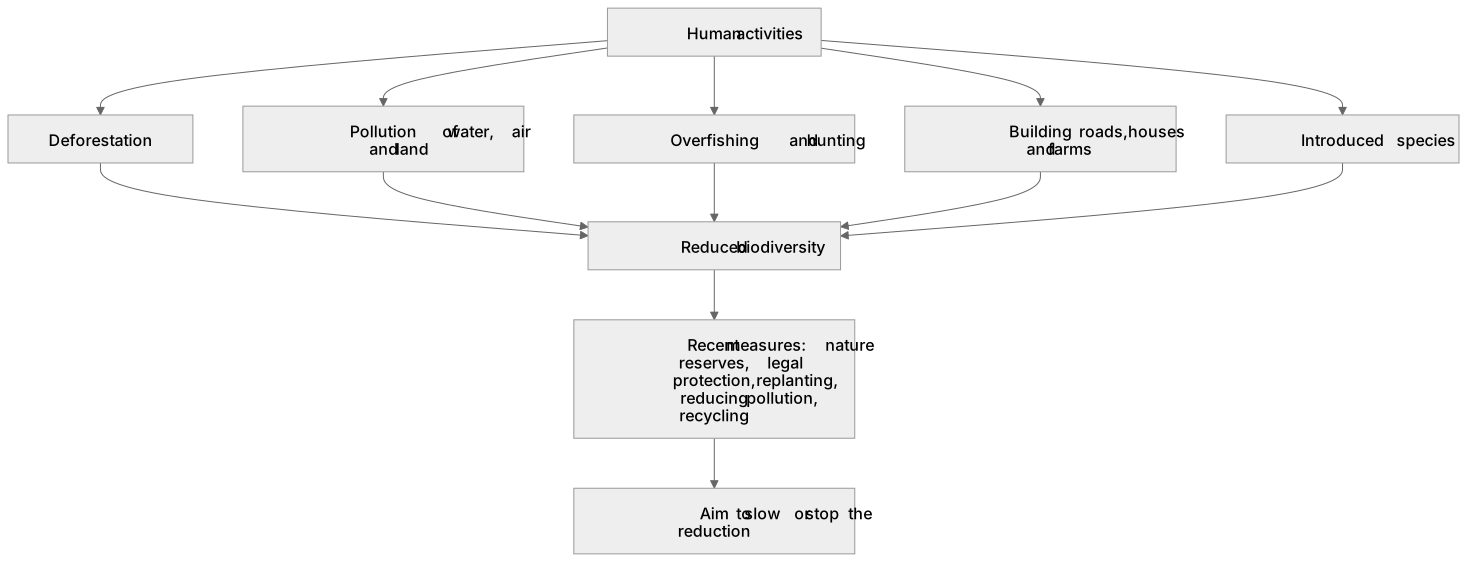
Key words
Say what each word means before you turn the card.
Biodiversity
Try answering aloud or in your head before turning the card.
Human impact on the environment
Try answering aloud or in your head before turning the card.
Conservation and sustainability
Try answering aloud or in your head before turning the card.
See every definition
- Biodiversity
- The variety of different species living in an ecosystem, and also the genetic variation within those species.
- Human impact on the environment
- Activities such as deforestation, pollution, overfishing, hunting and building that reduce biodiversity by destroying or fragmenting habitats.
- Conservation and sustainability
- Recent measures such as nature reserves, legal protection of species, replanting trees, reducing pollution and recycling that aim to slow or stop the reduction in biodiversity.
Label the diagram
Some boxes have lost their names. Pick the right name for each number.
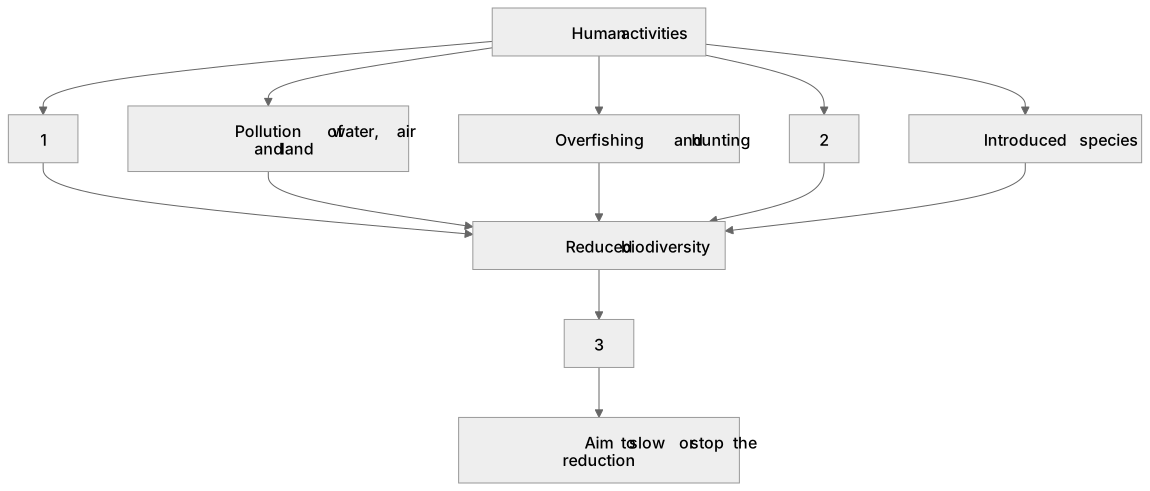
1Box 1
2Box 2
3Box 3
There is more to this lesson
The full lesson goes on to check your understanding and help you earn the marks. Create a free account to carry on, with your progress saved.
A week of Premium from your first lesson · Then the free plan continues · No card, no charge
Test your understanding of Biodiversity: Many human activities are reducing biodiversity and only recently have measures been taken to try to stop this reduction.
Active recall beats re-reading. Take an instant quiz now to test what you’ve learned and lock it into long-term memory.
A week of Premium from your first lesson · Then the free plan continues · No card, no charge