AQA · GCSE · Biology
Course version: 8461 · Version from Sept 2018
Blood is a tissue consisting of plasma, in which the red blood cells,…
Full specification wording
Blood: Blood is a tissue consisting of plasma, in which the red blood cells, white blood cells and platelets are suspended.
Blood is a tissue because it contains cells suspended in a liquid matrix.
Checked against the AQA 8461 specification (opens in a new tab) on .
- Point 1 of 3
- 4 key terms
Study notes
From the checked teaching notes for this specification point.
The idea
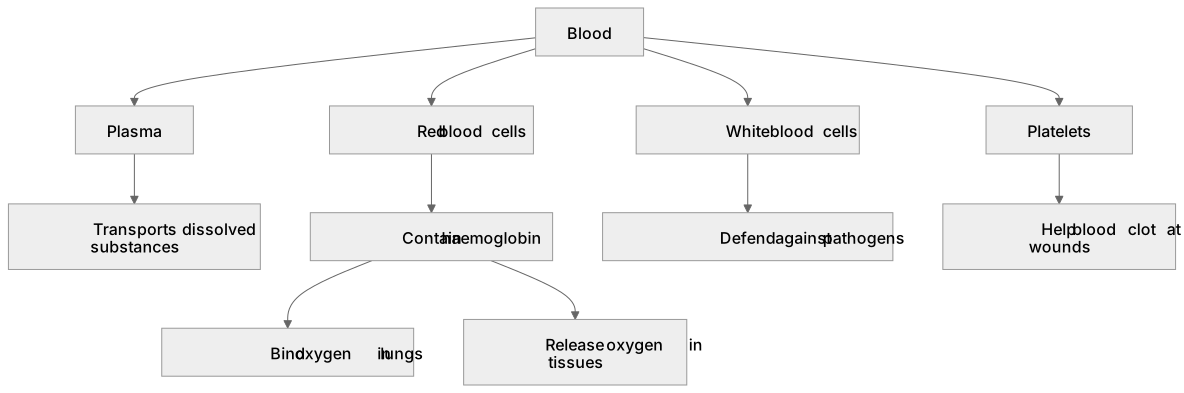
Blood is a tissue because it contains cells suspended in a liquid matrix. The liquid part is plasma, which transports dissolved substances such as glucose, amino acids, carbon dioxide, urea, hormones and heat. Suspended in plasma are red blood cells, white blood cells and platelets. Red blood cells contain haemoglobin, which binds oxygen in the lungs and releases it in tissues; they have no nucleus to maximise space for haemoglobin. White blood cells defend against pathogens through phagocytosis and antibody production. Platelets are cell fragments that help blood clot at wounds. For example, a cut triggers platelets to form a clot, while white blood cells fight infection. Recognising each component's role is essential.
What earns the marks
- Blood is a tissue because it consists of cells suspended in a liquid matrix called plasma.
- Plasma transports dissolved substances including glucose, amino acids, carbon dioxide, urea and hormones.
- Red blood cells contain haemoglobin, which binds oxygen to form oxyhaemoglobin in the lungs and releases oxygen in tissues.
- Red blood cells have no nucleus, increasing the space available for haemoglobin.
- White blood cells defend the body against pathogens by phagocytosis and by producing antibodies.
- Platelets are small cell fragments that help blood to clot at the site of a wound.
- The components of blood can be separated by centrifugation, forming layers according to density.
Common mistakes and how to put them right
Stating that plasma is a cell.
Put it right: Plasma is the liquid part of blood, while red blood cells, white blood cells and platelets are the cellular components.
Saying red blood cells have a nucleus.
Put it right: Mature red blood cells lack a nucleus, which increases space for haemoglobin.
Confusing the roles of white blood cells and platelets.
Put it right: White blood cells defend against pathogens, while platelets help clotting.
Exam tips
- When describing blood composition, name plasma first and then list the three suspended components.
- Link each component to its function, for example red blood cells transport oxygen using haemoglobin.
- Use the term tissue correctly by referring to cells suspended in a liquid matrix.
Try the lesson
The start of the Blood: Blood is a tissue consisting of plasma, in which the red blood cells, white blood cells and platelets are suspended. lesson, made from checked teaching notes for this specification point.
Have a go first
Which component makes up the liquid part of blood?
Listen
Blood is a tissue because it contains cells suspended in a liquid matrix. The liquid part is plasma, which transports dissolved substances such as glucose, amino acids, carbon dioxide, urea, hormones and heat. Suspended in plasma are red blood cells, white blood cells and platelets. Red blood cells contain haemoglobin, which binds oxygen in the lungs and releases it in tissues; they have no nucleus to maximise space for haemoglobin. White blood cells defend against pathogens through phagocytosis and antibody production. Platelets are cell fragments that help blood clot at wounds. For example, a cut triggers platelets to form a clot, while white blood cells fight infection. Recognising each component's role is essential. A strong answer earns marks for these points. Blood is a tissue because it consists of cells suspended in a liquid matrix called plasma. Plasma transports dissolved substances including glucose, amino acids, carbon dioxide, urea and hormones. Red blood cells contain haemoglobin, which binds oxygen to form oxyhaemoglobin in the lungs and releases oxygen in tissues. Red blood cells have no nucleus, increasing the space available for haemoglobin. A common slip: Stating that plasma is a cell. Instead, plasma is the liquid part of blood, while red blood cells, white blood cells and platelets are the cellular components. Exam tip: When describing blood composition, name plasma first and then list the three suspended components.
See it
Key words
Say what each word means before you turn the card.
Plasma
Try answering aloud or in your head before turning the card.
Red blood cells
Try answering aloud or in your head before turning the card.
White blood cells
Try answering aloud or in your head before turning the card.
Platelets
Try answering aloud or in your head before turning the card.
See every definition
- Plasma
- The liquid part of blood in which the red blood cells, white blood cells and platelets are suspended.
- Red blood cells
- Cells suspended in plasma that contain haemoglobin, which binds oxygen in the lungs and releases it in tissues, and have no nucleus to maximise space for haemoglobin.
- White blood cells
- Cells suspended in plasma that defend against pathogens through phagocytosis and antibody production.
- Platelets
- Cell fragments suspended in plasma that help blood clot at wounds.
Label the diagram
Some boxes have lost their names. Pick the right name for each number.
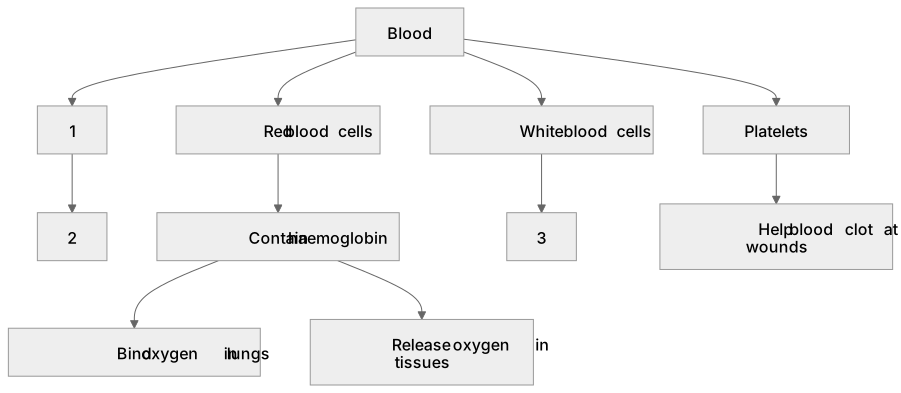
1Box 1
2Box 2
3Box 3
There is more to this lesson
The full lesson goes on to check your understanding and help you earn the marks. Create a free account to carry on, with your progress saved.
A week of Premium from your first lesson · Then the free plan continues · No card, no charge
Test your understanding of Blood: Blood is a tissue consisting of plasma, in which the red blood cells, white blood cells and platelets are suspended.
Active recall beats re-reading. Take an instant quiz now to test what you’ve learned and lock it into long-term memory.
A week of Premium from your first lesson · Then the free plan continues · No card, no charge