AQA · GCSE · Biology
Course version: 8461 · Version from Sept 2018
Cancer: There are also genetic risk factors for some cancers.
Not all risk of cancer comes from lifestyle.
Checked against the AQA 8461 specification (opens in a new tab) on .
- Point 5 of 5
Study notes
From the checked teaching notes for this specification point.
The idea
Not all risk of cancer comes from lifestyle. Some people inherit gene variants, sometimes called faulty genes, that increase the chance of developing particular cancers. These inherited factors are genetic risk factors. For example, variants of the BRCA1 and BRCA2 genes are linked to a higher risk of breast and ovarian cancer, and some inherited gene changes increase the risk of bowel cancer. A genetic risk factor is present from birth and cannot be changed by behaviour, although it still only raises the probability of cancer rather than making it certain. Scientists identify these factors by studying family histories and comparing the DNA of people with and without a particular cancer. Knowing about a genetic risk can guide screening and earlier monitoring.
What earns the marks
- Genetic risk factors are inherited gene variants that increase the chance of certain cancers.
- Examples include inherited variants of the BRCA genes linked to breast and ovarian cancer.
- A genetic risk factor raises the probability of cancer but does not make cancer certain.
- Scientists identify genetic risk factors by studying family histories and comparing DNA between groups.
Common mistakes and how to put them right
Saying a genetic risk factor guarantees cancer.
Put it right: It increases the chance, and many people with the variant never develop cancer.
Confusing genetic risk factors with lifestyle risk factors.
Put it right: Genetic factors are inherited, whereas lifestyle factors relate to behaviour and environment.
Claiming all cancers are inherited.
Put it right: Only some cancers have identified genetic risk factors, and most cancers involve a combination of factors.
Exam tips
- Use the word inherited when describing genetic risk factors.
- Give a named example, such as BRCA gene variants and breast cancer, to support the point.
- State clearly that genetic risk increases probability rather than causing cancer with certainty.
Try the lesson
The start of the Cancer: There are also genetic risk factors for some cancers. lesson, made from checked teaching notes for this specification point.
Have a go first
What is meant by a genetic risk factor for cancer?
Listen
Not all risk of cancer comes from lifestyle. Some people inherit gene variants, sometimes called faulty genes, that increase the chance of developing particular cancers. These inherited factors are genetic risk factors. For example, variants of the BRCA1 and BRCA2 genes are linked to a higher risk of breast and ovarian cancer, and some inherited gene changes increase the risk of bowel cancer. A genetic risk factor is present from birth and cannot be changed by behaviour, although it still only raises the probability of cancer rather than making it certain. Scientists identify these factors by studying family histories and comparing the DNA of people with and without a particular cancer. Knowing about a genetic risk can guide screening and earlier monitoring. A strong answer earns marks for these points. Genetic risk factors are inherited gene variants that increase the chance of certain cancers. Examples include inherited variants of the BRCA genes linked to breast and ovarian cancer. A genetic risk factor raises the probability of cancer but does not make cancer certain. Scientists identify genetic risk factors by studying family histories and comparing DNA between groups. A common slip: Saying a genetic risk factor guarantees cancer. Instead, it increases the chance, and many people with the variant never develop cancer. Exam tip: Use the word inherited when describing genetic risk factors.
See it
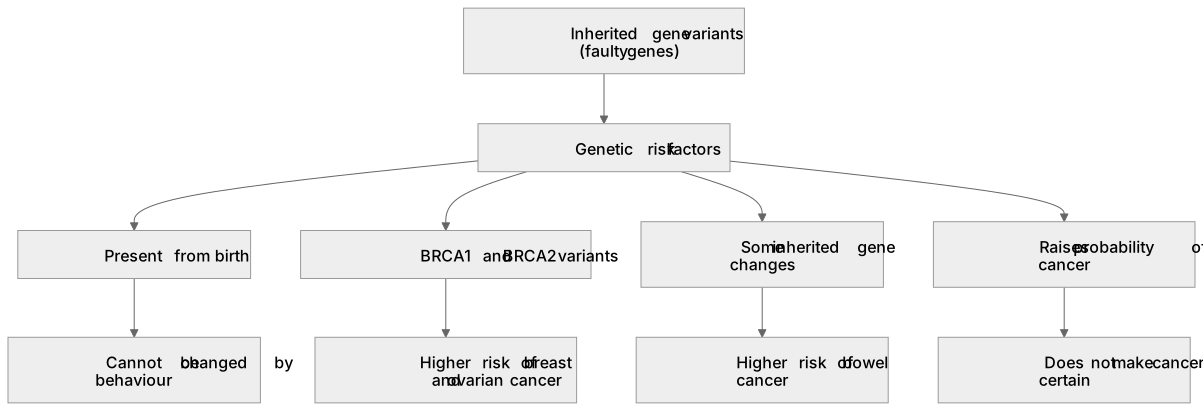
Label the diagram
Some boxes have lost their names. Pick the right name for each number.
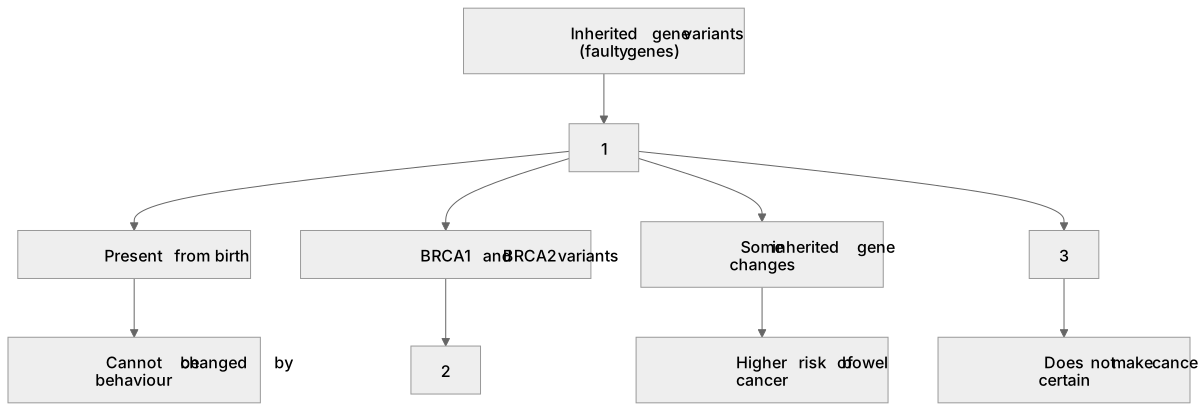
1Box 1
2Box 2
3Box 3
There is more to this lesson
The full lesson goes on to check your understanding and help you earn the marks. Create a free account to carry on, with your progress saved.
A week of Premium from your first lesson · Then the free plan continues · No card, no charge
Test your understanding of Cancer: There are also genetic risk factors for some cancers.
Active recall beats re-reading. Take an instant quiz now to test what you’ve learned and lock it into long-term memory.
A week of Premium from your first lesson · Then the free plan continues · No card, no charge