AQA · GCSE · Biology
Course version: 8461 · Version from Sept 2018
Fertility can be controlled by a variety of hormonal and non-hormonal…
Full specification wording
Contraception: Fertility can be controlled by a variety of hormonal and non-hormonal methods of contraception.
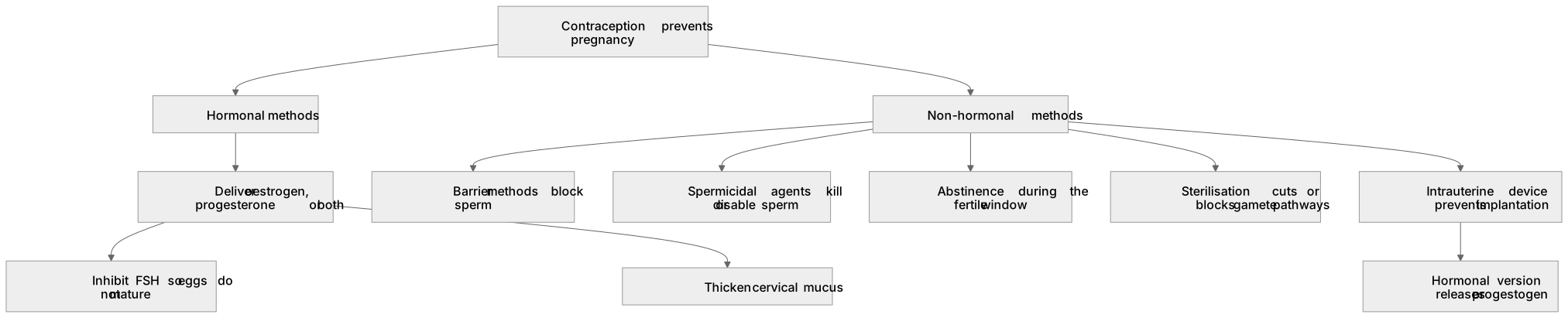
Contraception prevents pregnancy, and methods divide into hormonal and non-hormonal groups.
Checked against the AQA 8461 specification (opens in a new tab) on .
- Point 2 of 3
- 3 key terms
Study notes
From the checked teaching notes for this specification point.
The idea
Contraception prevents pregnancy, and methods divide into hormonal and non-hormonal groups. Hormonal methods deliver oestrogen, progesterone or both to disrupt the normal cycle, usually by inhibiting FSH so eggs do not mature or by thickening cervical mucus. Non-hormonal methods work physically or chemically: condoms and diaphragms block sperm, intrauterine devices prevent implantation or release a hormone, spermicidal agents kill or disable sperm, abstaining from intercourse during the fertile window avoids fertilisation, and surgical sterilisation cuts or blocks the gamete pathways. The intrauterine device straddles the two categories because copper versions are non-hormonal while hormonal versions release progestogen. Understanding the variety means knowing the route, duration and mechanism of each option, and recognising that effectiveness depends on correct and consistent use.
What earns the marks
- States that contraception prevents pregnancy and classifies methods as hormonal or non-hormonal.
- Describes at least two hormonal methods, such as oral contraceptives, injections, implants or skin patches, and links them to hormones.
- Describes at least two non-hormonal methods, such as condoms, diaphragms, intrauterine devices, spermicidal agents, abstinence or sterilisation.
- Explains a mechanism, for example that hormonal methods inhibit FSH so no eggs mature, or that barrier methods prevent sperm reaching an egg.
- Recognises that some methods combine mechanisms, for example an intrauterine device that prevents implantation or releases a hormone.
Common mistakes and how to put them right
Confusing contraception with abortion.
Put it right: Contraception prevents fertilisation or implantation, whereas abortion ends an established pregnancy.
Describing the contraceptive pill as killing sperm.
Put it right: It contains hormones that inhibit FSH so eggs do not mature.
Assuming every non-hormonal method is a barrier.
Put it right: Spermicides, abstinence and sterilisation are non-hormonal but not barriers.
Exam tips
- Sort your answer into hormonal and non-hormonal groups before writing so every method is placed correctly.
- Name the hormone involved where you can, for example progesterone in the implant, to show precise knowledge.
- Link each method to its route or duration, such as a skin patch, a slow-release implant or a permanent surgical procedure.
Try the lesson
The start of the Contraception: Fertility can be controlled by a variety of hormonal and non-hormonal methods of contraception. lesson, made from checked teaching notes for this specification point.
Have a go first
Which of these methods of contraception works by releasing hormones into the body?
Listen
Contraception prevents pregnancy, and methods divide into hormonal and non-hormonal groups. Hormonal methods deliver oestrogen, progesterone or both to disrupt the normal cycle, usually by inhibiting FSH so eggs do not mature or by thickening cervical mucus. Non-hormonal methods work physically or chemically: condoms and diaphragms block sperm, intrauterine devices prevent implantation or release a hormone, spermicidal agents kill or disable sperm, abstaining from intercourse during the fertile window avoids fertilisation, and surgical sterilisation cuts or blocks the gamete pathways. The intrauterine device straddles the two categories because copper versions are non-hormonal while hormonal versions release progestogen. Understanding the variety means knowing the route, duration and mechanism of each option, and recognising that effectiveness depends on correct and consistent use. A strong answer earns marks for these points. States that contraception prevents pregnancy and classifies methods as hormonal or non-hormonal. Describes at least two hormonal methods, such as oral contraceptives, injections, implants or skin patches, and links them to hormones. Describes at least two non-hormonal methods, such as condoms, diaphragms, intrauterine devices, spermicidal agents, abstinence or sterilisation. Explains a mechanism, for example that hormonal methods inhibit FSH so no eggs mature, or that barrier methods prevent sperm reaching an egg. A common slip: Confusing contraception with abortion. Instead, contraception prevents fertilisation or implantation, whereas abortion ends an established pregnancy. Exam tip: Sort your answer into hormonal and non-hormonal groups before writing so every method is placed correctly.
See it
Key words
Say what each word means before you turn the card.
Hormonal regulation of fertility
Try answering aloud or in your head before turning the card.
Duration and reversibility of methods
Try answering aloud or in your head before turning the card.
Correct and consistent use
Try answering aloud or in your head before turning the card.
See every definition
- Hormonal regulation of fertility
- Methods deliver oestrogen, progesterone or both to disrupt the normal cycle, usually by inhibiting FSH so eggs do not mature or by thickening cervical mucus.
- Duration and reversibility of methods
- Understanding the variety means knowing the route, duration and mechanism of each option, such as a skin patch, a slow-release implant or a permanent surgical procedure.
- Correct and consistent use
- Effectiveness depends on correct and consistent use of the chosen method.
Label the diagram
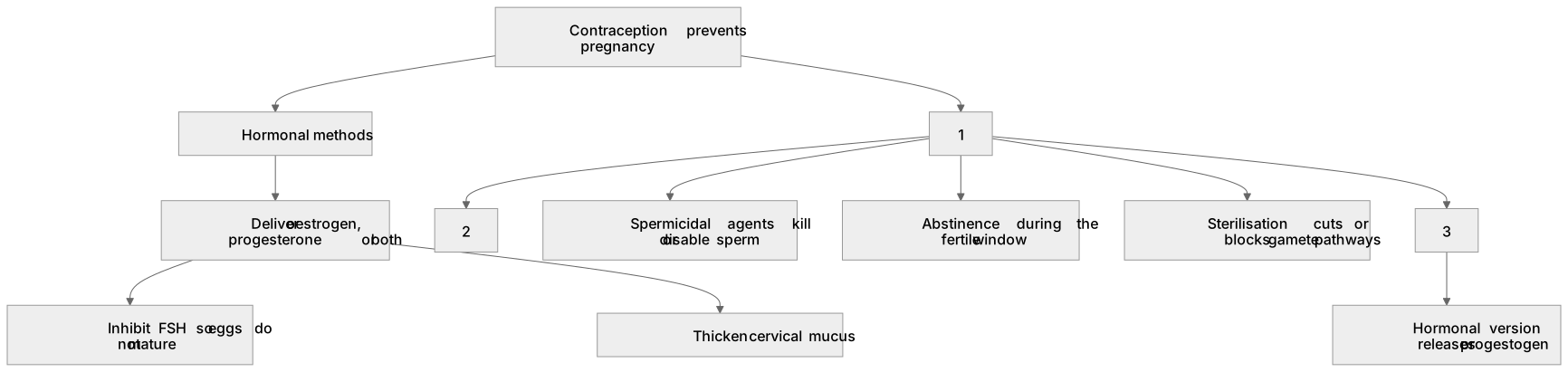
Some boxes have lost their names. Pick the right name for each number.
1Box 1
2Box 2
3Box 3
There is more to this lesson
The full lesson goes on to check your understanding and help you earn the marks. Create a free account to carry on, with your progress saved.
A week of Premium from your first lesson · Then the free plan continues · No card, no charge
Test your understanding of Contraception: Fertility can be controlled by a variety of hormonal and non-hormonal methods of contraception.
Active recall beats re-reading. Take an instant quiz now to test what you’ve learned and lock it into long-term memory.
A week of Premium from your first lesson · Then the free plan continues · No card, no charge