AQA · GCSE · Biology
Course version: 8461 · Version from Sept 2018
If the blood glucose concentration is too high, the pancreas produces the…
Full specification wording
Control of blood glucose concentration: If the blood glucose concentration is too high, the pancreas produces the hormone insulin that causes glucose to move from the blood into the cells.
After a carbohydrate-rich meal, glucose absorbed from the small intestine raises the concentration of glucose in the blood plasma.
Checked against the AQA 8461 specification (opens in a new tab) on .
- Point 2 of 13
- 4 key terms
Study notes
From the checked teaching notes for this specification point.
The idea
After a carbohydrate-rich meal, glucose absorbed from the small intestine raises the concentration of glucose in the blood plasma. The pancreas detects this rise and secretes insulin into the blood. Insulin travels to target cells, especially liver and muscle cells, and increases the rate at which they take up glucose from the blood. It does this by increasing the permeability of cell membranes to glucose, so glucose moves from the blood into the cells. Inside the cells, glucose is used in respiration or stored. As cells remove glucose from the blood, the blood glucose concentration falls back towards its normal set point, completing the negative feedback loop.
What earns the marks
- A rise in blood glucose concentration is detected by the pancreas.
- The pancreas secretes insulin into the blood.
- Insulin travels in the blood plasma to target cells such as liver and muscle cells.
- Insulin increases the movement of glucose from the blood into cells.
- Insulin increases the permeability of cell membranes to glucose.
- The removal of glucose from the blood lowers blood glucose concentration back towards the set point.
Common mistakes and how to put them right
Saying insulin is a digestive enzyme that breaks down glucose.
Put it right: Insulin is a hormone that signals cells to take up glucose.
Stating that glucose moves into cells by active transport driven by insulin.
Put it right: Insulin increases the permeability of membranes so glucose enters, and the movement is described as diffusion into the cell.
Writing that insulin is produced by the liver.
Put it right: Insulin is produced by the pancreas and acts on the liver.
Exam tips
- Name the source of insulin, the target cells and the direction of glucose movement in one linked sequence.
- Use the phrase blood glucose concentration rather than blood sugar when explaining the control mechanism.
- Explain the effect of insulin on cell membranes as well as the overall fall in blood glucose concentration.
Try the lesson
The start of the Control of blood glucose concentration: If the blood glucose concentration is too high, the pancreas produces the hormone insulin that causes glucose to move from the blood into the cells. lesson, made from checked teaching notes for this specification point.
Have a go first
Which hormone does the pancreas produce when the blood glucose concentration is too high?
Listen
After a carbohydrate-rich meal, glucose absorbed from the small intestine raises the concentration of glucose in the blood plasma. The pancreas detects this rise and secretes insulin into the blood. Insulin travels to target cells, especially liver and muscle cells, and increases the rate at which they take up glucose from the blood. It does this by increasing the permeability of cell membranes to glucose, so glucose moves from the blood into the cells. Inside the cells, glucose is used in respiration or stored. As cells remove glucose from the blood, the blood glucose concentration falls back towards its normal set point, completing the negative feedback loop. A strong answer earns marks for these points. A rise in blood glucose concentration is detected by the pancreas. The pancreas secretes insulin into the blood. Insulin travels in the blood plasma to target cells such as liver and muscle cells. Insulin increases the movement of glucose from the blood into cells. A common slip: Saying insulin is a digestive enzyme that breaks down glucose. Instead, insulin is a hormone that signals cells to take up glucose. Exam tip: Name the source of insulin, the target cells and the direction of glucose movement in one linked sequence.
See it
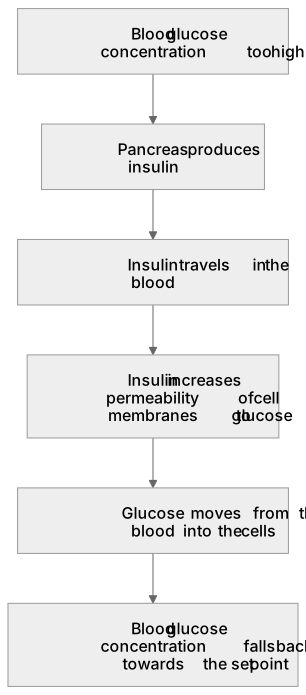
Put it in order
Put these steps in the order they happen.
- 1. Insulin travels in the blood
- 2. Pancreas produces insulin
- 3. Blood glucose concentration too high
- 4. Blood glucose concentration falls back towards the set point
- 5. Glucose moves from the blood into the cells
- 6. Insulin increases permeability of cell membranes to glucose
Key words
Say what each word means before you turn the card.
Insulin
Try answering aloud or in your head before turning the card.
Negative feedback
Try answering aloud or in your head before turning the card.
Target cells
Try answering aloud or in your head before turning the card.
Permeability
Try answering aloud or in your head before turning the card.
See every definition
- Insulin
- A hormone produced by the pancreas that causes glucose to move from the blood into the cells.
- Negative feedback
- The loop completed as cells remove glucose from the blood and the blood glucose concentration falls back towards its normal set point.
- Target cells
- Cells such as liver and muscle cells to which insulin travels in the blood plasma and which take up glucose from the blood.
- Permeability
- The property of cell membranes that insulin increases, so glucose moves from the blood into the cells.
Label the diagram
Some boxes have lost their names. Pick the right name for each number.
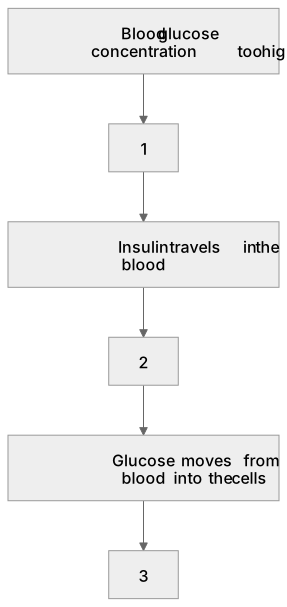
1Box 1
2Box 2
3Box 3
There is more to this lesson
The full lesson goes on to check your understanding and help you earn the marks. Create a free account to carry on, with your progress saved.
A week of Premium from your first lesson · Then the free plan continues · No card, no charge
Test your understanding of Control of blood glucose concentration: If the blood glucose concentration is too high, the pancreas produces the hormone insulin that causes glucose to move from the blood into the cells.
Active recall beats re-reading. Take an instant quiz now to test what you’ve learned and lock it into long-term memory.
A week of Premium from your first lesson · Then the free plan continues · No card, no charge