AQA · GCSE · Biology
Course version: 8461 · Version from Sept 2018
Both these mechanisms cause a transfer of energy from the skin to the…
Full specification wording
Control of body temperature (biology only): Both these mechanisms cause a transfer of energy from the skin to the environment.
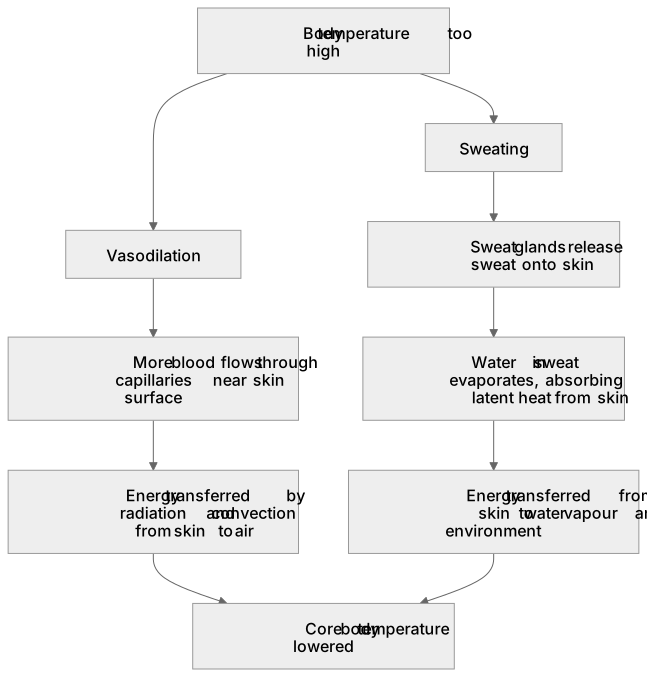
Vasodilation and sweating both increase the rate at which energy is transferred from the skin to the surroundings, helping to lower core body temperature.
Checked against the AQA 8461 specification (opens in a new tab) on .
- Point 5 of 7
Study notes
From the checked teaching notes for this specification point.
The idea
Vasodilation and sweating both increase the rate at which energy is transferred from the skin to the surroundings, helping to lower core body temperature. In vasodilation, more blood flows through capillaries near the skin surface, so a greater volume of warm blood is exposed to the cooler environment; energy is transferred by radiation and convection from the skin to the air. In sweating, sweat glands release sweat onto the skin; as the water in sweat evaporates, it absorbs latent heat from the skin, so energy is transferred from the skin to the water vapour and then to the environment. For example, on a hot day a runner may have flushed skin and visible sweat; both features increase energy loss and help prevent overheating. The mechanisms work together and are reversed when body temperature falls.
What earns the marks
- Vasodilation increases blood flow through skin capillaries, so more energy is transferred by radiation and convection.
- Sweating leads to evaporation of water from the skin surface.
- Evaporation of sweat transfers latent heat from the skin to the environment.
- The rate of energy transfer depends on the temperature difference between the skin and the environment.
- The responses are examples of negative feedback restoring the normal set point.
Common mistakes and how to put them right
Saying that energy is destroyed or lost completely.
Put it right: Energy is transferred to the environment, not destroyed.
Describing sweating as releasing coldness.
Put it right: Sweat cools by evaporation transferring energy away from the skin.
Ignoring the role of blood flow in vasodilation and only mentioning sweating when asked about both mechanisms.
Exam tips
- Use the phrase transfer of energy rather than heat loss alone, and specify radiation, convection or evaporation where relevant.
- Link each mechanism to the direction of energy transfer: from skin to environment.
- Compare the two mechanisms briefly to show they both achieve cooling by different routes.
Try the lesson
The start of the Control of body temperature (biology only): Both these mechanisms cause a transfer of energy from the skin to the environment. lesson, made from checked teaching notes for this specification point.
Have a go first
When a person's body temperature is too high, sweating and vasodilation occur. What is the main purpose of these two mechanisms?
Listen
Vasodilation and sweating both increase the rate at which energy is transferred from the skin to the surroundings, helping to lower core body temperature. In vasodilation, more blood flows through capillaries near the skin surface, so a greater volume of warm blood is exposed to the cooler environment; energy is transferred by radiation and convection from the skin to the air. In sweating, sweat glands release sweat onto the skin; as the water in sweat evaporates, it absorbs latent heat from the skin, so energy is transferred from the skin to the water vapour and then to the environment. For example, on a hot day a runner may have flushed skin and visible sweat; both features increase energy loss and help prevent overheating. The mechanisms work together and are reversed when body temperature falls. A strong answer earns marks for these points. Vasodilation increases blood flow through skin capillaries, so more energy is transferred by radiation and convection. Sweating leads to evaporation of water from the skin surface. Evaporation of sweat transfers latent heat from the skin to the environment. The rate of energy transfer depends on the temperature difference between the skin and the environment. Exam tip: Use the phrase transfer of energy rather than heat loss alone, and specify radiation, convection or evaporation where relevant.
See it
Label the diagram
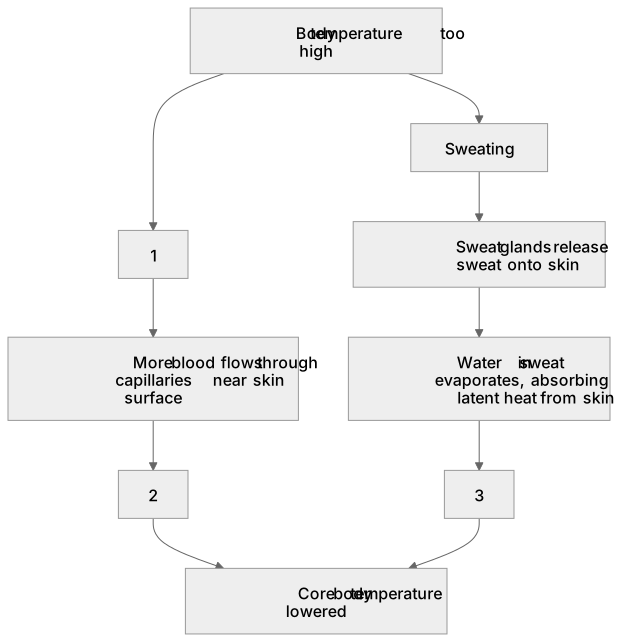
Some boxes have lost their names. Pick the right name for each number.
1Box 1
2Box 2
3Box 3
There is more to this lesson
The full lesson goes on to check your understanding and help you earn the marks. Create a free account to carry on, with your progress saved.
A week of Premium from your first lesson · Then the free plan continues · No card, no charge
Test your understanding of Control of body temperature (biology only): Both these mechanisms cause a transfer of energy from the skin to the environment.
Active recall beats re-reading. Take an instant quiz now to test what you’ve learned and lock it into long-term memory.
A week of Premium from your first lesson · Then the free plan continues · No card, no charge