AQA · GCSE · Biology
Course version: 8461 · Version from Sept 2018
A non-communicable disease: Faulty heart valves can be replaced using…
Full specification wording
Coronary heart disease: a non-communicable disease: Faulty heart valves can be replaced using biological or mechanical valves.
When a valve cannot be repaired, surgeons can replace it with a biological valve, taken from an animal such as a pig or cow, or from a human donor, or with a mechanical valve made from materials…
Checked against the AQA 8461 specification (opens in a new tab) on .
- Point 8 of 10
- 4 key terms
Study notes
From the checked teaching notes for this specification point.
The idea
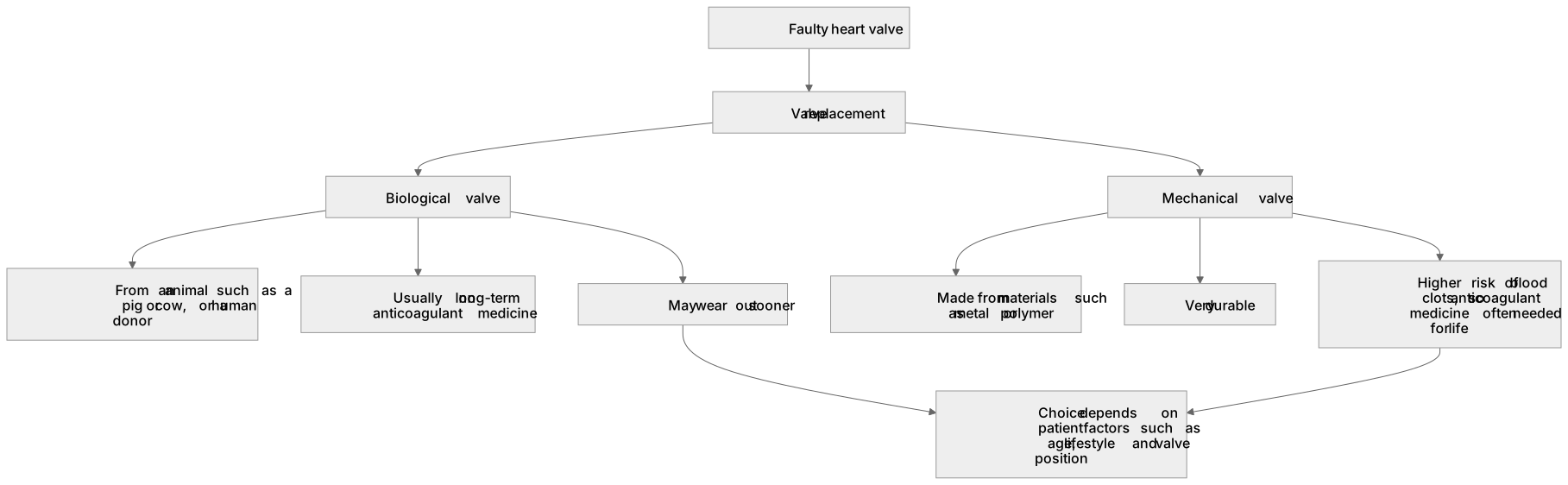
When a valve cannot be repaired, surgeons can replace it with a biological valve, taken from an animal such as a pig or cow, or from a human donor, or with a mechanical valve made from materials such as metal or polymer. Biological valves tend to work well without long-term anticoagulant medicine, but they may wear out sooner. Mechanical valves are very durable, but they increase the risk of blood clots, so patients usually need anticoagulant medicine for life. The choice depends on factors such as the patient's age, lifestyle, the valve position and the balance between durability and the risks of long-term medication.
What earns the marks
- A faulty valve can be replaced with a biological valve from an animal or human donor, or with a mechanical valve made from artificial materials.
- Biological valves generally do not require lifelong anticoagulant medicine, but they may deteriorate and need replacing sooner.
- Mechanical valves are durable and long-lasting, but they carry a higher risk of blood clots, so anticoagulant medicine is often needed.
- The choice of valve depends on patient factors such as age, lifestyle, the position of the valve and the risks of surgery or medication.
- Valve replacement aims to restore one-way blood flow and reduce the extra workload on the heart.
Common mistakes and how to put them right
Stating that biological valves never need replacing.
Put it right: They can wear out over time, especially in younger, more active patients.
Claiming that mechanical valves need no medication.
Put it right: Anticoagulants are usually required to reduce clot risk.
Treating one valve type as always better.
Put it right: The best choice depends on the individual patient and the balance of benefits and risks.
Exam tips
- Compare the two valve types using at least one advantage and one disadvantage for each.
- Refer to anticoagulant medicine rather than vaguely saying blood-thinning drugs.
- Link the purpose of replacement back to restoring one-way flow and reducing strain on the heart.
Try the lesson
The start of the Coronary heart disease: a non-communicable disease: Faulty heart valves can be replaced using biological or mechanical valves. lesson, made from checked teaching notes for this specification point.
Have a go first
Which two types of replacement valve can be used for a faulty heart valve?
Listen
When a valve cannot be repaired, surgeons can replace it with a biological valve, taken from an animal such as a pig or cow, or from a human donor, or with a mechanical valve made from materials such as metal or polymer. Biological valves tend to work well without long-term anticoagulant medicine, but they may wear out sooner. Mechanical valves are very durable, but they increase the risk of blood clots, so patients usually need anticoagulant medicine for life. The choice depends on factors such as the patient's age, lifestyle, the valve position and the balance between durability and the risks of long-term medication. A strong answer earns marks for these points. A faulty valve can be replaced with a biological valve from an animal or human donor, or with a mechanical valve made from artificial materials. Biological valves generally do not require lifelong anticoagulant medicine, but they may deteriorate and need replacing sooner. Mechanical valves are durable and long-lasting, but they carry a higher risk of blood clots, so anticoagulant medicine is often needed. The choice of valve depends on patient factors such as age, lifestyle, the position of the valve and the risks of surgery or medication. A common slip: Stating that biological valves never need replacing. Instead, they can wear out over time, especially in younger, more active patients. Exam tip: Compare the two valve types using at least one advantage and one disadvantage for each.
See it
Key words
Say what each word means before you turn the card.
Biological valves
Try answering aloud or in your head before turning the card.
Mechanical valves
Try answering aloud or in your head before turning the card.
Anticoagulant medicine
Try answering aloud or in your head before turning the card.
Restoring one-way blood flow
Try answering aloud or in your head before turning the card.
See every definition
- Biological valves
- Valves taken from an animal such as a pig or cow, or from a human donor, which tend to work well without long-term anticoagulant medicine but may wear out sooner.
- Mechanical valves
- Valves made from materials such as metal or polymer, which are very durable but increase the risk of blood clots, so patients usually need anticoagulant medicine for life.
- Anticoagulant medicine
- Medicine that patients with mechanical valves usually need for life because the valves increase the risk of blood clots.
- Restoring one-way blood flow
- The aim of valve replacement, which also reduces the extra workload on the heart.
Label the diagram
Some boxes have lost their names. Pick the right name for each number.
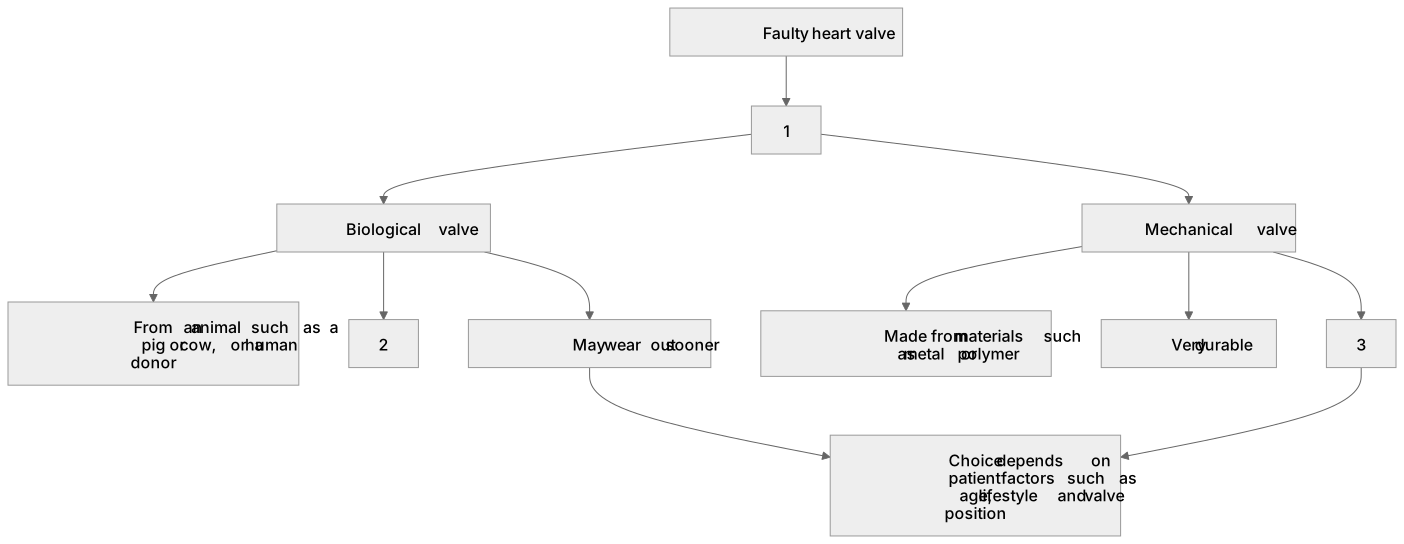
1Box 1
2Box 2
3Box 3
There is more to this lesson
The full lesson goes on to check your understanding and help you earn the marks. Create a free account to carry on, with your progress saved.
A week of Premium from your first lesson · Then the free plan continues · No card, no charge
Test your understanding of Coronary heart disease: a non-communicable disease: Faulty heart valves can be replaced using biological or mechanical valves.
Active recall beats re-reading. Take an instant quiz now to test what you’ve learned and lock it into long-term memory.
A week of Premium from your first lesson · Then the free plan continues · No card, no charge