AQA · GCSE · Biology
Course version: 8461 · Version from Sept 2018
The compost produced is used as a natural fertiliser for growing garden…
Full specification wording
Decomposition (biology only): The compost produced is used as a natural fertiliser for growing garden plants or crops.
When microorganisms have broken down waste biological material, the remaining dark, crumbly material is compost.
Checked against the AQA 8461 specification (opens in a new tab) on .
- Point 4 of 7
Study notes
From the checked teaching notes for this specification point.
The idea
When microorganisms have broken down waste biological material, the remaining dark, crumbly material is compost. Compost is rich in mineral ions and other nutrients that plants need for healthy growth. Gardeners dig compost into soil or spread it around plants, and farmers may spread it on fields. The mineral ions released, such as nitrate ions, are absorbed by plant roots and used to make proteins and other compounds. Compost therefore acts as a natural fertiliser, improving soil structure and supplying nutrients without relying only on manufactured fertilisers. Using compost also recycles waste biological material, reducing the amount sent to landfill.
What earns the marks
- State that compost is the product of the decay of waste biological material by microorganisms.
- Identify compost as a natural fertiliser that supplies mineral ions to plants.
- Explain that plants absorb mineral ions from the soil through their roots for healthy growth.
- Describe a use of compost, such as digging it into garden soil or spreading it on crop fields.
- Recognise that using compost recycles nutrients and reduces waste.
Common mistakes and how to put them right
Stating that compost is a manufactured fertiliser.
Put it right by describing it as a natural fertiliser produced by decay.
Thinking that plants absorb compost directly as food.
Put it right by explaining that microorganisms release mineral ions which plant roots absorb.
Assuming compost only improves soil texture and supplies no nutrients.
Put it right by stating that it also provides mineral ions such as nitrates.
Exam tips
- Use the term mineral ions rather than simply food when describing what plants take from compost.
- Link compost to plant growth by naming a mineral ion, such as nitrate, and its use in the plant.
- Mention recycling of waste biological material as an advantage of composting.
Try the lesson
The start of the Decomposition (biology only): The compost produced is used as a natural fertiliser for growing garden plants or crops. lesson, made from checked teaching notes for this specification point.
Have a go first
Which term describes the compost that gardeners dig into soil to help garden plants grow?
Listen
When microorganisms have broken down waste biological material, the remaining dark, crumbly material is compost. Compost is rich in mineral ions and other nutrients that plants need for healthy growth. Gardeners dig compost into soil or spread it around plants, and farmers may spread it on fields. The mineral ions released, such as nitrate ions, are absorbed by plant roots and used to make proteins and other compounds. Compost therefore acts as a natural fertiliser, improving soil structure and supplying nutrients without relying only on manufactured fertilisers. Using compost also recycles waste biological material, reducing the amount sent to landfill. A strong answer earns marks for these points. State that compost is the product of the decay of waste biological material by microorganisms. Identify compost as a natural fertiliser that supplies mineral ions to plants. Explain that plants absorb mineral ions from the soil through their roots for healthy growth. Describe a use of compost, such as digging it into garden soil or spreading it on crop fields. A common slip: Stating that compost is a manufactured fertiliser. Instead, describing it as a natural fertiliser produced by decay. Exam tip: Use the term mineral ions rather than simply food when describing what plants take from compost.
See it
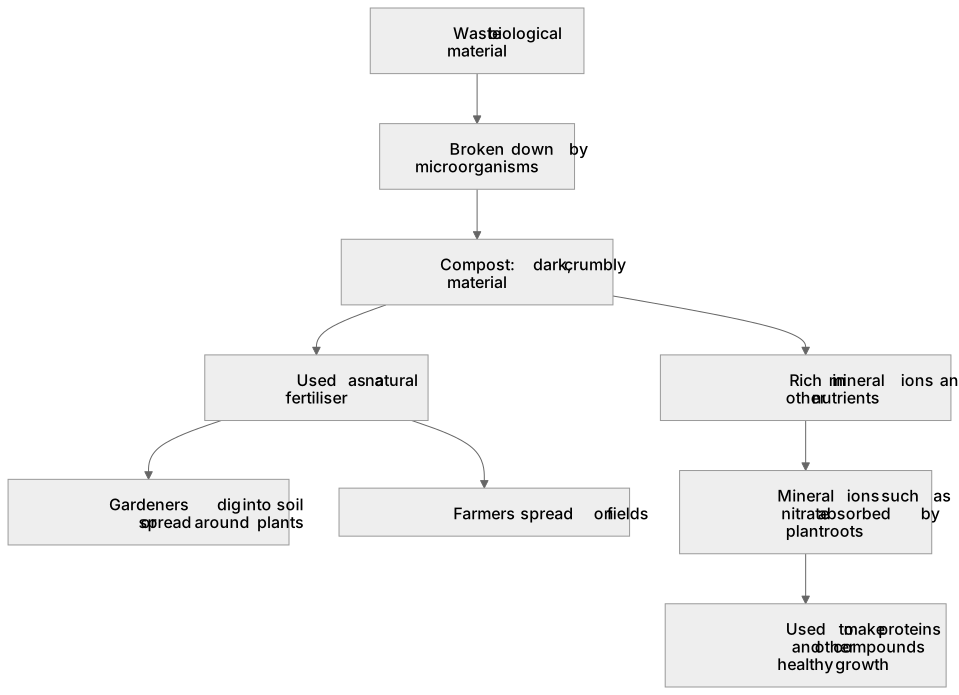
Label the diagram
Some boxes have lost their names. Pick the right name for each number.
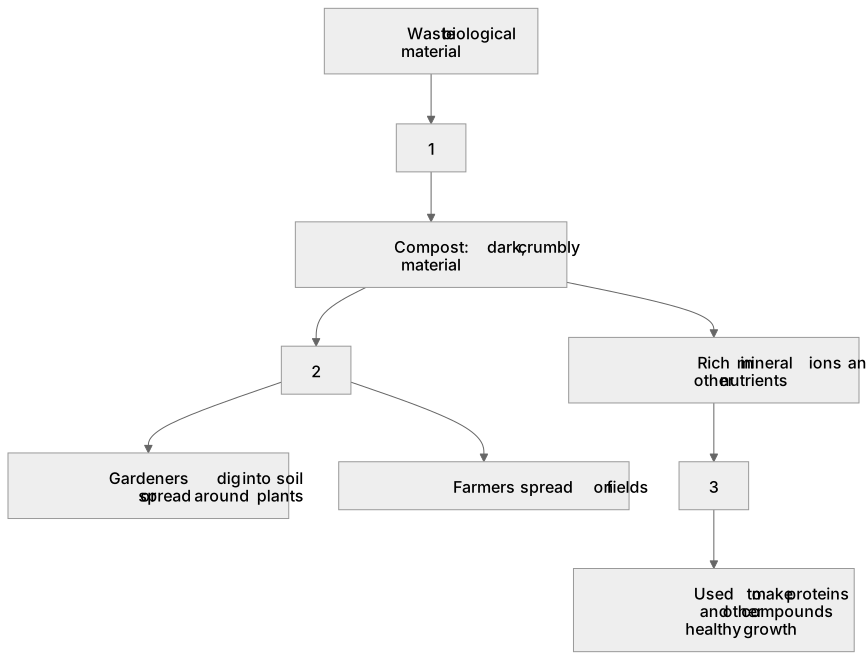
1Box 1
2Box 2
3Box 3
There is more to this lesson
The full lesson goes on to check your understanding and help you earn the marks. Create a free account to carry on, with your progress saved.
A week of Premium from your first lesson · Then the free plan continues · No card, no charge
Test your understanding of Decomposition (biology only): The compost produced is used as a natural fertiliser for growing garden plants or crops.
Active recall beats re-reading. Take an instant quiz now to test what you’ve learned and lock it into long-term memory.
A week of Premium from your first lesson · Then the free plan continues · No card, no charge