AQA · GCSE · Biology
Course version: 8461 · Version from Sept 2018
Students should be able to describe the structure of DNA and define genome.
Full specification wording
DNA and the genome: Students should be able to describe the structure of DNA and define genome.
DNA is the molecule that stores genetic information.
Checked against the AQA 8461 specification (opens in a new tab) on .
- Point 1 of 9
- 4 key terms
Study notes
From the checked teaching notes for this specification point.
The idea
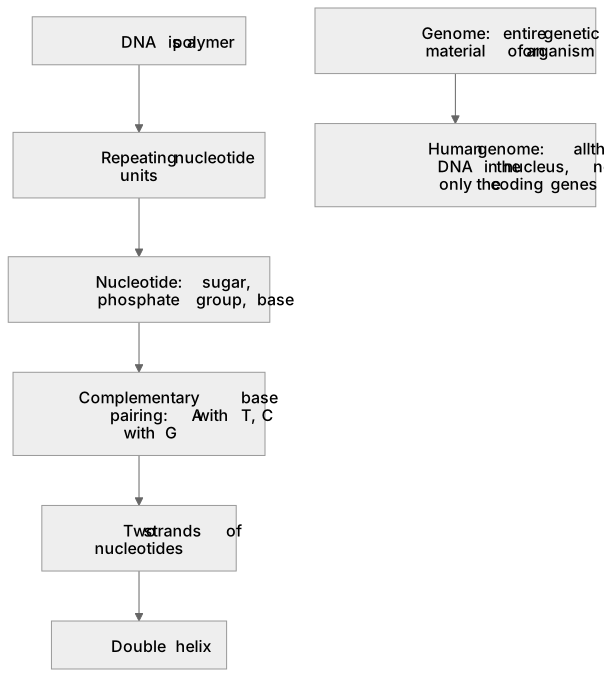
DNA is the molecule that stores genetic information. Its structure is a polymer of nucleotides, each containing a sugar, a phosphate group and a base. Two strands of nucleotides pair up by complementary bases (A with T, C with G) and twist around each other to form a double helix. The genome is the entire genetic material of an organism: in humans this is the complete set of DNA in the nucleus, including all genes and non-coding regions. When describing structure, link the repeating nucleotide units to the polymer backbone and the base pairing that holds the two strands together. When defining genome, state that it is the whole genetic material, not just the genes, and give a named example such as the human genome.
What earns the marks
- DNA is a polymer made of repeating nucleotide units.
- Each nucleotide contains a sugar, a phosphate group and a base.
- The bases pair specifically: adenine with thymine, and cytosine with guanine.
- Two strands of nucleotides form a double helix.
- The genome is the entire genetic material of an organism.
- The human genome includes all the DNA in the nucleus, not only the coding genes.
Common mistakes and how to put them right
Saying that DNA is made of protein.
Put it right by stating that DNA is a nucleic acid polymer and proteins are made from the instructions carried by DNA.
Describing the genome as only the genes.
Put it right by stating that the genome is all the genetic material, including non-coding DNA.
Writing that the two strands are identical.
Put it right by explaining that the strands are complementary because of specific base pairing.
Exam tips
- Use the terms nucleotide, complementary base pairing and double helix when describing structure.
- When defining genome, include the word entire or complete to show it is all the genetic material.
- Sketch a simple labelled diagram of the double helix with base pairs to support your written description.
Try the lesson
The start of the DNA and the genome: Students should be able to describe the structure of DNA and define genome. lesson, made from checked teaching notes for this specification point.
Have a go first
Which statement best describes the structure of a DNA molecule?
Listen
DNA is the molecule that stores genetic information. Its structure is a polymer of nucleotides, each containing a sugar, a phosphate group and a base. Two strands of nucleotides pair up by complementary bases (A with T, C with G) and twist around each other to form a double helix. The genome is the entire genetic material of an organism: in humans this is the complete set of DNA in the nucleus, including all genes and non-coding regions. When describing structure, link the repeating nucleotide units to the polymer backbone and the base pairing that holds the two strands together. When defining genome, state that it is the whole genetic material, not just the genes, and give a named example such as the human genome. A strong answer earns marks for these points. DNA is a polymer made of repeating nucleotide units. Each nucleotide contains a sugar, a phosphate group and a base. The bases pair specifically: adenine with thymine, and cytosine with guanine. Two strands of nucleotides form a double helix. A common slip: Saying that DNA is made of protein. Instead, stating that DNA is a nucleic acid polymer and proteins are made from the instructions carried by DNA. Exam tip: Use the terms nucleotide, complementary base pairing and double helix when describing structure.
See it
Key words
Say what each word means before you turn the card.
Complementary base pairing
Try answering aloud or in your head before turning the card.
The genome as the complete genetic material
Try answering aloud or in your head before turning the card.
Structure and function of biological molecules
Try answering aloud or in your head before turning the card.
Genetic information and inheritance
Try answering aloud or in your head before turning the card.
See every definition
- Complementary base pairing
- The bases pair specifically: adenine with thymine, and cytosine with guanine, which holds the two strands together.
- The genome as the complete genetic material
- The entire genetic material of an organism, including all genes and non-coding regions, not just the genes.
- Structure and function of biological molecules
- DNA is a polymer of nucleotides, each containing a sugar, a phosphate group and a base, and two strands form a double helix.
- Genetic information and inheritance
- DNA is the molecule that stores genetic information.
Label the diagram
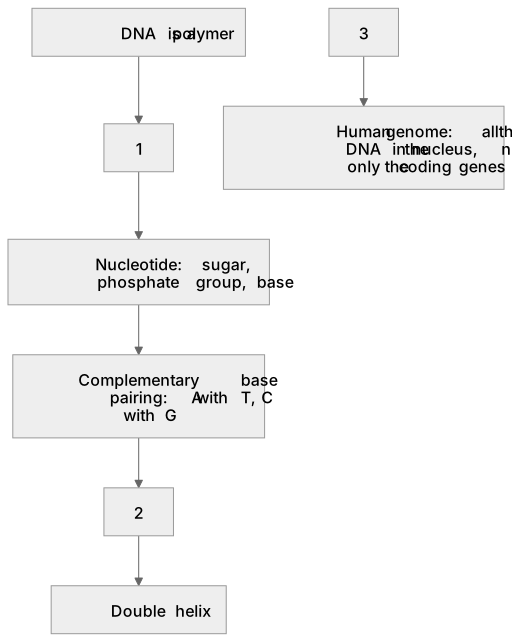
Some boxes have lost their names. Pick the right name for each number.
1Box 1
2Box 2
3Box 3
There is more to this lesson
The full lesson goes on to check your understanding and help you earn the marks. Create a free account to carry on, with your progress saved.
A week of Premium from your first lesson · Then the free plan continues · No card, no charge
Test your understanding of DNA and the genome: Students should be able to describe the structure of DNA and define genome.
Active recall beats re-reading. Take an instant quiz now to test what you’ve learned and lock it into long-term memory.
A week of Premium from your first lesson · Then the free plan continues · No card, no charge