AQA · GCSE · Biology
Course version: 8461 · Version from Sept 2018
The whole human genome has now been studied and this will have great…
Full specification wording
DNA and the genome: The whole human genome has now been studied and this will have great importance for medicine in the future.
Scientists have determined the complete base sequence of human DNA, so the whole human genome has been studied.
Checked against the AQA 8461 specification (opens in a new tab) on .
- Point 7 of 9
- 4 key terms
Study notes
From the checked teaching notes for this specification point.
The idea
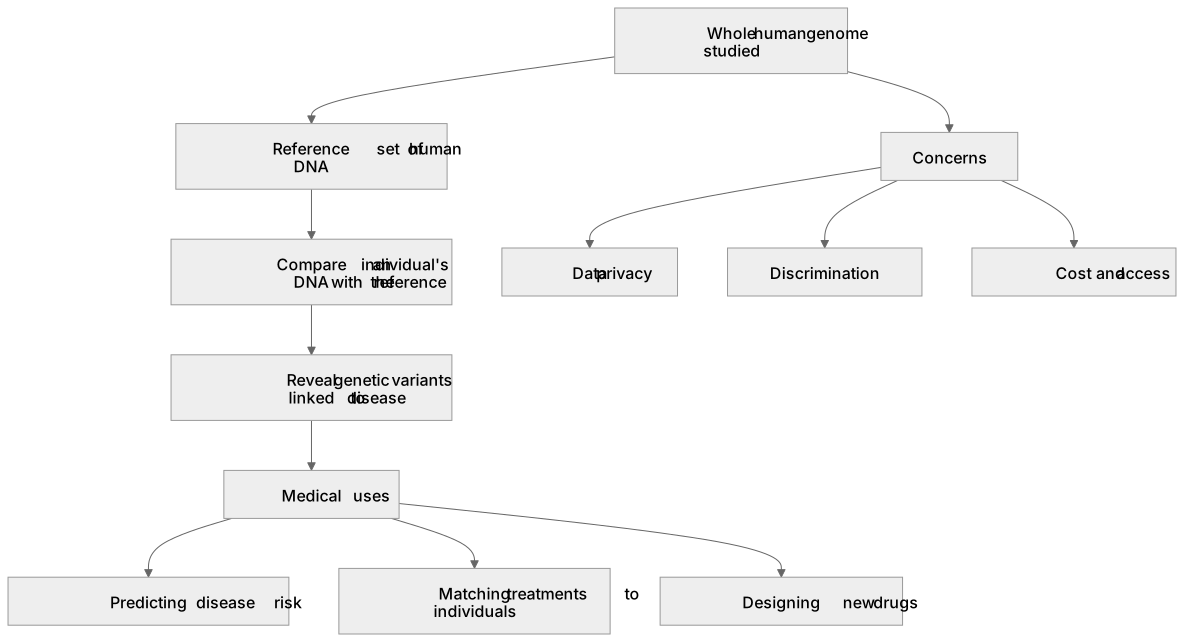
Scientists have determined the complete base sequence of human DNA, so the whole human genome has been studied. This reference sequence lets researchers compare an individual's DNA with the standard and spot differences linked to disease. Medical importance includes predicting risk of conditions, choosing treatments that suit a person's genetic make-up, designing new medicines, and understanding inherited disorders. It can also support tracing the spread of disease and developing gene-based therapies. The benefits must be weighed against issues such as privacy of genetic data, insurance and employment discrimination, cost, and unequal access to testing. A balanced answer states a medical use, explains how the genome sequence enables it, and notes a limitation or ethical concern.
What earns the marks
- State that the complete human genome has been sequenced, giving a reference set of human DNA.
- Explain how comparing an individual's DNA with the reference genome can reveal variants linked to disease.
- Describe a medical application, such as predicting disease risk, matching treatments to individuals, or designing new drugs.
- Discuss limitations or concerns, such as data privacy, discrimination, cost, or access to genetic testing.
- Reach a supported judgement about the future importance of the human genome for medicine.
Common mistakes and how to put them right
Claiming the genome project can cure all diseases now.
Put it right by describing current and potential future uses, such as risk prediction and treatment selection.
Ignoring ethical issues: correct this by including concerns about privacy, consent and possible discrimination.
Treating genome study as identical to genetic testing of one gene.
Put it right by explaining that the whole genome sequence allows many variants to be examined together.
Exam tips
- For 'discuss' questions, give both benefits and concerns, then state a clear conclusion.
- Link each medical use to how the genome sequence makes it possible, rather than listing uses alone.
- Use terms such as 'genetic variant', 'risk' and 'personalised treatment' accurately and sparingly.
Try the lesson
The start of the DNA and the genome: The whole human genome has now been studied and this will have great importance for medicine in the future. lesson, made from checked teaching notes for this specification point.
Have a go first
How is the comprehensive study of the entire human genome expected to improve medical treatments in the future?
Listen
Scientists have determined the complete base sequence of human DNA, so the whole human genome has been studied. This reference sequence lets researchers compare an individual's DNA with the standard and spot differences linked to disease. Medical importance includes predicting risk of conditions, choosing treatments that suit a person's genetic make-up, designing new medicines, and understanding inherited disorders. It can also support tracing the spread of disease and developing gene-based therapies. The benefits must be weighed against issues such as privacy of genetic data, insurance and employment discrimination, cost, and unequal access to testing. A balanced answer states a medical use, explains how the genome sequence enables it, and notes a limitation or ethical concern. A strong answer earns marks for these points. State that the complete human genome has been sequenced, giving a reference set of human DNA. Explain how comparing an individual's DNA with the reference genome can reveal variants linked to disease. Describe a medical application, such as predicting disease risk, matching treatments to individuals, or designing new drugs. Discuss limitations or concerns, such as data privacy, discrimination, cost, or access to genetic testing. A common slip: Claiming the genome project can cure all diseases now. Instead, describing current and potential future uses, such as risk prediction and treatment selection. Exam tip: For 'discuss' questions, give both benefits and concerns, then state a clear conclusion.
See it
Key words
Say what each word means before you turn the card.
The completed human genome sequence
Try answering aloud or in your head before turning the card.
Applications of genomics in medicine
Try answering aloud or in your head before turning the card.
Ethical, legal and social implications
Try answering aloud or in your head before turning the card.
Evidence-based evaluation of future benefits
Try answering aloud or in your head before turning the card.
See every definition
- The completed human genome sequence
- The complete base sequence of human DNA has been determined, giving a reference set of human DNA.
- Applications of genomics in medicine
- Medical uses include predicting risk of conditions, choosing treatments that suit a person's genetic make-up, designing new medicines, and understanding inherited disorders.
- Ethical, legal and social implications
- The benefits must be weighed against issues such as privacy of genetic data, insurance and employment discrimination, cost, and unequal access to testing.
- Evidence-based evaluation of future benefits
- A balanced answer states a medical use, explains how the genome sequence enables it, and notes a limitation or ethical concern.
Label the diagram
Some boxes have lost their names. Pick the right name for each number.
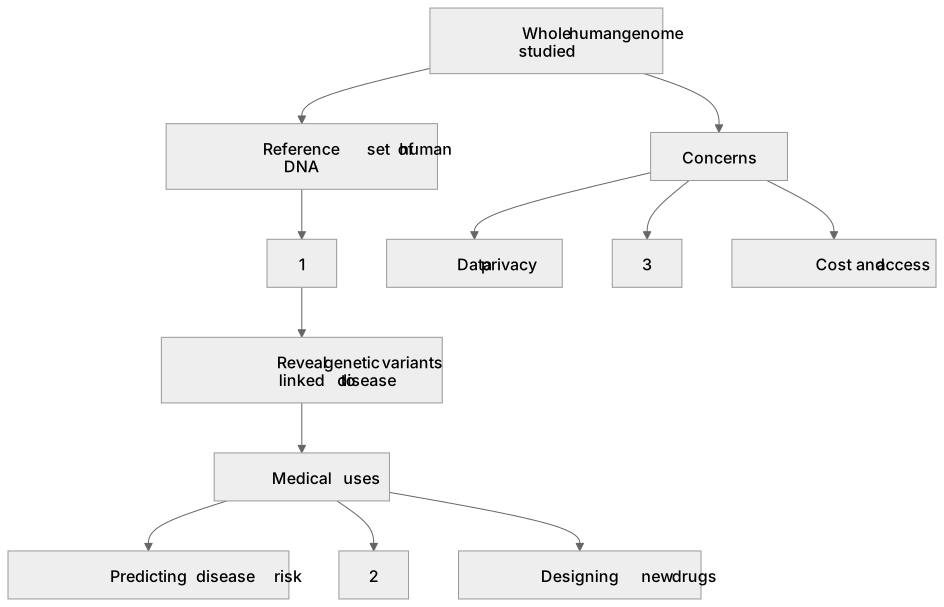
1Box 1
2Box 2
3Box 3
There is more to this lesson
The full lesson goes on to check your understanding and help you earn the marks. Create a free account to carry on, with your progress saved.
A week of Premium from your first lesson · Then the free plan continues · No card, no charge
Test your understanding of DNA and the genome: The whole human genome has now been studied and this will have great importance for medicine in the future.
Active recall beats re-reading. Take an instant quiz now to test what you’ve learned and lock it into long-term memory.
A week of Premium from your first lesson · Then the free plan continues · No card, no charge