AQA · GCSE · Biology
Course version: 8461 · Version from Sept 2018
An enzyme may no longer fit the substrate binding site or a structural…
Full specification wording
DNA structure (biology only): An enzyme may no longer fit the substrate binding site or a structural protein may lose its strength.
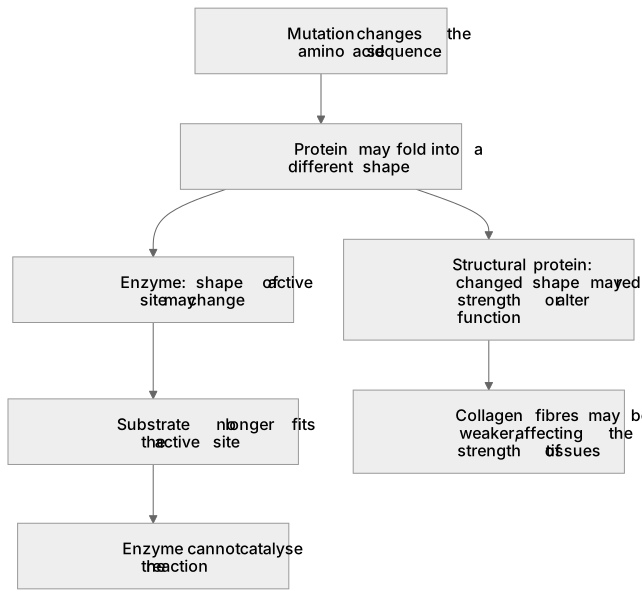
When a mutation changes the amino acid sequence of a protein, the protein may fold into a different shape.
Checked against the AQA 8461 specification (opens in a new tab) on .
- Point 17 of 19
- 3 key terms
Study notes
From the checked teaching notes for this specification point.
The idea
When a mutation changes the amino acid sequence of a protein, the protein may fold into a different shape. If the protein is an enzyme, the shape of its active site may change so that the substrate no longer fits and the enzyme cannot catalyse the reaction. This is described as the substrate binding site no longer fitting the substrate. If the protein is a structural protein, such as collagen in connective tissue or keratin in skin, hair and nails, a changed shape can reduce its strength or alter its function. For example, a mutation in a gene for collagen could produce collagen fibres that are weaker, affecting the strength of tissues. The effect depends on the role of the protein and where the changed amino acids are located.
What earns the marks
- A mutation can change the amino acid sequence and therefore the shape of a protein.
- In an enzyme, a changed active site may no longer fit the substrate, so the enzyme cannot catalyse the reaction.
- In a structural protein, a changed shape may reduce its strength or alter its structural role.
- The effect of a mutation depends on the function of the protein and the position of the changed amino acids.
- Examples include enzymes with altered active sites and structural proteins such as collagen losing strength.
Common mistakes and how to put them right
Saying the enzyme is 'killed' or 'denatured' by a mutation.
Put it right by explaining that the active site shape is altered so the substrate no longer fits.
Thinking that all proteins are enzymes.
Put it right by stating that structural proteins such as collagen have a different role and can lose strength if their shape changes.
Confusing the substrate binding site with the whole enzyme.
Put it right by referring specifically to the active site and its shape.
Exam tips
- Use the phrase 'the substrate no longer fits the active site' when explaining the effect on an enzyme.
- For structural proteins, name a specific example such as collagen and state how its strength could be affected.
- Link the change in shape to a change in function rather than just saying the protein is 'different'.
Try the lesson
The start of the DNA structure (biology only): An enzyme may no longer fit the substrate binding site or a structural protein may lose its strength. lesson, made from checked teaching notes for this specification point.
Have a go first
What is a possible consequence of a genetic mutation that alters the amino acid sequence of an enzyme?
Listen
When a mutation changes the amino acid sequence of a protein, the protein may fold into a different shape. If the protein is an enzyme, the shape of its active site may change so that the substrate no longer fits and the enzyme cannot catalyse the reaction. This is described as the substrate binding site no longer fitting the substrate. If the protein is a structural protein, such as collagen in connective tissue or keratin in skin, hair and nails, a changed shape can reduce its strength or alter its function. For example, a mutation in a gene for collagen could produce collagen fibres that are weaker, affecting the strength of tissues. The effect depends on the role of the protein and where the changed amino acids are located. A strong answer earns marks for these points. A mutation can change the amino acid sequence and therefore the shape of a protein. In an enzyme, a changed active site may no longer fit the substrate, so the enzyme cannot catalyse the reaction. In a structural protein, a changed shape may reduce its strength or alter its structural role. The effect of a mutation depends on the function of the protein and the position of the changed amino acids. A common slip: Saying the enzyme is 'killed' or 'denatured' by a mutation. Instead, explaining that the active site shape is altered so the substrate no longer fits. Exam tip: Use the phrase 'the substrate no longer fits the active site' when explaining the effect on an enzyme.
See it
Key words
Say what each word means before you turn the card.
Enzyme structure and function
Try answering aloud or in your head before turning the card.
Mutation and protein function
Try answering aloud or in your head before turning the card.
Structural proteins in organisms
Try answering aloud or in your head before turning the card.
See every definition
- Enzyme structure and function
- A mutation can change the amino acid sequence and therefore the shape of a protein, so the shape of an enzyme's active site may change and the substrate no longer fits.
- Mutation and protein function
- A changed shape can reduce a protein's strength or alter its function, and the effect depends on the function of the protein and the position of the changed amino acids.
- Structural proteins in organisms
- A structural protein such as collagen in connective tissue or keratin in skin, hair and nails may lose its strength if a mutation changes its shape.
Label the diagram
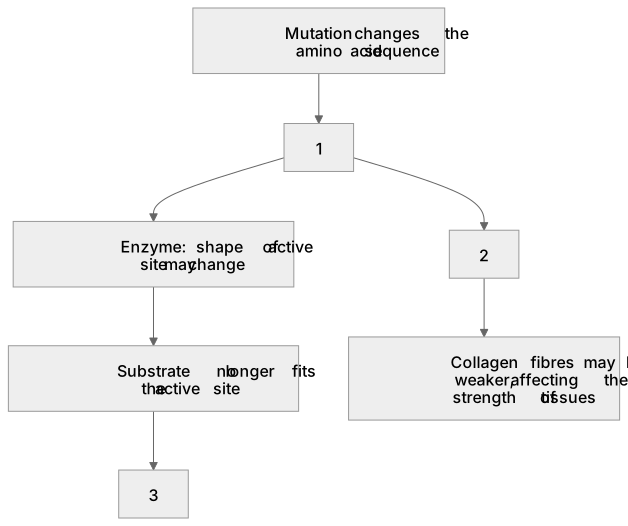
Some boxes have lost their names. Pick the right name for each number.
1Box 1
2Box 2
3Box 3
There is more to this lesson
The full lesson goes on to check your understanding and help you earn the marks. Create a free account to carry on, with your progress saved.
A week of Premium from your first lesson · Then the free plan continues · No card, no charge
Test your understanding of DNA structure (biology only): An enzyme may no longer fit the substrate binding site or a structural protein may lose its strength.
Active recall beats re-reading. Take an instant quiz now to test what you’ve learned and lock it into long-term memory.
A week of Premium from your first lesson · Then the free plan continues · No card, no charge