AQA · GCSE · Biology
Course version: 8461 · Version from Sept 2018
Students should be able to explain the potential benefits and risks of…
Full specification wording
Genetic engineering: Students should be able to explain the potential benefits and risks of genetic engineering in agriculture and in medicine and that some people have objections.
Genetic engineering can bring benefits and risks, and people hold different views about it.
Checked against the AQA 8461 specification (opens in a new tab) on .
- Point 4 of 13
- 4 key terms
Study notes
From the checked teaching notes for this specification point.
The idea
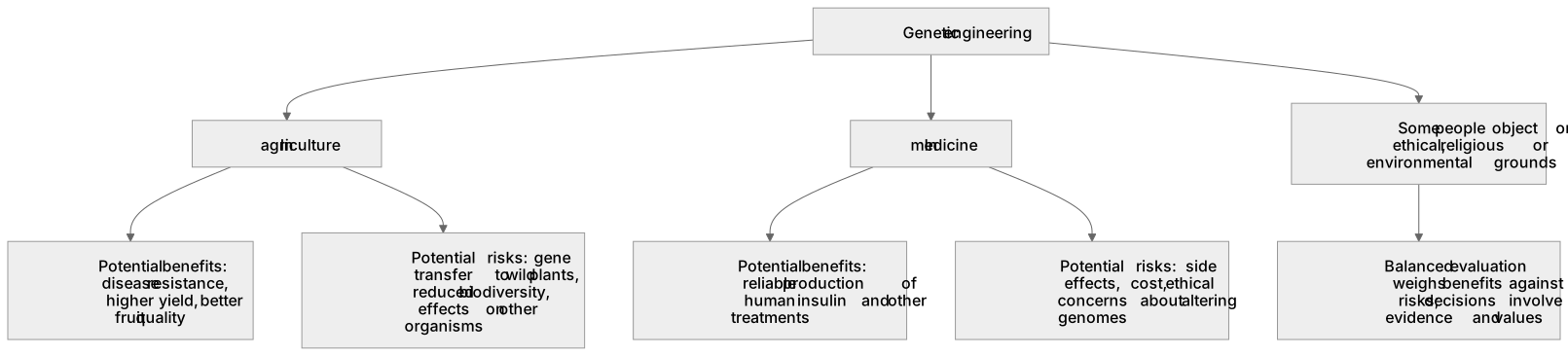
Genetic engineering can bring benefits and risks, and people hold different views about it. In agriculture, benefits include crops resistant to disease, improved yields and better fruit quality, which can help food supply. Risks include genes spreading to wild plants, reduced biodiversity, and effects on non-target organisms. In medicine, benefits include reliable production of human insulin and other treatments, while risks include possible side effects, high cost, and ethical concerns about altering genomes. Some people object on religious or ethical grounds, or because they worry about long-term effects and unequal access. A balanced answer explains both sides and recognises that evidence and values both influence decisions.
What earns the marks
- Benefits of genetic engineering in agriculture, such as disease resistance, higher yield and better fruit quality.
- Risks of genetic engineering in agriculture, such as gene transfer to wild plants, reduced biodiversity or effects on other organisms.
- Benefits of genetic engineering in medicine, such as reliable production of human insulin and other treatments.
- Risks of genetic engineering in medicine, such as side effects, cost or ethical concerns about altering genomes.
- Some people object to genetic engineering on ethical, religious or environmental grounds.
- A balanced evaluation weighs benefits against risks and recognises that decisions involve both evidence and values.
Common mistakes and how to put them right
Listing only benefits or only risks.
Put it right by giving at least one benefit and one risk for each context.
Treating all objections as unscientific.
Put it right by recognising ethical, religious and environmental reasons as valid viewpoints.
Confusing a risk with a proven harm.
Put it right by describing risks as possible outcomes that may or may not occur.
Exam tips
- Structure your answer by context: agriculture first, then medicine, with benefits and risks for each.
- Use words such as may, could and potential to show that risks are not certainties.
- Include a clear statement that some people object, and give a reason for the objection.
Try the lesson
The start of the Genetic engineering: Students should be able to explain the potential benefits and risks of genetic engineering in agriculture and in medicine and that some people have objections. lesson, made from checked teaching notes for this specification point.
Have a go first
Which of the following describes a potential benefit of genetic engineering in agriculture?
Listen
Genetic engineering can bring benefits and risks, and people hold different views about it. In agriculture, benefits include crops resistant to disease, improved yields and better fruit quality, which can help food supply. Risks include genes spreading to wild plants, reduced biodiversity, and effects on non-target organisms. In medicine, benefits include reliable production of human insulin and other treatments, while risks include possible side effects, high cost, and ethical concerns about altering genomes. Some people object on religious or ethical grounds, or because they worry about long-term effects and unequal access. A balanced answer explains both sides and recognises that evidence and values both influence decisions. A strong answer earns marks for these points. Benefits of genetic engineering in agriculture, such as disease resistance, higher yield and better fruit quality. Risks of genetic engineering in agriculture, such as gene transfer to wild plants, reduced biodiversity or effects on other organisms. Benefits of genetic engineering in medicine, such as reliable production of human insulin and other treatments. Risks of genetic engineering in medicine, such as side effects, cost or ethical concerns about altering genomes. A common slip: Listing only benefits or only risks. Instead, giving at least one benefit and one risk for each context. Exam tip: Structure your answer by context: agriculture first, then medicine, with benefits and risks for each.
See it
Key words
Say what each word means before you turn the card.
Benefits and risks
Try answering aloud or in your head before turning the card.
Agriculture and medicine contexts
Try answering aloud or in your head before turning the card.
Ethical and religious objections
Try answering aloud or in your head before turning the card.
Evidence-based evaluation
Try answering aloud or in your head before turning the card.
See every definition
- Benefits and risks
- The potential advantages and possible negative outcomes of genetic engineering, which students should explain for agriculture and medicine.
- Agriculture and medicine contexts
- The two settings in which potential benefits and risks of genetic engineering should be explained, with at least one benefit and one risk for each.
- Ethical and religious objections
- Reasons some people object to genetic engineering on ethical, religious or environmental grounds, which are valid viewpoints.
- Evidence-based evaluation
- A balanced evaluation that weighs benefits against risks and recognises that decisions involve both evidence and values.
Label the diagram
Some boxes have lost their names. Pick the right name for each number.
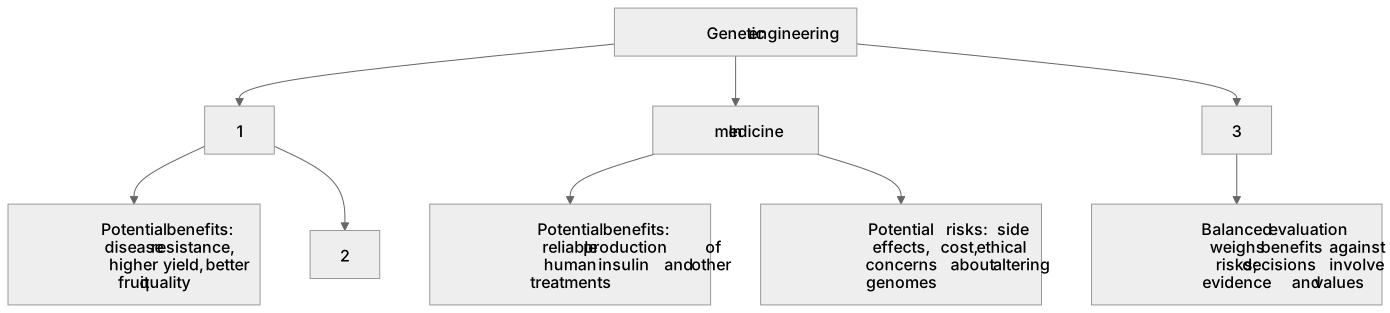
1Box 1
2Box 2
3Box 3
There is more to this lesson
The full lesson goes on to check your understanding and help you earn the marks. Create a free account to carry on, with your progress saved.
A week of Premium from your first lesson · Then the free plan continues · No card, no charge
Test your understanding of Genetic engineering: Students should be able to explain the potential benefits and risks of genetic engineering in agriculture and in medicine and that some people have objections.
Active recall beats re-reading. Take an instant quiz now to test what you’ve learned and lock it into long-term memory.
A week of Premium from your first lesson · Then the free plan continues · No card, no charge