AQA · GCSE · Biology
Course version: 8461 · Version from Sept 2018
The alleles present, or genotype, operate at a molecular level to develop…
Full specification wording
Genetic inheritance: The alleles present, or genotype, operate at a molecular level to develop characteristics that can be expressed as a phenotype.
The genotype is the combination of alleles an organism carries.
Checked against the AQA 8461 specification (opens in a new tab) on .
- Point 3 of 11
- 3 key terms
Study notes
From the checked teaching notes for this specification point.
The idea
The genotype is the combination of alleles an organism carries. Alleles are versions of a gene, and a gene is a length of DNA that codes for a protein. At the molecular level, the DNA base sequence of an allele determines the amino acid sequence of that protein, and therefore its shape and function. Proteins act as enzymes, structural components, carriers or signalling molecules, so they build the observable characteristics we call the phenotype. For example, an allele coding for a functional enzyme may produce dark pigment in hair or fur, while a different allele coding for a non-functional enzyme may leave the pigment absent. The phenotype also depends on the environment, so genotype is not the only influence.
What earns the marks
- Define genotype as the alleles present for a gene, and phenotype as the observable characteristics of an organism.
- State that a gene is a section of DNA that codes for a protein, and that different alleles have different DNA base sequences.
- Explain that the base sequence determines the amino acid sequence, which determines the shape and function of the protein produced.
- Link the protein produced to a characteristic, for example an enzyme controlling pigment production or a structural protein affecting a feature.
- Recognise that the phenotype results from the proteins produced by the alleles, and may also be affected by environmental factors.
Common mistakes and how to put them right
Treating genotype and phenotype as the same thing.
Put it right by stating that genotype is the alleles present while phenotype is the observable characteristic.
Saying that alleles directly code for characteristics.
Put it right by explaining that alleles code for proteins, and proteins produce the characteristic.
Assuming the phenotype depends only on genotype.
Put it right by noting that the environment can also influence the phenotype.
Exam tips
- Use the words genotype and phenotype precisely, and make the link from allele to protein to characteristic explicit in your answer.
- When asked to explain, include the sequence DNA base sequence, amino acid sequence, protein shape and function, then characteristic.
- If a question gives a specific example, apply the general chain to that example rather than repeating a memorised definition.
Try the lesson
The start of the Genetic inheritance: The alleles present, or genotype, operate at a molecular level to develop characteristics that can be expressed as a phenotype. lesson, made from checked teaching notes for this specification point.
Have a go first
Which term describes the alleles that are present in an organism?
Listen
The genotype is the combination of alleles an organism carries. Alleles are versions of a gene, and a gene is a length of DNA that codes for a protein. At the molecular level, the DNA base sequence of an allele determines the amino acid sequence of that protein, and therefore its shape and function. Proteins act as enzymes, structural components, carriers or signalling molecules, so they build the observable characteristics we call the phenotype. For example, an allele coding for a functional enzyme may produce dark pigment in hair or fur, while a different allele coding for a non-functional enzyme may leave the pigment absent. The phenotype also depends on the environment, so genotype is not the only influence. A strong answer earns marks for these points. Define genotype as the alleles present for a gene, and phenotype as the observable characteristics of an organism. State that a gene is a section of DNA that codes for a protein, and that different alleles have different DNA base sequences. Explain that the base sequence determines the amino acid sequence, which determines the shape and function of the protein produced. Link the protein produced to a characteristic, for example an enzyme controlling pigment production or a structural protein affecting a feature. A common slip: Treating genotype and phenotype as the same thing. Instead, stating that genotype is the alleles present while phenotype is the observable characteristic. Exam tip: Use the words genotype and phenotype precisely, and make the link from allele to protein to characteristic explicit in your answer.
See it
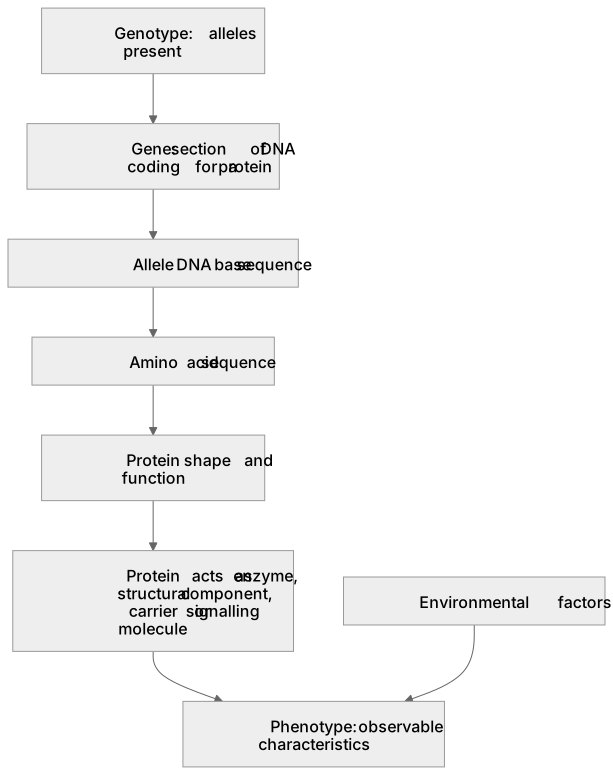
Key words
Say what each word means before you turn the card.
Genotype
Try answering aloud or in your head before turning the card.
Phenotype
Try answering aloud or in your head before turning the card.
Gene
Try answering aloud or in your head before turning the card.
See every definition
- Genotype
- The alleles present for a gene, which operate at a molecular level to develop characteristics.
- Phenotype
- The observable characteristics of an organism, which result from the proteins produced by the alleles.
- Gene
- A length of DNA that codes for a protein, with different alleles having different DNA base sequences.
Label the diagram
Some boxes have lost their names. Pick the right name for each number.
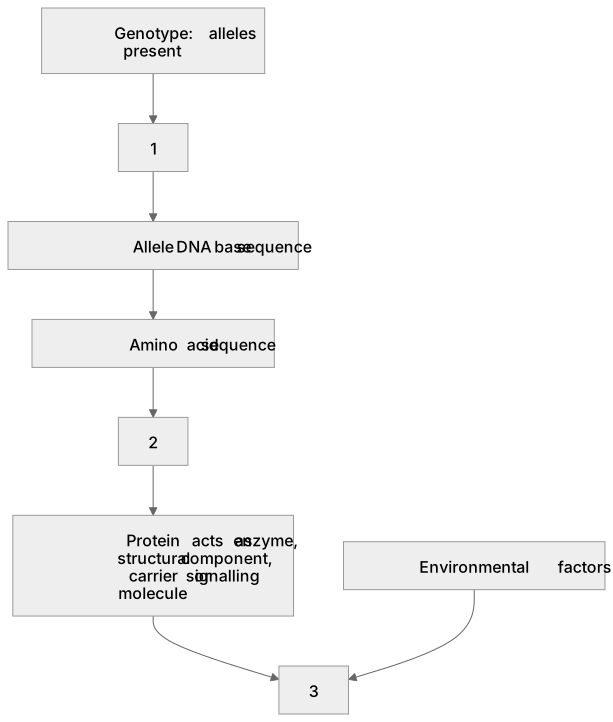
1Box 1
2Box 2
3Box 3
There is more to this lesson
The full lesson goes on to check your understanding and help you earn the marks. Create a free account to carry on, with your progress saved.
A week of Premium from your first lesson · Then the free plan continues · No card, no charge
Test your understanding of Genetic inheritance: The alleles present, or genotype, operate at a molecular level to develop characteristics that can be expressed as a phenotype.
Active recall beats re-reading. Take an instant quiz now to test what you’ve learned and lock it into long-term memory.
A week of Premium from your first lesson · Then the free plan continues · No card, no charge