AQA · GCSE · Biology
Course version: 8461 · Version from Sept 2018
The water cycle provides fresh water for plants and animals on land before…
Full specification wording
How materials are cycled: The water cycle provides fresh water for plants and animals on land before draining into the seas. Water is continuously evaporated and precipitated.
The water cycle moves water between the oceans, atmosphere and land.
Checked against the AQA 8461 specification (opens in a new tab) on .
- Point 4 of 5
- 4 key terms
Study notes
From the checked teaching notes for this specification point.
The idea
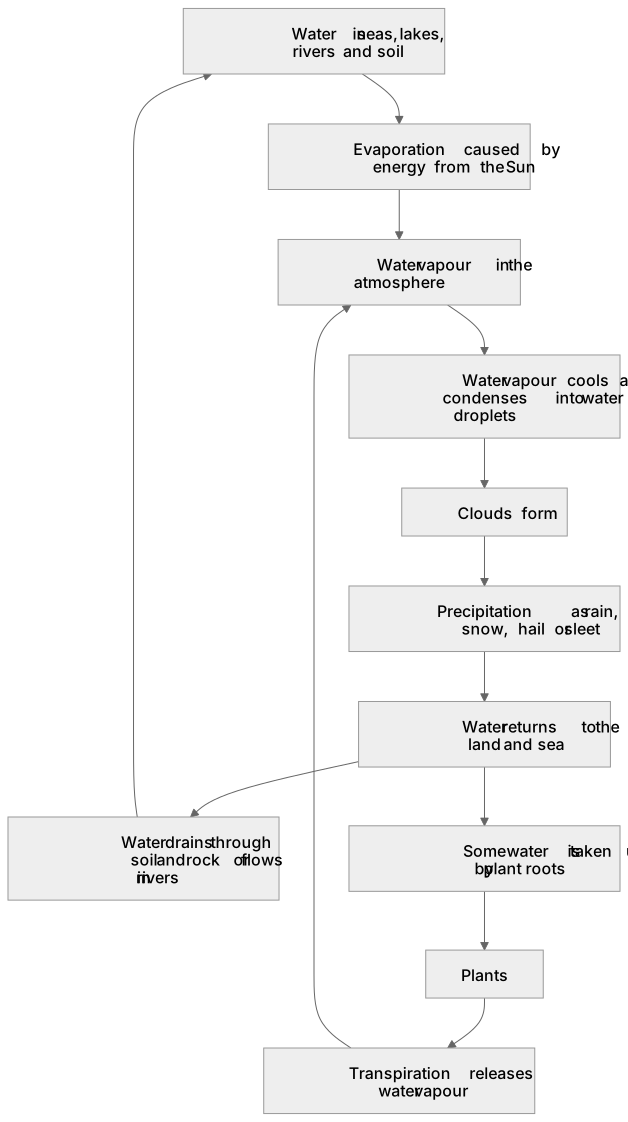
The water cycle moves water between the oceans, atmosphere and land. Energy from the Sun evaporates water from seas, lakes, rivers and soil. Transpiration from plant leaves also adds water vapour to the air. As moist air rises and cools, water vapour condenses into droplets that form clouds. Precipitation as rain, snow, hail or sleet returns water to the land and sea. On land, some water runs over the surface or drains through soil and rock into rivers, eventually reaching the sea. Some soaks into the ground and is taken up by plant roots. This continuous evaporation and precipitation supplies the fresh water that land plants and animals need, while the seas act as the main reservoir.
What earns the marks
- Energy from the Sun causes evaporation of water from seas, lakes, rivers and soil, changing liquid water into water vapour.
- Transpiration from plants releases water vapour into the atmosphere, adding to the water cycle.
- Water vapour cools and condenses to form clouds, and precipitation returns water to the land and seas.
- Water on land drains through soil and rock or flows in rivers back to the sea, while some is taken up by plant roots.
- The cycle continuously supplies fresh water to land organisms before water eventually returns to the seas.
Common mistakes and how to put them right
Saying water is created by the water cycle.
Put it right: Water is recycled and its total amount is conserved.
Confusing evaporation with condensation.
Put it right: Evaporation changes liquid water to vapour, while condensation changes vapour to liquid droplets.
Thinking precipitation only falls as rain.
Put it right: Precipitation includes snow, hail and sleet as well as rain.
Exam tips
- Name the processes in order: evaporation, transpiration, condensation, precipitation and drainage or run-off.
- Use the term 'water vapour' for the gas and 'water droplets' for the liquid in clouds to show precise understanding.
- When explaining fresh water supply, state that precipitation on land provides water for plants and animals before drainage returns it to the sea.
Try the lesson
The start of the How materials are cycled: The water cycle provides fresh water for plants and animals on land before draining into the seas. Water is continuously evaporated and precipitated. lesson, made from checked teaching notes for this specification point.
Have a go first
In the water cycle, what is the name of the process in which water changes from a liquid into a gas?
Listen
The water cycle moves water between the oceans, atmosphere and land. Energy from the Sun evaporates water from seas, lakes, rivers and soil. Transpiration from plant leaves also adds water vapour to the air. As moist air rises and cools, water vapour condenses into droplets that form clouds. Precipitation as rain, snow, hail or sleet returns water to the land and sea. On land, some water runs over the surface or drains through soil and rock into rivers, eventually reaching the sea. Some soaks into the ground and is taken up by plant roots. This continuous evaporation and precipitation supplies the fresh water that land plants and animals need, while the seas act as the main reservoir. A strong answer earns marks for these points. Energy from the Sun causes evaporation of water from seas, lakes, rivers and soil, changing liquid water into water vapour. Transpiration from plants releases water vapour into the atmosphere, adding to the water cycle. Water vapour cools and condenses to form clouds, and precipitation returns water to the land and seas. Water on land drains through soil and rock or flows in rivers back to the sea, while some is taken up by plant roots. A common slip: Saying water is created by the water cycle. Instead, water is recycled and its total amount is conserved. Exam tip: Name the processes in order: evaporation, transpiration, condensation, precipitation and drainage or run-off.
See it
Key words
Say what each word means before you turn the card.
Evaporation and condensation
Try answering aloud or in your head before turning the card.
Transpiration and plant water uptake
Try answering aloud or in your head before turning the card.
Fresh water supply and drainage
Try answering aloud or in your head before turning the card.
Cycling of matter
Try answering aloud or in your head before turning the card.
See every definition
- Evaporation and condensation
- Energy from the Sun causes evaporation of water from seas, lakes, rivers and soil, while water vapour cools and condenses to form clouds.
- Transpiration and plant water uptake
- Transpiration from plants releases water vapour into the atmosphere, and some water on land is taken up by plant roots.
- Fresh water supply and drainage
- The cycle continuously supplies fresh water to land organisms before water eventually returns to the seas, with water on land draining through soil and rock or flowing in rivers back to the sea.
- Cycling of matter
- Water is recycled and its total amount is conserved, as the cycle continuously supplies fresh water to land organisms before water eventually returns to the seas.
Label the diagram
Some boxes have lost their names. Pick the right name for each number.
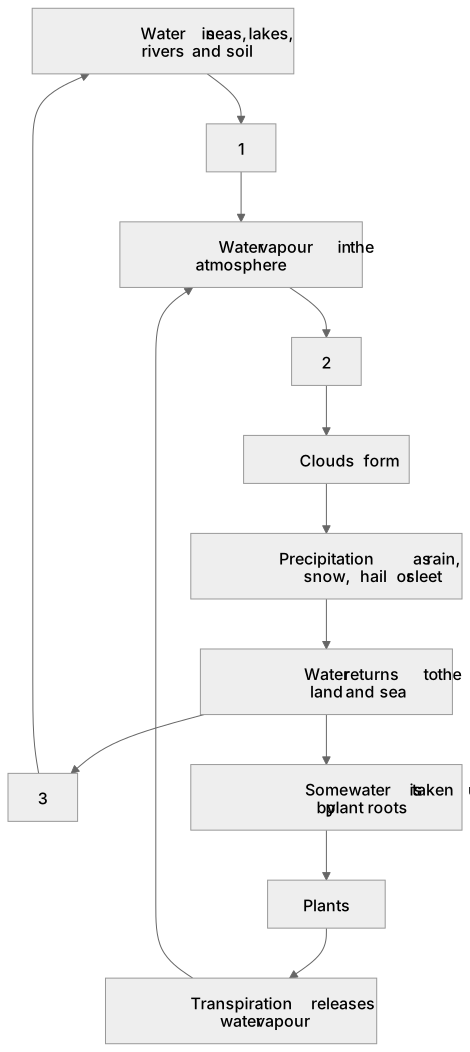
1Box 1
2Box 2
3Box 3
There is more to this lesson
The full lesson goes on to check your understanding and help you earn the marks. Create a free account to carry on, with your progress saved.
A week of Premium from your first lesson · Then the free plan continues · No card, no charge
Test your understanding of How materials are cycled: The water cycle provides fresh water for plants and animals on land before draining into the seas. Water is continuously evaporated and precipitated.
Active recall beats re-reading. Take an instant quiz now to test what you’ve learned and lock it into long-term memory.
A week of Premium from your first lesson · Then the free plan continues · No card, no charge