AQA · GCSE · Biology
Course version: 8461 · Version from Sept 2018
If a pathogen enters the body the immune system tries to destroy the…
Full specification wording
Human defence systems: If a pathogen enters the body the immune system tries to destroy the pathogen.
Antitoxins neutralise toxins produced by bacteria, not the pathogens themselves.
Checked against the AQA 8461 specification (opens in a new tab) on .
- Point 3 of 4
- 4 key terms
Study notes
From the checked teaching notes for this specification point.
The idea
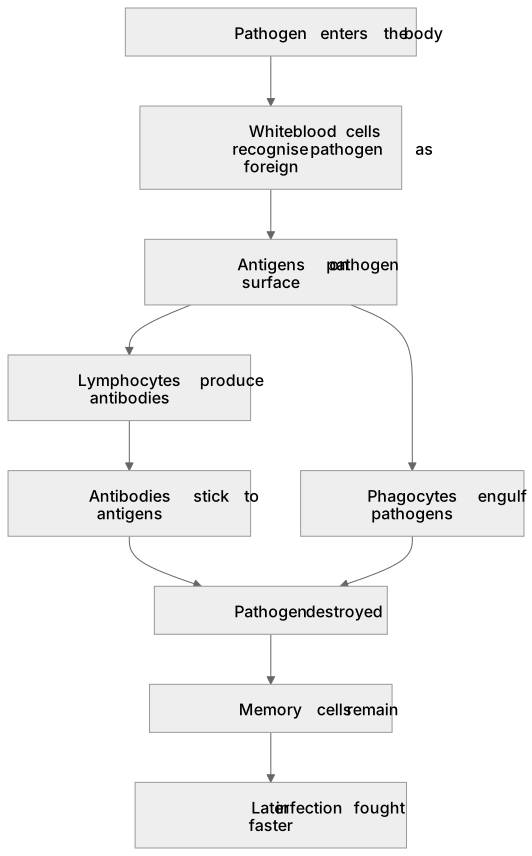
Antitoxins neutralise toxins produced by bacteria, not the pathogens themselves. A pathogen is a microorganism that causes disease, such as a bacterium, virus, fungus, or protist. The body has non-specific defences that try to stop pathogens entering, including the skin, mucus, cilia, and stomach acid. If a pathogen gets past these barriers, the immune system responds. White blood cells recognise the pathogen as foreign, usually by its antigens, and act to destroy it. For example, phagocytes can engulf pathogens, while lymphocytes produce antibodies that stick to antigens and help destroy the pathogen. The response is specific, and memory cells can remain so a later infection is fought faster.
What earns the marks
- Antitoxins neutralise toxins produced by bacteria, not the pathogens themselves.
- A pathogen is a microorganism that causes disease, for example a bacterium or virus.
- The body has non-specific barriers such as skin, mucus and stomach acid that reduce pathogen entry.
- If a pathogen enters the body, white blood cells recognise it as foreign, often through antigens on its surface.
- Phagocytosis and antibody production are ways white blood cells destroy pathogens.
Common mistakes and how to put them right
Stating antitoxins destroy pathogens.
Put it right: Antitoxins neutralise toxins produced by bacteria, not the pathogens themselves.
Thinking all microorganisms are pathogens.
Put it right: Only some microorganisms cause disease, and many are harmless or useful.
Believing the skin is part of the immune system's internal response.
Put it right: The skin is a non-specific barrier that prevents entry.
Exam tips
- Use the term pathogen correctly and give a named example, such as a bacterium or virus, to show understanding.
- Link the entry of a pathogen to a specific defence, such as phagocytosis or antibody production, rather than saying the body 'fights germs'.
Try the lesson
The start of the Human defence systems: If a pathogen enters the body the immune system tries to destroy the pathogen. lesson, made from checked teaching notes for this specification point.
Have a go first
A cut in the skin lets bacteria enter the blood. Which statement best describes the response of the immune system to these bacteria?
Listen
Antitoxins neutralise toxins produced by bacteria, not the pathogens themselves. A pathogen is a microorganism that causes disease, such as a bacterium, virus, fungus, or protist. The body has non-specific defences that try to stop pathogens entering, including the skin, mucus, cilia, and stomach acid. If a pathogen gets past these barriers, the immune system responds. White blood cells recognise the pathogen as foreign, usually by its antigens, and act to destroy it. For example, phagocytes can engulf pathogens, while lymphocytes produce antibodies that stick to antigens and help destroy the pathogen. The response is specific, and memory cells can remain so a later infection is fought faster. A strong answer earns marks for these points. Antitoxins neutralise toxins produced by bacteria, not the pathogens themselves. A pathogen is a microorganism that causes disease, for example a bacterium or virus. The body has non-specific barriers such as skin, mucus and stomach acid that reduce pathogen entry. If a pathogen enters the body, white blood cells recognise it as foreign, often through antigens on its surface. A common slip: Stating antitoxins destroy pathogens. Instead, antitoxins neutralise toxins produced by bacteria, not the pathogens themselves. Exam tip: Use the term pathogen correctly and give a named example, such as a bacterium or virus, to show understanding.
See it
Key words
Say what each word means before you turn the card.
Pathogen
Try answering aloud or in your head before turning the card.
Non-specific defences
Try answering aloud or in your head before turning the card.
White blood cells
Try answering aloud or in your head before turning the card.
Antitoxins
Try answering aloud or in your head before turning the card.
See every definition
- Pathogen
- A microorganism that causes disease, such as a bacterium, virus, fungus, or protist.
- Non-specific defences
- Barriers including the skin, mucus, cilia, and stomach acid that try to stop pathogens entering.
- White blood cells
- Cells that recognise a pathogen as foreign, usually by its antigens, and act to destroy it.
- Antitoxins
- Substances that neutralise toxins produced by bacteria, not the pathogens themselves.
Label the diagram
Some boxes have lost their names. Pick the right name for each number.
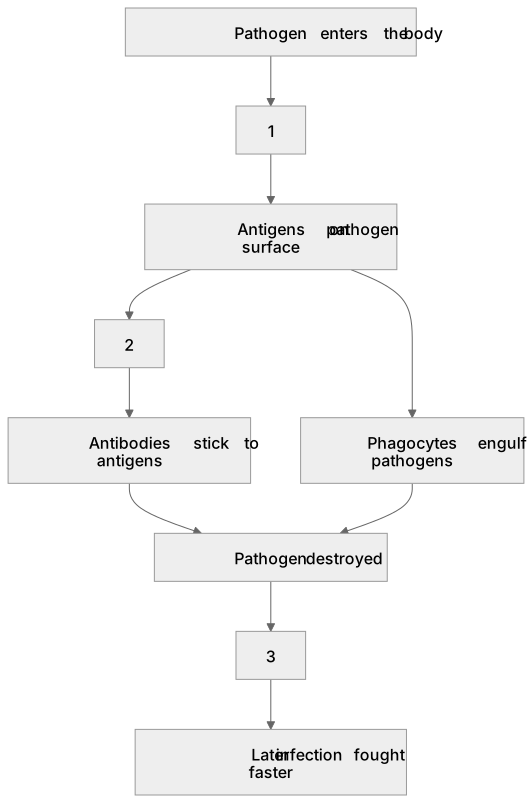
1Box 1
2Box 2
3Box 3
There is more to this lesson
The full lesson goes on to check your understanding and help you earn the marks. Create a free account to carry on, with your progress saved.
A week of Premium from your first lesson · Then the free plan continues · No card, no charge
Test your understanding of Human defence systems: If a pathogen enters the body the immune system tries to destroy the pathogen.
Active recall beats re-reading. Take an instant quiz now to test what you’ve learned and lock it into long-term memory.
A week of Premium from your first lesson · Then the free plan continues · No card, no charge