AQA · GCSE · Biology
Course version: 8461 · Version from Sept 2018
(HT only) The digestion of proteins from the diet results in excess amino…
Full specification wording
Maintaining water and nitrogen balance in the body (biology only): (HT only) The digestion of proteins from the diet results in excess amino acids which need to be excreted safely.
Proteins in the diet are digested into amino acids, which are absorbed into the blood.
Checked against the AQA 8461 specification (opens in a new tab) on .
- Point 7 of 17
- 4 key terms
Study notes
From the checked teaching notes for this specification point.
The idea
Proteins in the diet are digested into amino acids, which are absorbed into the blood. The body uses amino acids to build new proteins, but any excess cannot be stored. The amino group is removed and converted into ammonia, which is toxic, and then into urea in the liver. Urea is less harmful and is carried in the blood to the kidneys, where it is removed in urine. The remaining parts of the amino acids can be used in respiration to release energy. This process excretes the nitrogen safely and helps maintain nitrogen balance in the body.
What earns the marks
- Dietary proteins are digested into amino acids, which are absorbed into the blood.
- Excess amino acids cannot be stored by the body and must be broken down.
- Deamination in the liver removes the amino group from excess amino acids.
- The amino group is converted to ammonia and then to urea, which is less toxic.
- Urea is transported in the blood to the kidneys and excreted in urine.
Common mistakes and how to put them right
Thinking excess amino acids are stored like fat.
Put it right: They are broken down in the liver by deamination.
Believing urea is formed directly from proteins in the stomach.
Put it right: Proteins are digested to amino acids, and urea is made from excess amino acids in the liver.
Confusing ammonia and urea.
Put it right: Ammonia is toxic and is converted to the less toxic urea before excretion.
Exam tips
- Name the liver as the organ where deamination of excess amino acids occurs.
- State the sequence excess amino acids → ammonia → urea → kidneys → urine.
- Explain that converting ammonia to urea makes the nitrogen waste safer to transport and excrete.
Try the lesson
The start of the Maintaining water and nitrogen balance in the body (biology only): (HT only) The digestion of proteins from the diet results in excess amino acids which need to be excreted safely. lesson, made from checked teaching notes for this specification point.
Have a go first
Digestion of proteins from the diet produces amino acids. What happens to the excess amino acids that the body does not need?
Listen
Proteins in the diet are digested into amino acids, which are absorbed into the blood. The body uses amino acids to build new proteins, but any excess cannot be stored. The amino group is removed and converted into ammonia, which is toxic, and then into urea in the liver. Urea is less harmful and is carried in the blood to the kidneys, where it is removed in urine. The remaining parts of the amino acids can be used in respiration to release energy. This process excretes the nitrogen safely and helps maintain nitrogen balance in the body. A strong answer earns marks for these points. Dietary proteins are digested into amino acids, which are absorbed into the blood. Excess amino acids cannot be stored by the body and must be broken down. Deamination in the liver removes the amino group from excess amino acids. The amino group is converted to ammonia and then to urea, which is less toxic. A common slip: Thinking excess amino acids are stored like fat. Instead, they are broken down in the liver by deamination. Exam tip: Name the liver as the organ where deamination of excess amino acids occurs.
See it
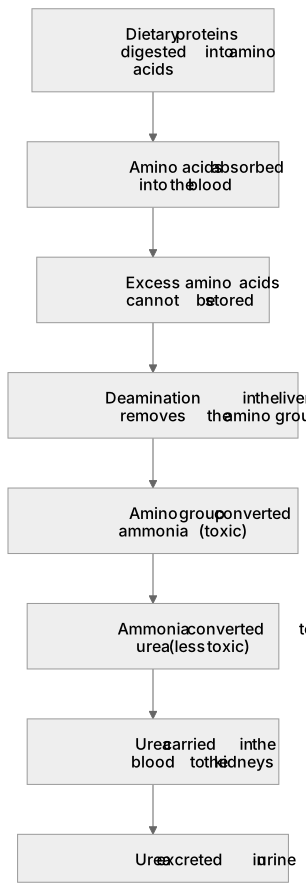
Put it in order
Put these steps in the order they happen.
- 1. Amino group converted to ammonia (toxic)
- 2. Urea excreted in urine
- 3. Ammonia converted to urea (less toxic)
- 4. Dietary proteins digested into amino acids
- 5. Amino acids absorbed into the blood
- 6. Urea carried in the blood to the kidneys
- 7. Excess amino acids cannot be stored
- 8. Deamination in the liver removes the amino group
Key words
Say what each word means before you turn the card.
Deamination
Try answering aloud or in your head before turning the card.
Ammonia
Try answering aloud or in your head before turning the card.
Urea
Try answering aloud or in your head before turning the card.
Excretion
Try answering aloud or in your head before turning the card.
See every definition
- Deamination
- Excess amino acids are broken down in the liver by deamination, which removes the amino group.
- Ammonia
- The amino group removed from excess amino acids is converted into ammonia, which is toxic.
- Urea
- Ammonia is converted into urea in the liver, which is less harmful and is carried in the blood to the kidneys.
- Excretion
- Urea is removed in urine by the kidneys, which excretes the nitrogen safely and helps maintain nitrogen balance in the body.
Label the diagram
Some boxes have lost their names. Pick the right name for each number.
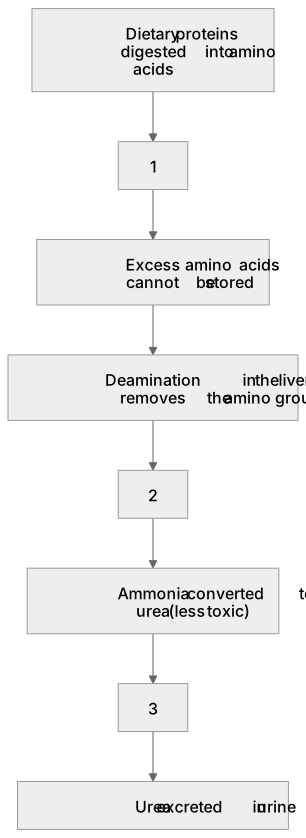
1Box 1
2Box 2
3Box 3
There is more to this lesson
The full lesson goes on to check your understanding and help you earn the marks. Create a free account to carry on, with your progress saved.
A week of Premium from your first lesson · Then the free plan continues · No card, no charge
Test your understanding of Maintaining water and nitrogen balance in the body (biology only): (HT only) The digestion of proteins from the diet results in excess amino acids which need to be excreted safely.
Active recall beats re-reading. Take an instant quiz now to test what you’ve learned and lock it into long-term memory.
A week of Premium from your first lesson · Then the free plan continues · No card, no charge