AQA · GCSE · Biology
Course version: 8461 · Version from Sept 2018
Meiosis: The new cell divides by mitosis.
After fertilisation, the zygote is a single cell with the normal diploid number of chromosomes.
Checked against the AQA 8461 specification (opens in a new tab) on .
- Point 5 of 7
Study notes
From the checked teaching notes for this specification point.
The idea
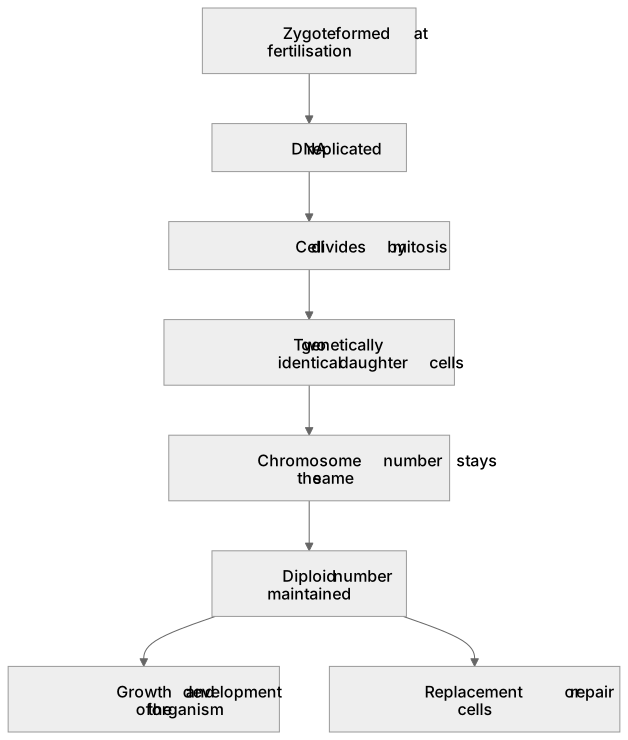
After fertilisation, the zygote is a single cell with the normal diploid number of chromosomes. To grow into a multicellular organism, this cell must divide repeatedly. It does so by mitosis, a type of cell division that produces two genetically identical daughter cells. Before each division, the DNA is replicated so that each daughter cell receives a complete set of chromosomes. The chromosome number stays the same, so the diploid number is maintained throughout growth.
For example: A human zygote with 46 chromosomes divides by mitosis to produce cells that also contain 46 chromosomes, allowing the embryo to develop and the organism to grow and repair tissues.
What earns the marks
- The zygote formed at fertilisation divides by mitosis.
- Mitosis produces two genetically identical daughter cells from one parent cell.
- DNA is replicated before mitosis so each daughter cell receives a complete set of chromosomes.
- The chromosome number remains constant during mitosis, so the diploid number is maintained.
- Mitosis enables growth of the organism and replacement or repair of cells.
Common mistakes and how to put them right
Confusing mitosis with meiosis.
Put it right by stating that mitosis produces two identical diploid cells, whereas meiosis produces four genetically different haploid gametes.
Thinking the chromosome number halves during mitosis.
Put it right by stating that the chromosome number stays the same.
Believing mitosis produces gametes.
Put it right by stating that mitosis produces body cells for growth and repair.
Exam tips
- State that the daughter cells are genetically identical and diploid.
- Use the human zygote with 46 chromosomes as a concrete example of the chromosome number staying constant.
- Link mitosis after fertilisation to growth and development of the organism.
Try the lesson
The start of the Meiosis: The new cell divides by mitosis. lesson, made from checked teaching notes for this specification point.
Have a go first
After fertilisation, the new cell divides by mitosis. What is the main result of mitosis in this new cell?
Listen
After fertilisation, the zygote is a single cell with the normal diploid number of chromosomes. To grow into a multicellular organism, this cell must divide repeatedly. It does so by mitosis, a type of cell division that produces two genetically identical daughter cells. Before each division, the DNA is replicated so that each daughter cell receives a complete set of chromosomes. The chromosome number stays the same, so the diploid number is maintained throughout growth. For example, a human zygote with 46 chromosomes divides by mitosis to produce cells that also contain 46 chromosomes, allowing the embryo to develop and the organism to grow and repair tissues. A strong answer earns marks for these points. The zygote formed at fertilisation divides by mitosis. Mitosis produces two genetically identical daughter cells from one parent cell. DNA is replicated before mitosis so each daughter cell receives a complete set of chromosomes. The chromosome number remains constant during mitosis, so the diploid number is maintained. A common slip: Confusing mitosis with meiosis. Instead, stating that mitosis produces two identical diploid cells, whereas meiosis produces four genetically different haploid gametes. Exam tip: State that the daughter cells are genetically identical and diploid.
See it
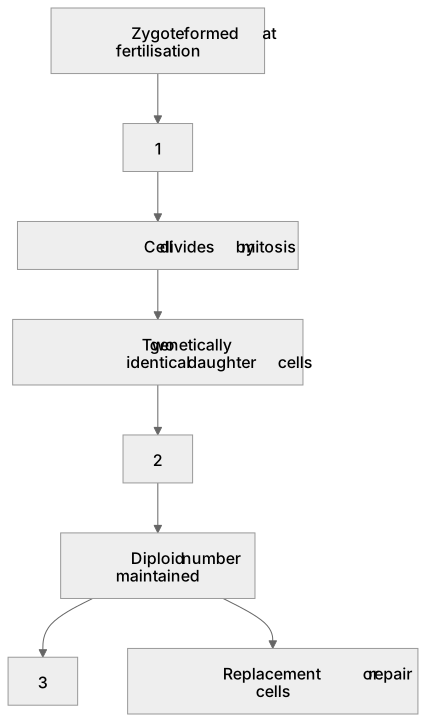
Label the diagram
Some boxes have lost their names. Pick the right name for each number.
1Box 1
2Box 2
3Box 3
There is more to this lesson
The full lesson goes on to check your understanding and help you earn the marks. Create a free account to carry on, with your progress saved.
A week of Premium from your first lesson · Then the free plan continues · No card, no charge
Test your understanding of Meiosis: The new cell divides by mitosis.
Active recall beats re-reading. Take an instant quiz now to test what you’ve learned and lock it into long-term memory.
A week of Premium from your first lesson · Then the free plan continues · No card, no charge