AQA · GCSE · Biology
Course version: 8461 · Version from Sept 2018
Thyroxine levels are controlled by negative feedback.
Full specification wording
Negative feedback (HT only): Thyroxine levels are controlled by negative feedback.
Negative feedback keeps thyroxine concentration close to a set point.
Checked against the AQA 8461 specification (opens in a new tab) on .
- Point 5 of 5
- 2 key terms
Study notes
From the checked teaching notes for this specification point.
The idea
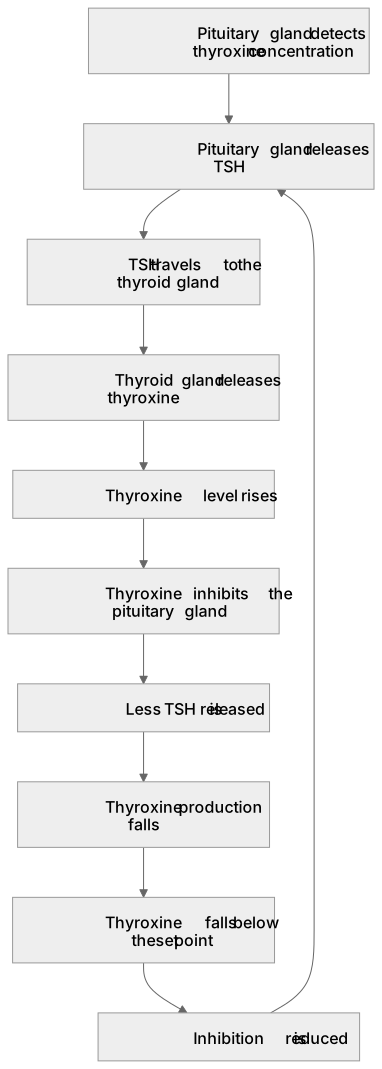
Negative feedback keeps thyroxine concentration close to a set point. The pituitary gland detects the level of thyroxine in the blood and releases thyroid stimulating hormone (TSH). TSH travels to the thyroid gland and stimulates it to release thyroxine. As thyroxine rises, it inhibits the pituitary gland, so less TSH is released and thyroxine production falls. When thyroxine falls below the set point, inhibition is reduced, so more TSH is released and thyroxine rises again. This is a loop: a change is detected, a response opposes the change, and the original level is restored. The same principle explains why thyroxine stays stable despite changes in activity or temperature.
What earns the marks
- The pituitary gland detects thyroxine concentration and releases TSH.
- TSH stimulates the thyroid gland to release thyroxine into the blood.
- Rising thyroxine levels inhibit the pituitary gland, reducing TSH release.
- Falling thyroxine reduces inhibition, so TSH release increases and thyroxine rises.
- The loop restores thyroxine concentration towards its normal level, which is an example of negative feedback.
Common mistakes and how to put them right
Writing that thyroxine stimulates its own release.
Put it right: High thyroxine inhibits the pituitary gland, reducing further release.
Confusing the roles of the pituitary and thyroid glands.
Put it right: The pituitary releases TSH, which stimulates the thyroid to release thyroxine.
Describing negative feedback as a process that increases the original change.
Put it right: Negative feedback opposes the change and returns the level towards the set point.
Exam tips
- Name the two organs in order: pituitary gland and thyroid gland, and state the hormone each releases.
- Use the phrase 'opposes the change' when explaining negative feedback, then apply it to thyroxine by saying that high thyroxine reduces TSH release.
- If asked to predict the effect of an underactive thyroid, trace the loop: less thyroxine means less inhibition, so TSH levels rise.
Try the lesson
The start of the Negative feedback (HT only): Thyroxine levels are controlled by negative feedback. lesson, made from checked teaching notes for this specification point.
Have a go first
In the negative feedback control of thyroxine, which gland detects the level of thyroxine in the blood and releases TSH?
Listen
Negative feedback keeps thyroxine concentration close to a set point. The pituitary gland detects the level of thyroxine in the blood and releases thyroid stimulating hormone (TSH). TSH travels to the thyroid gland and stimulates it to release thyroxine. As thyroxine rises, it inhibits the pituitary gland, so less TSH is released and thyroxine production falls. When thyroxine falls below the set point, inhibition is reduced, so more TSH is released and thyroxine rises again. This is a loop: a change is detected, a response opposes the change, and the original level is restored. The same principle explains why thyroxine stays stable despite changes in activity or temperature. A strong answer earns marks for these points. The pituitary gland detects thyroxine concentration and releases TSH. TSH stimulates the thyroid gland to release thyroxine into the blood. Rising thyroxine levels inhibit the pituitary gland, reducing TSH release. Falling thyroxine reduces inhibition, so TSH release increases and thyroxine rises. A common slip: Writing that thyroxine stimulates its own release. Instead, high thyroxine inhibits the pituitary gland, reducing further release. Exam tip: Name the two organs in order: pituitary gland and thyroid gland, and state the hormone each releases.
See it
Key words
Say what each word means before you turn the card.
Negative feedback
Try answering aloud or in your head before turning the card.
Pituitary control
Try answering aloud or in your head before turning the card.
See every definition
- Negative feedback
- A loop in which a change is detected, a response opposes the change, and the original level is restored.
- Pituitary control
- The pituitary gland detects the level of thyroxine in the blood and releases thyroid stimulating hormone (TSH).
Label the diagram
Some boxes have lost their names. Pick the right name for each number.
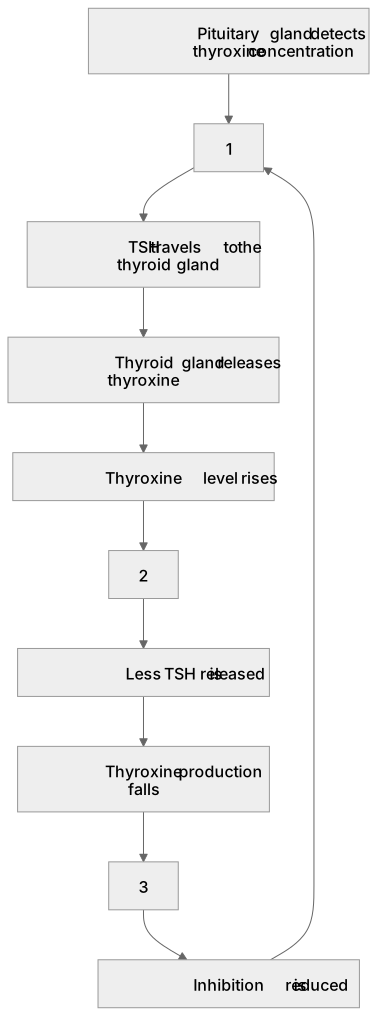
1Box 1
2Box 2
3Box 3
There is more to this lesson
The full lesson goes on to check your understanding and help you earn the marks. Create a free account to carry on, with your progress saved.
A week of Premium from your first lesson · Then the free plan continues · No card, no charge
Test your understanding of Negative feedback (HT only): Thyroxine levels are controlled by negative feedback.
Active recall beats re-reading. Take an instant quiz now to test what you’ve learned and lock it into long-term memory.
A week of Premium from your first lesson · Then the free plan continues · No card, no charge