AQA · GCSE · Biology
Course version: 8461 · Version from Sept 2018
Students should be able to describe physical and chemical plant defence…
Full specification wording
Plant defence responses: Students should be able to describe physical and chemical plant defence responses.
Plants resist invasion by microorganisms using physical barriers and chemical defences.
Checked against the AQA 8461 specification (opens in a new tab) on .
- Point 1 of 7
- 3 key terms
Study notes
From the checked teaching notes for this specification point.
The idea
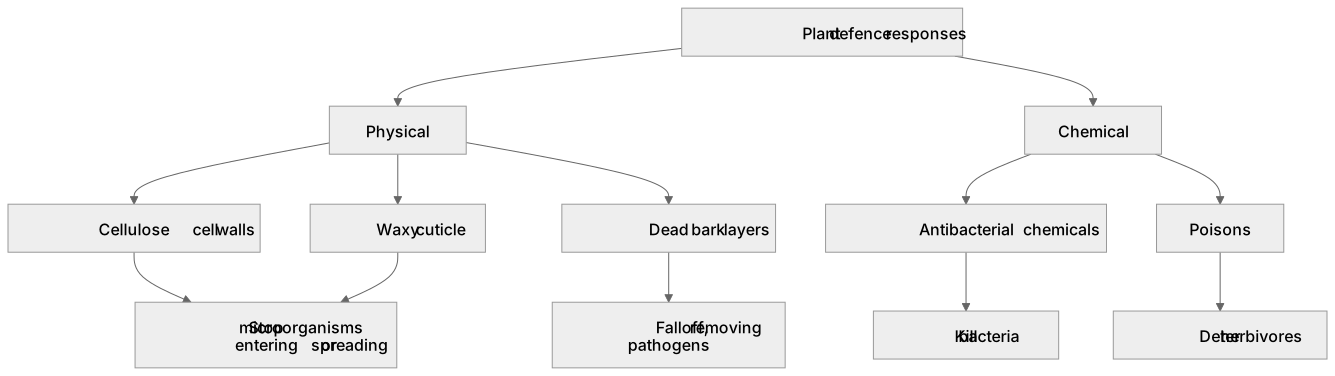
Plants resist invasion by microorganisms using physical barriers and chemical defences. Physical responses block entry or limit spread: cellulose cell walls are strong and rigid, a tough waxy cuticle covers leaves, and layers of dead cells around stems, seen as bark on trees, fall off and take pathogens with them. Chemical responses deter or damage attackers: antibacterial chemicals kill bacteria, and poisons deter herbivores that would otherwise eat the plant and create entry wounds. A useful method is to classify each example as physical or chemical, then explain how it prevents microorganisms from entering or surviving. Descriptions should link the defence to reduced infection or reduced damage, not merely name it.
What earns the marks
- Physical defences stop microorganisms entering or spreading, for example cellulose cell walls, a waxy cuticle and dead bark layers.
- Chemical defences include antibacterial chemicals that kill bacteria and poisons that deter herbivores.
- Bark consists of layers of dead cells around stems that fall off, removing pathogens with them.
- Herbivore damage can create wounds that allow microorganisms to enter, so deterring herbivores is also a defence.
- A strong description names the defence, classifies it as physical or chemical, and explains how it reduces infection or damage.
Common mistakes and how to put them right
Calling the waxy cuticle a chemical defence.
Put it right by classifying it as a physical barrier that prevents water loss and entry of microorganisms.
Saying poisons kill bacteria.
Put it right by stating that poisons deter herbivores, while antibacterial chemicals kill bacteria.
Describing bark as living tissue.
Put it right by stating that bark is made of layers of dead cells that fall off.
Exam tips
- Sort your answer into physical responses and chemical responses so both parts of the statement are covered.
- For each defence, add a short consequence, such as preventing entry, killing bacteria or deterring feeding.
- Use precise terms such as cellulose cell wall, waxy cuticle, bark, antibacterial chemical and poison.
Try the lesson
The start of the Plant defence responses: Students should be able to describe physical and chemical plant defence responses. lesson, made from checked teaching notes for this specification point.
Have a go first
Which of the following is an example of a physical defence response in plants?
Listen
Plants resist invasion by microorganisms using physical barriers and chemical defences. Physical responses block entry or limit spread: cellulose cell walls are strong and rigid, a tough waxy cuticle covers leaves, and layers of dead cells around stems, seen as bark on trees, fall off and take pathogens with them. Chemical responses deter or damage attackers: antibacterial chemicals kill bacteria, and poisons deter herbivores that would otherwise eat the plant and create entry wounds. A useful method is to classify each example as physical or chemical, then explain how it prevents microorganisms from entering or surviving. Descriptions should link the defence to reduced infection or reduced damage, not merely name it. A strong answer earns marks for these points. Physical defences stop microorganisms entering or spreading, for example cellulose cell walls, a waxy cuticle and dead bark layers. Chemical defences include antibacterial chemicals that kill bacteria and poisons that deter herbivores. Bark consists of layers of dead cells around stems that fall off, removing pathogens with them. Herbivore damage can create wounds that allow microorganisms to enter, so deterring herbivores is also a defence. A common slip: Calling the waxy cuticle a chemical defence. Instead, classifying it as a physical barrier that prevents water loss and entry of microorganisms. Exam tip: Sort your answer into physical responses and chemical responses so both parts of the statement are covered.
See it
Key words
Say what each word means before you turn the card.
Cellulose cell walls
Try answering aloud or in your head before turning the card.
Waxy cuticle
Try answering aloud or in your head before turning the card.
Poisons
Try answering aloud or in your head before turning the card.
See every definition
- Cellulose cell walls
- Strong and rigid physical barriers that stop microorganisms entering or spreading.
- Waxy cuticle
- A tough physical barrier covering leaves that prevents water loss and entry of microorganisms.
- Poisons
- Chemical defences that deter herbivores which would otherwise eat the plant and create entry wounds.
Label the diagram
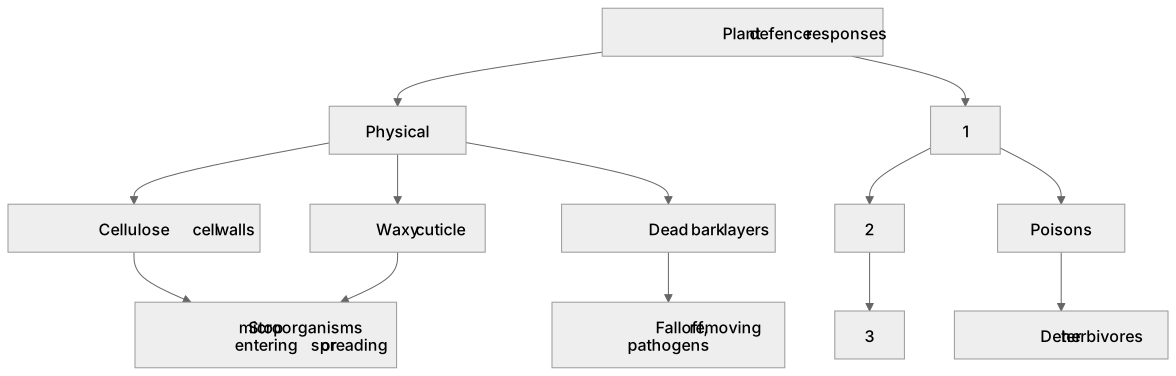
Some boxes have lost their names. Pick the right name for each number.
1Box 1
2Box 2
3Box 3
There is more to this lesson
The full lesson goes on to check your understanding and help you earn the marks. Create a free account to carry on, with your progress saved.
A week of Premium from your first lesson · Then the free plan continues · No card, no charge
Test your understanding of Plant defence responses: Students should be able to describe physical and chemical plant defence responses.
Active recall beats re-reading. Take an instant quiz now to test what you’ve learned and lock it into long-term memory.
A week of Premium from your first lesson · Then the free plan continues · No card, no charge