AQA · GCSE · Biology
Course version: 8461 · Version from Sept 2018
The left ventricle pumps blood around the rest of the body.
Full specification wording
The heart and blood vessels: The left ventricle pumps blood around the rest of the body.
Oxygenated blood returns from the lungs through the pulmonary vein into the left atrium.
Checked against the AQA 8461 specification (opens in a new tab) on .
- Point 4 of 11
Study notes
From the checked teaching notes for this specification point.
The idea
Oxygenated blood returns from the lungs through the pulmonary vein into the left atrium. The left atrium contracts, pushing blood through the bicuspid valve into the left ventricle. The left ventricle has a thick muscular wall because it must contract strongly to pump blood at high pressure around the whole body through the aorta. This ensures oxygen and nutrients reach all cells. The septum separates the left and right sides, preventing mixing of oxygenated and deoxygenated blood.
What earns the marks
- States that the left ventricle receives oxygenated blood from the left atrium.
- Describes the left ventricle contracting to pump blood into the aorta and around the body.
- Links the thick muscular wall of the left ventricle to the high pressure needed for the systemic circuit.
- Explains that the septum prevents mixing of oxygenated and deoxygenated blood.
- Relates the systemic circulation to delivering oxygen and nutrients to body cells.
Common mistakes and how to put them right
Saying the left ventricle pumps blood to the lungs.
Put it right by stating it pumps blood to the body via the aorta.
Thinking the left ventricle has a thin wall.
Put it right by stating it has a thicker wall than the right ventricle.
Confusing the aorta with the vena cava.
Put it right by stating the aorta carries blood away from the left ventricle to the body.
Exam tips
- Compare the walls of the left and right ventricles using comparative terms such as thicker and more muscular.
- Name the aorta and vena cava correctly when describing the systemic circuit.
- Explain the link between high pressure and the need to reach all body cells.
Try the lesson
The start of the The heart and blood vessels: The left ventricle pumps blood around the rest of the body. lesson, made from checked teaching notes for this specification point.
Have a go first
Which chamber of the heart pumps blood around the rest of the body?
Listen
Oxygenated blood returns from the lungs through the pulmonary vein into the left atrium. The left atrium contracts, pushing blood through the bicuspid valve into the left ventricle. The left ventricle has a thick muscular wall because it must contract strongly to pump blood at high pressure around the whole body through the aorta. This ensures oxygen and nutrients reach all cells. The septum separates the left and right sides, preventing mixing of oxygenated and deoxygenated blood. A strong answer earns marks for these points. States that the left ventricle receives oxygenated blood from the left atrium. Describes the left ventricle contracting to pump blood into the aorta and around the body. Links the thick muscular wall of the left ventricle to the high pressure needed for the systemic circuit. Explains that the septum prevents mixing of oxygenated and deoxygenated blood. A common slip: Saying the left ventricle pumps blood to the lungs. Instead, stating it pumps blood to the body via the aorta. Exam tip: Compare the walls of the left and right ventricles using comparative terms such as thicker and more muscular.
See it
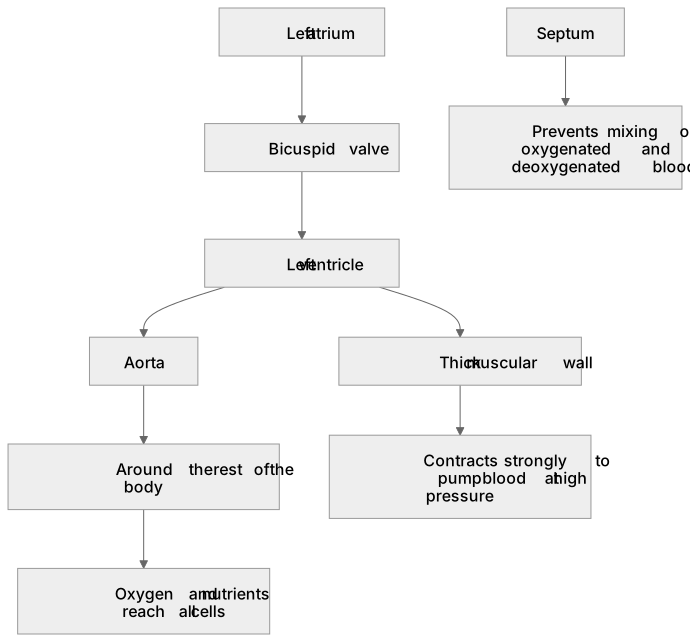
Label the diagram
Some boxes have lost their names. Pick the right name for each number.
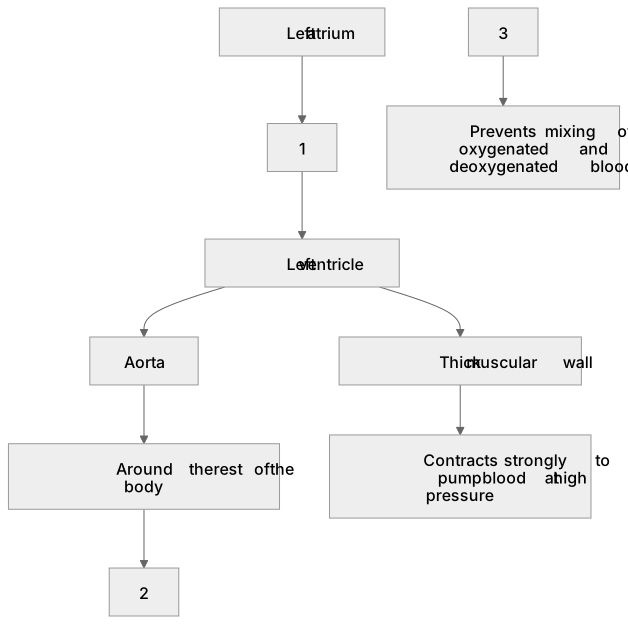
1Box 1
2Box 2
3Box 3
There is more to this lesson
The full lesson goes on to check your understanding and help you earn the marks. Create a free account to carry on, with your progress saved.
A week of Premium from your first lesson · Then the free plan continues · No card, no charge
Test your understanding of The heart and blood vessels: The left ventricle pumps blood around the rest of the body.
Active recall beats re-reading. Take an instant quiz now to test what you’ve learned and lock it into long-term memory.
A week of Premium from your first lesson · Then the free plan continues · No card, no charge