AQA · GCSE · Biology
Course version: 8461 · Version from Sept 2018
Losses of biomass are due to: • not all the ingested material is absorbed,…
Full specification wording
Transfer of biomass: Losses of biomass are due to: • not all the ingested material is absorbed, some is egested as faeces • some absorbed material is lost as waste, such as carbon dioxide and water in respiration and water and urea in urine.
When a consumer eats food, not all of the biomass in that food becomes part of the consumer.
Checked against the AQA 8461 specification (opens in a new tab) on .
- Point 4 of 7
Study notes
From the checked teaching notes for this specification point.
The idea
When a consumer eats food, not all of the biomass in that food becomes part of the consumer. Some ingested material is not absorbed and leaves the body as faeces, so it is lost from the food chain at that point. Of the material that is absorbed, some is used in respiration, where carbon dioxide and water are produced and released as waste. Other absorbed material is converted to waste products such as water and urea in urine. These losses mean that only a fraction of the biomass eaten is available to the next trophic level, which explains why food chains rarely have many levels and why biomass pyramids narrow.
What earns the marks
- Not all ingested material is absorbed; some passes through the gut and is egested as faeces, so it is not available to the consumer.
- Some absorbed material is broken down in respiration, producing carbon dioxide and water that are lost as waste.
- Water and urea are lost in urine after absorbed material is processed, removing more biomass from the consumer.
- The losses can be grouped into unabsorbed material and absorbed material lost through respiration and excretion.
Common mistakes and how to put them right
Saying that all eaten food is absorbed.
Put it right: Some is egested as faeces and never enters the body's cells.
Confusing egestion with excretion.
Put it right: Egestion removes unabsorbed food as faeces, while excretion removes waste made by the body, such as urea and carbon dioxide.
Thinking respiration destroys biomass completely.
Put it right: Respiration transfers energy and releases carbon dioxide and water as waste products.
Exam tips
- Separate your answer into two parts: losses before absorption and losses after absorption, so both bullet points are covered.
- Use the correct terms egestion and excretion, and name the waste products carbon dioxide, water and urea.
- Link the losses to the idea that less biomass is available at each trophic level, which explains why food chains are short.
Try the lesson
The start of the Transfer of biomass: Losses of biomass are due to: • not all the ingested material is absorbed, some is egested as faeces • some absorbed material is lost as waste, such as carbon dioxide and water in respiration and water and urea in urine. lesson, made from checked teaching notes for this specification point.
Have a go first
Which process causes a consumer to lose biomass as carbon dioxide and water?
Listen
When a consumer eats food, not all of the biomass in that food becomes part of the consumer. Some ingested material is not absorbed and leaves the body as faeces, so it is lost from the food chain at that point. Of the material that is absorbed, some is used in respiration, where carbon dioxide and water are produced and released as waste. Other absorbed material is converted to waste products such as water and urea in urine. These losses mean that only a fraction of the biomass eaten is available to the next trophic level, which explains why food chains rarely have many levels and why biomass pyramids narrow. A strong answer earns marks for these points. Not all ingested material is absorbed; some passes through the gut and is egested as faeces, so it is not available to the consumer. Some absorbed material is broken down in respiration, producing carbon dioxide and water that are lost as waste. Water and urea are lost in urine after absorbed material is processed, removing more biomass from the consumer. The losses can be grouped into unabsorbed material and absorbed material lost through respiration and excretion. A common slip: Saying that all eaten food is absorbed. Instead, some is egested as faeces and never enters the body's cells. Exam tip: Separate your answer into two parts: losses before absorption and losses after absorption, so both bullet points are covered.
See it
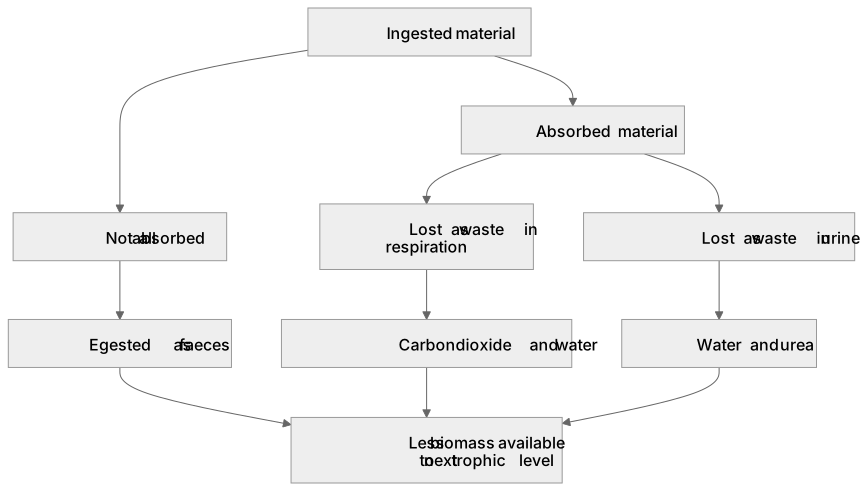
Label the diagram
Some boxes have lost their names. Pick the right name for each number.
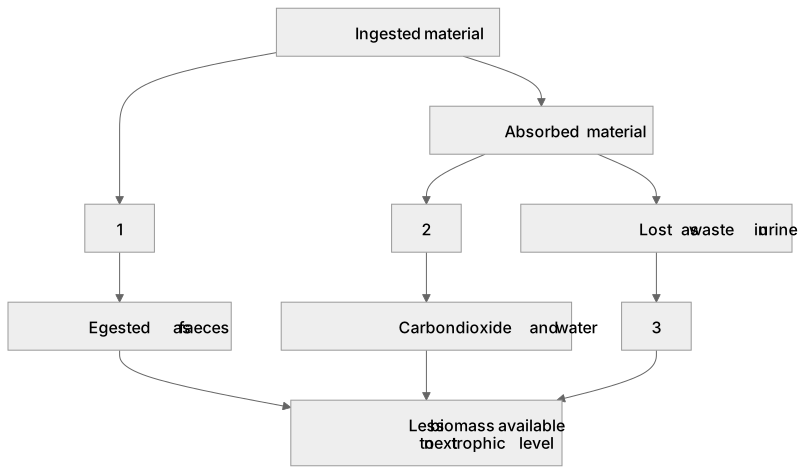
1Box 1
2Box 2
3Box 3
There is more to this lesson
The full lesson goes on to check your understanding and help you earn the marks. Create a free account to carry on, with your progress saved.
A week of Premium from your first lesson · Then the free plan continues · No card, no charge
Test your understanding of Transfer of biomass: Losses of biomass are due to: • not all the ingested material is absorbed, some is egested as faeces • some absorbed material is lost as waste, such as carbon dioxide and water in respiration and water and urea in urine.
Active recall beats re-reading. Take an instant quiz now to test what you’ve learned and lock it into long-term memory.
A week of Premium from your first lesson · Then the free plan continues · No card, no charge