AQA · GCSE · Biology
Course version: 8461 · Version from Sept 2018
Viral diseases: HIV initially causes a flu-like illness.
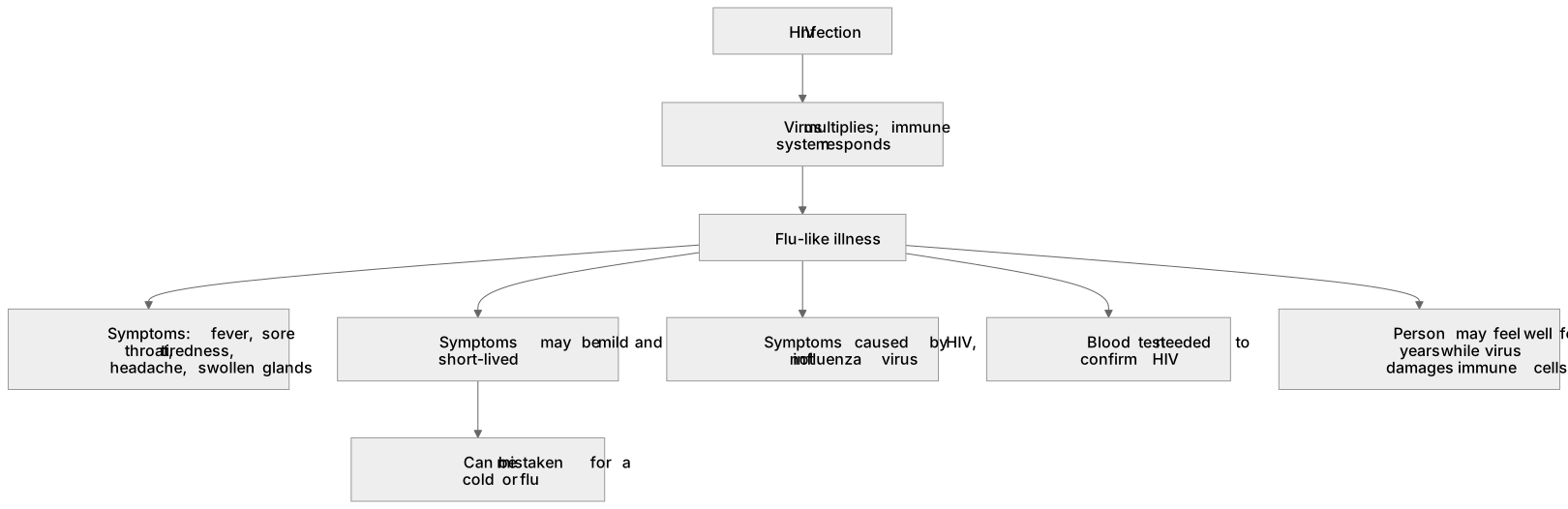
When a person first becomes infected with HIV, the virus multiplies in the body and the immune system responds.
Checked against the AQA 8461 specification (opens in a new tab) on .
- Point 4 of 9
- 3 key terms
Study notes
From the checked teaching notes for this specification point.
The idea
When a person first becomes infected with HIV, the virus multiplies in the body and the immune system responds. During this early stage many people develop symptoms similar to influenza, such as fever, sore throat, tiredness, headache and swollen glands. These symptoms are not caused by influenza virus; they are the body's early response to HIV. The flu-like illness may be mild and short-lived, so it can easily be mistaken for a common cold or flu. After this initial phase, the person may feel well for years while the virus continues to damage immune cells. A blood test, not the symptoms alone, is needed to confirm HIV infection.
What earns the marks
- States that the initial stage of HIV infection can cause symptoms resembling influenza.
- Gives at least one example of a flu-like symptom, such as fever, sore throat, tiredness or swollen glands.
- Recognises that these early symptoms are caused by HIV, not by influenza virus.
- Explains that the early symptoms may be mild or short-lived and can be mistaken for another illness.
- Notes that the person may later be asymptomatic while HIV continues to affect immune cells.
- States that HIV infection is confirmed by a blood test rather than by symptoms alone.
Common mistakes and how to put them right
Stating that HIV causes influenza.
Put it right by saying HIV causes flu-like symptoms, but the pathogen is HIV, not influenza virus.
Believing that no symptoms means no infection.
Put it right by explaining that HIV can remain without symptoms for years while damaging immune cells.
Confusing HIV with AIDS at the initial stage.
Put it right by describing the early flu-like illness as the first stage of HIV infection, before AIDS develops.
Exam tips
- Use the phrase flu-like illness and give one named symptom to make the description precise.
- Make clear that the symptoms are non-specific, so a blood test is needed for diagnosis.
- Link the early stage to the later stage by noting that the person may feel well before immune damage becomes severe.
Try the lesson
The start of the Viral diseases: HIV initially causes a flu-like illness. lesson, made from checked teaching notes for this specification point.
Have a go first
What are the typical initial symptoms experienced by a person who has recently been infected with HIV?
Listen
When a person first becomes infected with HIV, the virus multiplies in the body and the immune system responds. During this early stage many people develop symptoms similar to influenza, such as fever, sore throat, tiredness, headache and swollen glands. These symptoms are not caused by influenza virus; they are the body's early response to HIV. The flu-like illness may be mild and short-lived, so it can easily be mistaken for a common cold or flu. After this initial phase, the person may feel well for years while the virus continues to damage immune cells. A blood test, not the symptoms alone, is needed to confirm HIV infection. A strong answer earns marks for these points. States that the initial stage of HIV infection can cause symptoms resembling influenza. Gives at least one example of a flu-like symptom, such as fever, sore throat, tiredness or swollen glands. Recognises that these early symptoms are caused by HIV, not by influenza virus. Explains that the early symptoms may be mild or short-lived and can be mistaken for another illness. A common slip: Stating that HIV causes influenza. Instead, saying HIV causes flu-like symptoms, but the pathogen is HIV, not influenza virus. Exam tip: Use the phrase flu-like illness and give one named symptom to make the description precise.
See it
Key words
Say what each word means before you turn the card.
Viral infection and immune response
Try answering aloud or in your head before turning the card.
Stages of HIV infection
Try answering aloud or in your head before turning the card.
Diagnosis of infection
Try answering aloud or in your head before turning the card.
See every definition
- Viral infection and immune response
- When a person first becomes infected with HIV, the virus multiplies in the body and the immune system responds.
- Stages of HIV infection
- HIV initially causes a flu-like illness, after which the person may feel well for years while the virus continues to damage immune cells.
- Diagnosis of infection
- A blood test, not the symptoms alone, is needed to confirm HIV infection.
Label the diagram
Some boxes have lost their names. Pick the right name for each number.
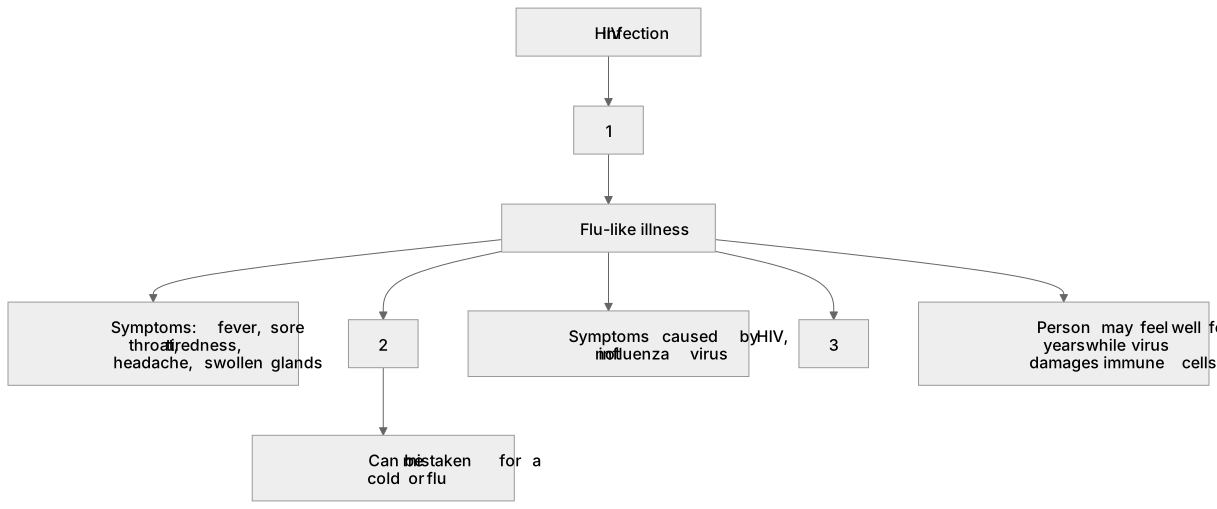
1Box 1
2Box 2
3Box 3
There is more to this lesson
The full lesson goes on to check your understanding and help you earn the marks. Create a free account to carry on, with your progress saved.
A week of Premium from your first lesson · Then the free plan continues · No card, no charge
Test your understanding of Viral diseases: HIV initially causes a flu-like illness.
Active recall beats re-reading. Take an instant quiz now to test what you’ve learned and lock it into long-term memory.
A week of Premium from your first lesson · Then the free plan continues · No card, no charge