AQA · GCSE · Biology
Course version: 8461 · Version from Sept 2018
Unless successfully controlled with antiretroviral drugs the virus attacks…
Full specification wording
Viral diseases: Unless successfully controlled with antiretroviral drugs the virus attacks the body’s immune cells.
After the initial flu-like illness, HIV continues to reproduce inside the body.
Checked against the AQA 8461 specification (opens in a new tab) on .
- Point 5 of 9
- 4 key terms
Study notes
From the checked teaching notes for this specification point.
The idea
After the initial flu-like illness, HIV continues to reproduce inside the body. If the infection is not controlled by antiretroviral drugs, the virus attacks immune cells, especially helper T cells. These cells coordinate the immune response, so their destruction weakens the body's ability to fight other pathogens. Antiretroviral drugs do not cure HIV, but when taken correctly they suppress viral replication and allow the immune system to remain functional. This is why treatment must be continued: stopping treatment allows the virus to multiply and attack immune cells again. A useful analogy is a security system losing its control room operators, so other defences cannot be coordinated effectively.
What earns the marks
- States that HIV attacks the body's immune cells if not controlled.
- Names antiretroviral drugs as the treatment that can control HIV.
- Explains that antiretroviral drugs suppress viral replication rather than curing the infection.
- Links the destruction of immune cells to a weakened immune response against other pathogens.
- Recognises that treatment must be continued to keep the virus controlled.
- Uses the idea of immune cell damage to explain why untreated HIV progresses to AIDS.
Common mistakes and how to put them right
Saying antiretroviral drugs cure HIV.
Put it right by stating that they control the virus but do not eliminate it, so treatment is ongoing.
Claiming HIV attacks red blood cells.
Put it right by stating that HIV attacks immune cells, particularly helper T cells.
Thinking the virus stops attacking immune cells after the flu-like illness.
Put it right by explaining that without treatment the virus continues to replicate and damage immune cells.
Exam tips
- Use the conditional unless to show that immune cell attack happens when treatment does not control the virus.
- Name antiretroviral drugs and state their effect on viral replication.
- Link immune cell destruction to increased risk from other infections or cancers.
Try the lesson
The start of the Viral diseases: Unless successfully controlled with antiretroviral drugs the virus attacks the body’s immune cells. lesson, made from checked teaching notes for this specification point.
Have a go first
Which cells of the body are attacked by HIV unless the virus is successfully controlled with antiretroviral drugs?
Listen
After the initial flu-like illness, HIV continues to reproduce inside the body. If the infection is not controlled by antiretroviral drugs, the virus attacks immune cells, especially helper T cells. These cells coordinate the immune response, so their destruction weakens the body's ability to fight other pathogens. Antiretroviral drugs do not cure HIV, but when taken correctly they suppress viral replication and allow the immune system to remain functional. This is why treatment must be continued: stopping treatment allows the virus to multiply and attack immune cells again. A useful analogy is a security system losing its control room operators, so other defences cannot be coordinated effectively. A strong answer earns marks for these points. States that HIV attacks the body's immune cells if not controlled. Names antiretroviral drugs as the treatment that can control HIV. Explains that antiretroviral drugs suppress viral replication rather than curing the infection. Links the destruction of immune cells to a weakened immune response against other pathogens. A common slip: Saying antiretroviral drugs cure HIV. Instead, stating that they control the virus but do not eliminate it, so treatment is ongoing. Exam tip: Use the conditional unless to show that immune cell attack happens when treatment does not control the virus.
See it
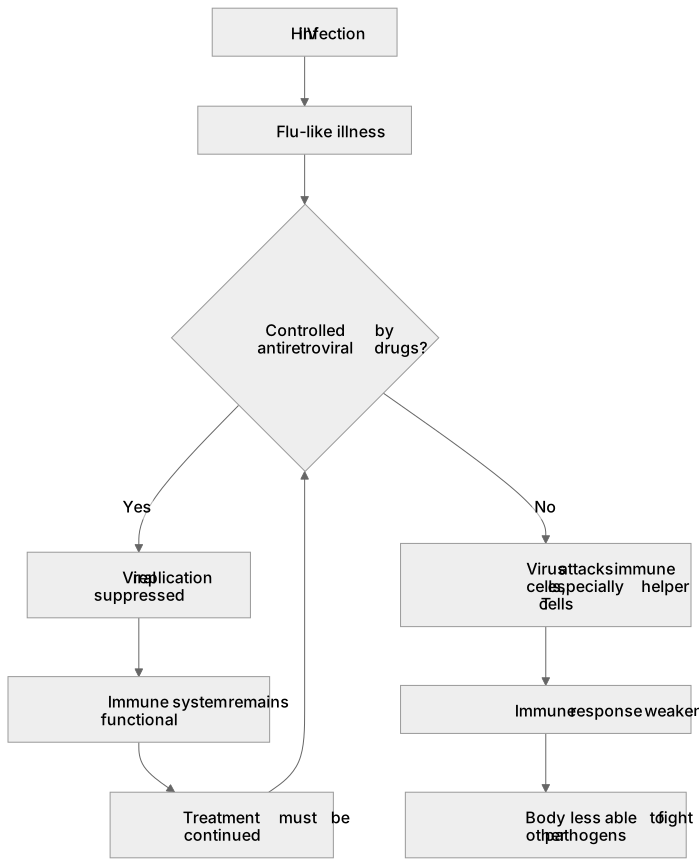
Key words
Say what each word means before you turn the card.
Antiretroviral drugs
Try answering aloud or in your head before turning the card.
Helper T cells
Try answering aloud or in your head before turning the card.
Immune response
Try answering aloud or in your head before turning the card.
AIDS
Try answering aloud or in your head before turning the card.
See every definition
- Antiretroviral drugs
- Treatment that can control HIV by suppressing viral replication rather than curing the infection, so it must be continued.
- Helper T cells
- Immune cells that coordinate the immune response and are especially attacked by HIV when the infection is not controlled.
- Immune response
- The body's defence that is weakened when immune cells are destroyed, reducing the ability to fight other pathogens.
- AIDS
- The progression that occurs from untreated HIV, explained by immune cell damage.
Label the diagram
Some boxes have lost their names. Pick the right name for each number.
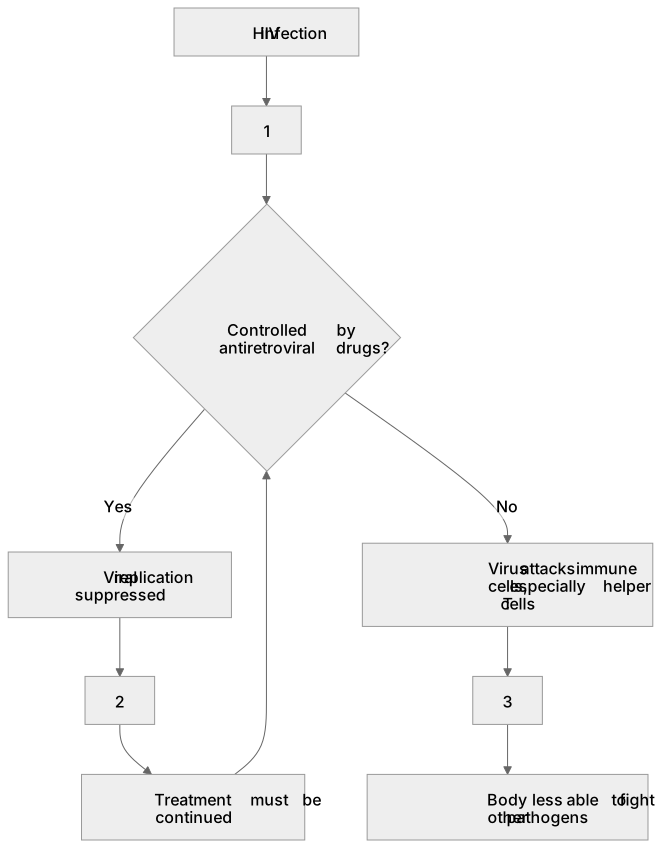
1Box 1
2Box 2
3Box 3
There is more to this lesson
The full lesson goes on to check your understanding and help you earn the marks. Create a free account to carry on, with your progress saved.
A week of Premium from your first lesson · Then the free plan continues · No card, no charge
Test your understanding of Viral diseases: Unless successfully controlled with antiretroviral drugs the virus attacks the body’s immune cells.
Active recall beats re-reading. Take an instant quiz now to test what you’ve learned and lock it into long-term memory.
A week of Premium from your first lesson · Then the free plan continues · No card, no charge