AQA · GCSE · Biology
Course version: 8461 · Version from Sept 2018
Late stage HIV infection, or AIDS, occurs when the body’s immune system…
Full specification wording
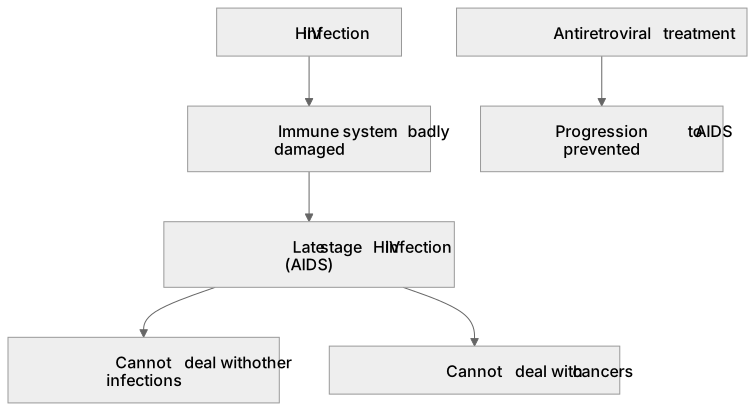
Viral diseases: Late stage HIV infection, or AIDS, occurs when the body’s immune system becomes so badly damaged it can no longer deal with other infections or cancers.
AIDS is the late stage of HIV infection.
Checked against the AQA 8461 specification (opens in a new tab) on .
- Point 6 of 9
- 4 key terms
Study notes
From the checked teaching notes for this specification point.
The idea
AIDS is the late stage of HIV infection. It develops when HIV has destroyed so many immune cells that the immune system can no longer coordinate effective responses. At this point, infections that would normally be harmless, called opportunistic infections, can cause serious illness. Some cancers also become more likely because the immune system normally destroys abnormal cells. AIDS is not a single disease with one set of symptoms; it is a syndrome defined by severe immune damage and the resulting infections or cancers. With effective antiretroviral treatment, HIV need not progress to AIDS, so late stage HIV is not inevitable.
What earns the marks
- States that AIDS is the late stage of HIV infection.
- Explains that AIDS occurs when the immune system is severely damaged.
- Links severe immune damage to an inability to deal with other infections or cancers.
- Recognises that infections which are normally harmless can become serious when immunity is lost.
- Distinguishes AIDS as a syndrome resulting from immune damage rather than a single pathogen-caused disease.
- Notes that antiretroviral treatment can prevent progression from HIV to AIDS.
Common mistakes and how to put them right
Saying AIDS is a virus.
Put it right by stating that AIDS is the late stage of HIV infection, not a separate virus.
Believing AIDS develops immediately after HIV infection.
Put it right by explaining that AIDS occurs after years of immune damage, unless treatment prevents progression.
Thinking AIDS directly kills immune cells.
Put it right by stating that HIV damages immune cells, and AIDS is the resulting severe immune deficiency.
Exam tips
- Use the phrase late stage HIV infection when defining AIDS to show the link between the two.
- Give the consequence of immune damage, such as inability to deal with other infections or cancers.
- Mention that antiretroviral treatment can stop HIV progressing to AIDS.
Try the lesson
The start of the Viral diseases: Late stage HIV infection, or AIDS, occurs when the body’s immune system becomes so badly damaged it can no longer deal with other infections or cancers. lesson, made from checked teaching notes for this specification point.
Have a go first
What name is given to late stage HIV infection, when the body's immune system becomes so badly damaged it can no longer deal with other infections or cancers?
Listen
AIDS is the late stage of HIV infection. It develops when HIV has destroyed so many immune cells that the immune system can no longer coordinate effective responses. At this point, infections that would normally be harmless, called opportunistic infections, can cause serious illness. Some cancers also become more likely because the immune system normally destroys abnormal cells. AIDS is not a single disease with one set of symptoms; it is a syndrome defined by severe immune damage and the resulting infections or cancers. With effective antiretroviral treatment, HIV need not progress to AIDS, so late stage HIV is not inevitable. A strong answer earns marks for these points. States that AIDS is the late stage of HIV infection. Explains that AIDS occurs when the immune system is severely damaged. Links severe immune damage to an inability to deal with other infections or cancers. Recognises that infections which are normally harmless can become serious when immunity is lost. A common slip: Saying AIDS is a virus. Instead, stating that AIDS is the late stage of HIV infection, not a separate virus. Exam tip: Use the phrase late stage HIV infection when defining AIDS to show the link between the two.
See it
Key words
Say what each word means before you turn the card.
Late stage HIV infection
Try answering aloud or in your head before turning the card.
AIDS
Try answering aloud or in your head before turning the card.
Opportunistic infections
Try answering aloud or in your head before turning the card.
Antiretroviral treatment
Try answering aloud or in your head before turning the card.
See every definition
- Late stage HIV infection
- Occurs when the body's immune system becomes so badly damaged it can no longer deal with other infections or cancers.
- AIDS
- The late stage of HIV infection, occurring when the body's immune system becomes so badly damaged it can no longer deal with other infections or cancers.
- Opportunistic infections
- Infections that would normally be harmless but can cause serious illness when immunity is lost.
- Antiretroviral treatment
- Effective treatment that can prevent HIV from progressing to AIDS, so late stage HIV is not inevitable.
Label the diagram
Some boxes have lost their names. Pick the right name for each number.
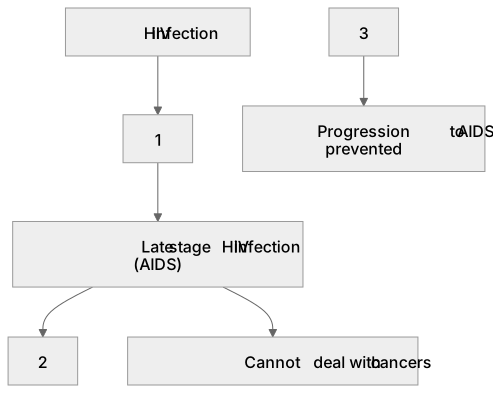
1Box 1
2Box 2
3Box 3
There is more to this lesson
The full lesson goes on to check your understanding and help you earn the marks. Create a free account to carry on, with your progress saved.
A week of Premium from your first lesson · Then the free plan continues · No card, no charge
Test your understanding of Viral diseases: Late stage HIV infection, or AIDS, occurs when the body’s immune system becomes so badly damaged it can no longer deal with other infections or cancers.
Active recall beats re-reading. Take an instant quiz now to test what you’ve learned and lock it into long-term memory.
A week of Premium from your first lesson · Then the free plan continues · No card, no charge