OCR · A-Level · Biology
Course version: H420 · Version from Sept 2025
(e) the differences between Type 1 and Type 2 diabetes mellitus
Full specification wording
Hormonal communication: (e) the differences between Type 1 and Type 2 diabetes mellitus
Diabetes mellitus is a condition in which blood glucose is poorly controlled.
Checked against the OCR H420 specification (opens in a new tab) on .
- Point 5 of 6
- 4 key terms
Study notes
From the checked teaching notes for this specification point.
The idea
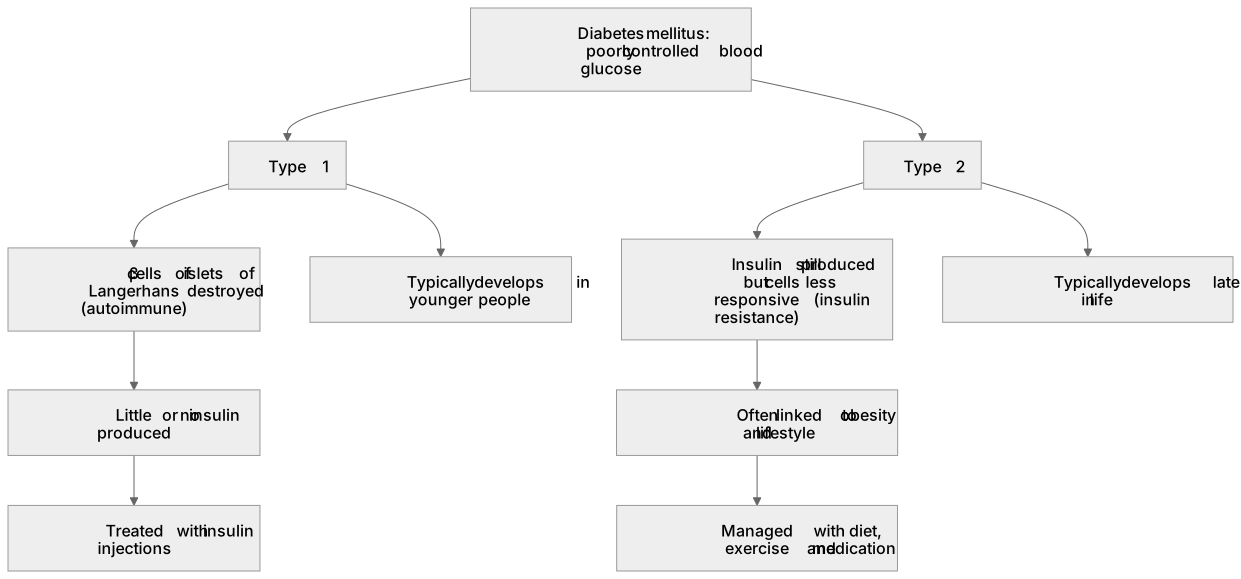
Diabetes mellitus is a condition in which blood glucose is poorly controlled. In Type 1 diabetes, the β cells of the islets of Langerhans are destroyed (an autoimmune response), so little or no insulin is produced; it typically develops in younger people and is treated with insulin injections. In Type 2 diabetes, insulin is still produced but body cells become less responsive to it (insulin resistance), often linked to obesity and lifestyle; it typically develops later in life and is managed with diet, exercise and medication. Both types cause high blood glucose, but the underlying cause differs: Type 1 is a failure of insulin secretion, Type 2 is a failure of cell response to insulin.
What earns the marks
- Type 1 involves destruction of β cells so little or no insulin is secreted.
- Type 1 is treated with insulin injections because the body cannot produce it.
- Type 2 involves cells becoming less responsive to insulin (insulin resistance) while insulin is still produced.
- Type 2 is often associated with obesity and lifestyle and is managed by diet, exercise and medication.
- Type 1 typically develops earlier in life; Type 2 typically develops later in life.
Common mistakes and how to put them right
Saying Type 2 diabetics produce no insulin.
Put it right: They usually still produce insulin but cells respond poorly to it.
Confusing the treatments: Type 1 requires insulin injections; Type 2 is usually managed first by lifestyle and medication.
Assuming both types have the same cause.
Put it right: Distinguish failure of insulin secretion (Type 1) from insulin resistance (Type 2).
Exam tips
- Structure the answer as paired comparisons (cause, insulin level, age of onset, treatment) rather than describing each type separately.
- Use the term insulin resistance for Type 2 and β cell destruction for Type 1.
- State clearly that both lead to high blood glucose, then explain why the causes differ.
Try the lesson
The start of the Hormonal communication: (e) the differences between Type 1 and Type 2 diabetes mellitus lesson, made from checked teaching notes for this specification point.
Have a go first
Which statement describes the underlying cause of Type 1 diabetes mellitus?
Listen
Diabetes mellitus is a condition in which blood glucose is poorly controlled. In Type 1 diabetes, the β cells of the islets of Langerhans are destroyed (an autoimmune response), so little or no insulin is produced; it typically develops in younger people and is treated with insulin injections. In Type 2 diabetes, insulin is still produced but body cells become less responsive to it (insulin resistance), often linked to obesity and lifestyle; it typically develops later in life and is managed with diet, exercise and medication. Both types cause high blood glucose, but the underlying cause differs: Type 1 is a failure of insulin secretion, Type 2 is a failure of cell response to insulin. A strong answer earns marks for these points. Type 1 involves destruction of β cells so little or no insulin is secreted. Type 1 is treated with insulin injections because the body cannot produce it. Type 2 involves cells becoming less responsive to insulin (insulin resistance) while insulin is still produced. Type 2 is often associated with obesity and lifestyle and is managed by diet, exercise and medication. Exam tip: Structure the answer as paired comparisons (cause, insulin level, age of onset, treatment) rather than describing each type separately.
See it
Key words
Say what each word means before you turn the card.
β cell destruction
Try answering aloud or in your head before turning the card.
Insulin resistance
Try answering aloud or in your head before turning the card.
Lifestyle and obesity
Try answering aloud or in your head before turning the card.
Treatment and management
Try answering aloud or in your head before turning the card.
See every definition
- β cell destruction
- The β cells of the islets of Langerhans are destroyed by an autoimmune response, so little or no insulin is produced.
- Insulin resistance
- Body cells become less responsive to insulin even though insulin is still produced, often linked to obesity and lifestyle.
- Lifestyle and obesity
- Factors often linked to Type 2 diabetes, which is managed with diet, exercise and medication.
- Treatment and management
- Type 1 is treated with insulin injections, while Type 2 is managed with diet, exercise and medication.
Label the diagram
Some boxes have lost their names. Pick the right name for each number.
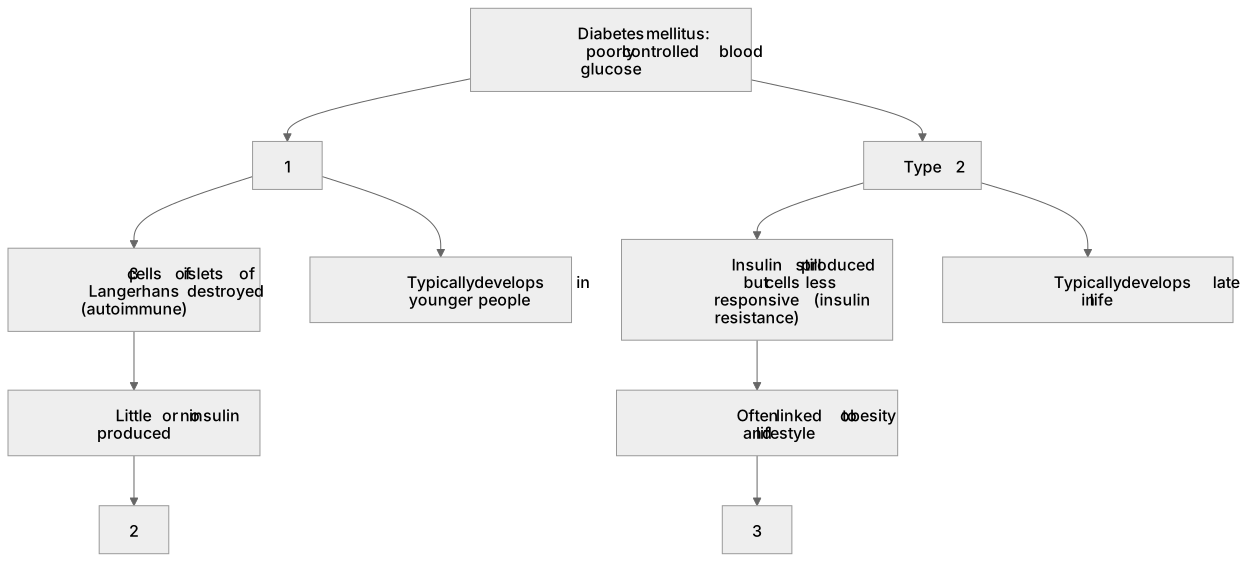
1Box 1
2Box 2
3Box 3
There is more to this lesson
The full lesson goes on to check your understanding and help you earn the marks. Create a free account to carry on, with your progress saved.
A week of Premium from your first lesson · Then the free plan continues · No card, no charge
Test your understanding of Hormonal communication: (e) the differences between Type 1 and Type 2 diabetes mellitus
Active recall beats re-reading. Take an instant quiz now to test what you’ve learned and lock it into long-term memory.
A week of Premium from your first lesson · Then the free plan continues · No card, no charge