OCR · A-Level · Biology
Course version: H420 · Version from Sept 2025
Hormonal communication: (d) how blood glucose concentration is regulated
Blood glucose is regulated by negative feedback centred on the pancreatic islets of Langerhans.
Checked against the OCR H420 specification (opens in a new tab) on .
- Point 4 of 6
- 4 key terms
Study notes
From the checked teaching notes for this specification point.
The idea
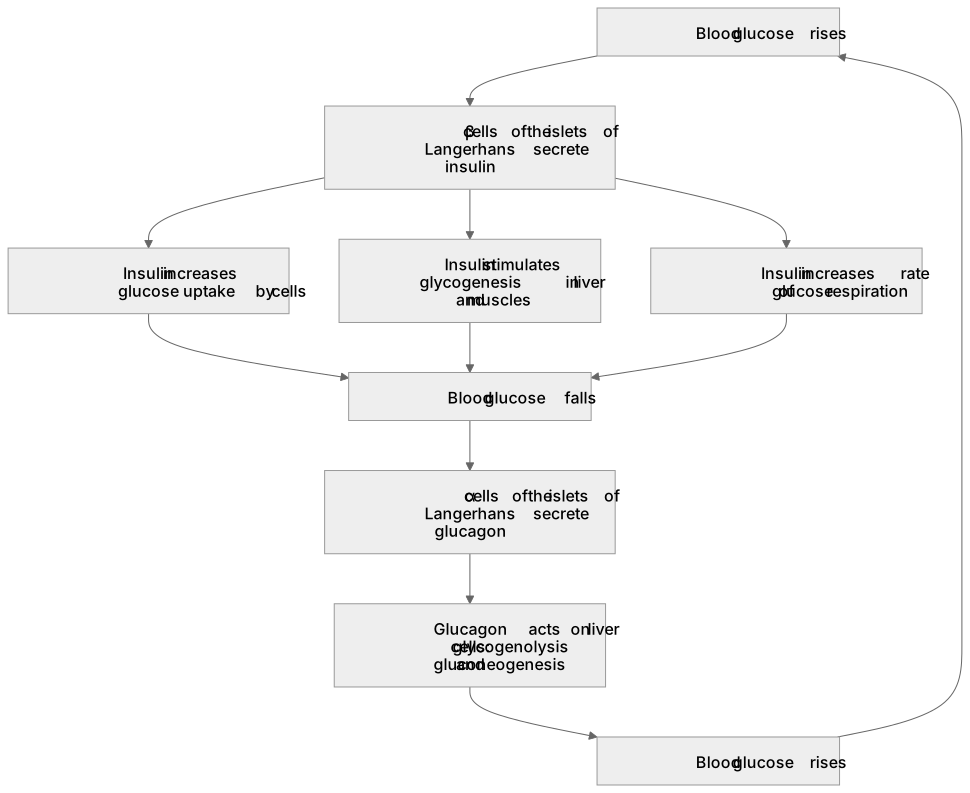
Blood glucose is regulated by negative feedback centred on the pancreatic islets of Langerhans. When blood glucose rises after a meal, β cells secrete insulin. Insulin binds to receptors on liver and muscle cells, increasing glucose uptake and converting glucose to glycogen (glycogenesis), and it increases respiration of glucose, lowering blood glucose. When blood glucose falls, α cells secrete glucagon. Glucagon acts mainly on liver cells, promoting glycogenolysis (glycogen to glucose) and gluconeogenesis (amino acids and glycerol to glucose), raising blood glucose. Adrenaline from the adrenal glands also raises blood glucose in stress. The liver is the key effector organ. Regulation is self-correcting: the change in glucose concentration triggers the corrective hormone response, and the restored level reduces further hormone secretion.
What earns the marks
- β cells of the islets of Langerhans detect a rise in blood glucose and secrete insulin.
- Insulin increases glucose uptake by cells and stimulates glycogenesis (glucose to glycogen) in the liver and muscles.
- Insulin increases the rate of glucose respiration, lowering blood glucose concentration.
- α cells detect a fall in blood glucose and secrete glucagon.
- Glucagon acts on liver cells to stimulate glycogenolysis and gluconeogenesis, raising blood glucose.
- The system is an example of negative feedback: the corrected glucose level reduces hormone secretion.
Common mistakes and how to put them right
Thinking insulin is secreted when glucose is low.
Put it right by linking β cells and insulin to a rise in blood glucose.
Confusing glycogenolysis with glycogenesis.
Put it right: Glycogenolysis is the breakdown of glycogen to glucose (glucagon), glycogenesis is the formation of glycogen (insulin).
Believing glucagon acts on muscle to release glucose into the blood.
Put it right: Glucagon acts mainly on the liver; muscle glycogen is not released as blood glucose.
Exam tips
- Name the specific cells (α and β cells of the islets of Langerhans) and the effector organ (liver) rather than saying 'the pancreas' alone.
- Use the correct terms glycogenesis, glycogenolysis and gluconeogenesis precisely.
- Frame the answer explicitly as negative feedback, stating what triggers the response and what reduces it.
Try the lesson
The start of the Hormonal communication: (d) how blood glucose concentration is regulated lesson, made from checked teaching notes for this specification point.
Have a go first
Which cells of the islets of Langerhans secrete glucagon when blood glucose concentration falls?
Listen
Blood glucose is regulated by negative feedback centred on the pancreatic islets of Langerhans. When blood glucose rises after a meal, β cells secrete insulin. Insulin binds to receptors on liver and muscle cells, increasing glucose uptake and converting glucose to glycogen (glycogenesis), and it increases respiration of glucose, lowering blood glucose. When blood glucose falls, α cells secrete glucagon. Glucagon acts mainly on liver cells, promoting glycogenolysis (glycogen to glucose) and gluconeogenesis (amino acids and glycerol to glucose), raising blood glucose. Adrenaline from the adrenal glands also raises blood glucose in stress. The liver is the key effector organ. Regulation is self-correcting: the change in glucose concentration triggers the corrective hormone response, and the restored level reduces further hormone secretion. A strong answer earns marks for these points. β cells of the islets of Langerhans detect a rise in blood glucose and secrete insulin. Insulin increases glucose uptake by cells and stimulates glycogenesis (glucose to glycogen) in the liver and muscles. Insulin increases the rate of glucose respiration, lowering blood glucose concentration. α cells detect a fall in blood glucose and secrete glucagon. A common slip: Thinking insulin is secreted when glucose is low. Instead, linking β cells and insulin to a rise in blood glucose. Exam tip: Name the specific cells (α and β cells of the islets of Langerhans) and the effector organ (liver) rather than saying 'the pancreas' alone.
See it
Key words
Say what each word means before you turn the card.
Negative feedback
Try answering aloud or in your head before turning the card.
Insulin and β cells
Try answering aloud or in your head before turning the card.
Glucagon and α cells
Try answering aloud or in your head before turning the card.
Liver as effector organ
Try answering aloud or in your head before turning the card.
See every definition
- Negative feedback
- A self-correcting system in which the change in glucose concentration triggers the corrective hormone response, and the restored level reduces further hormone secretion.
- Insulin and β cells
- Cells of the islets of Langerhans that detect a rise in blood glucose and secrete insulin, which increases glucose uptake by cells, stimulates glycogenesis and increases the rate of glucose respiration.
- Glucagon and α cells
- Cells that detect a fall in blood glucose and secrete glucagon, which acts mainly on liver cells to stimulate glycogenolysis and gluconeogenesis, raising blood glucose.
- Liver as effector organ
- The key organ on which insulin and glucagon act, where glucose is converted to glycogen and glycogen is broken down to glucose.
There is more to this lesson
The full lesson goes on to check your understanding and help you earn the marks. Create a free account to carry on, with your progress saved.
A week of Premium from your first lesson · Then the free plan continues · No card, no charge
Test your understanding of Hormonal communication: (d) how blood glucose concentration is regulated
Active recall beats re-reading. Take an instant quiz now to test what you’ve learned and lock it into long-term memory.
A week of Premium from your first lesson · Then the free plan continues · No card, no charge