OCR · A-Level · Biology
Course version: H420 · Version from Sept 2025
(a) the interrelationship between the process of photosynthesis and…
Full specification wording
Photosynthesis: (a) the interrelationship between the process of photosynthesis and respiration
This clause requires you to explain how photosynthesis and respiration depend on each other.
Checked against the OCR H420 specification (opens in a new tab) on .
- Point 1 of 9
- 4 key terms
Study notes
From the checked teaching notes for this specification point.
The idea
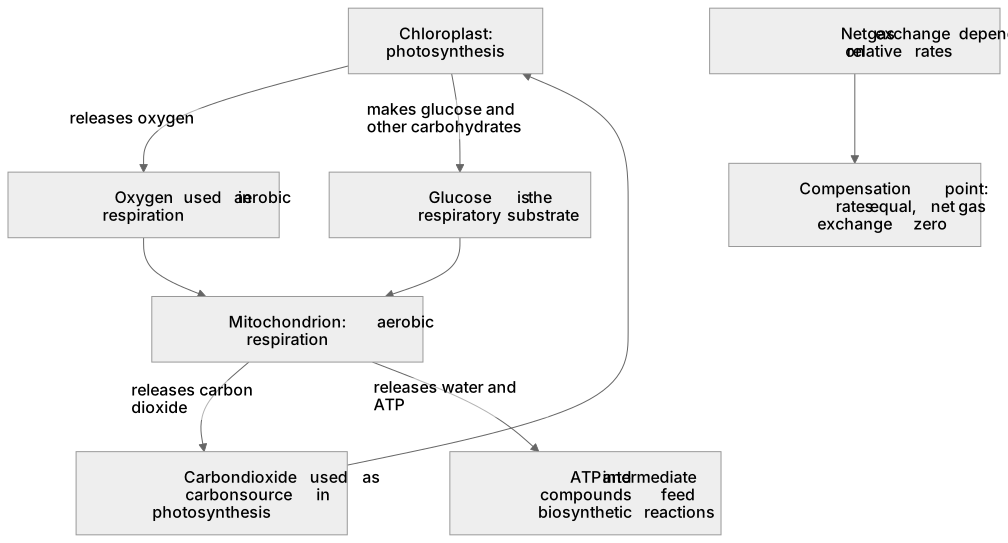
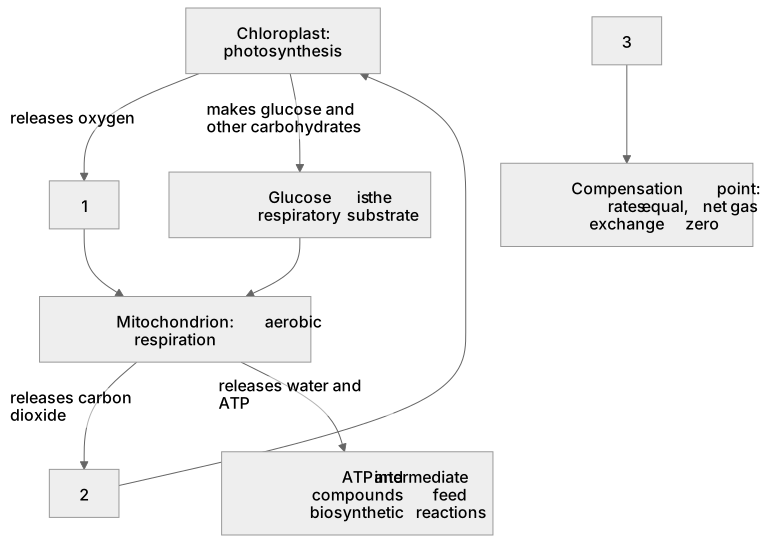
This clause requires you to explain how photosynthesis and respiration depend on each other. In photosynthesis, chloroplasts use light energy to fix carbon dioxide and release oxygen, producing glucose and other carbohydrates. In aerobic respiration, mitochondria oxidise those carbohydrates, using oxygen and releasing carbon dioxide, water and ATP. The two processes are therefore linked by gas exchange: the oxygen released in photosynthesis is used in respiration, and the carbon dioxide released in respiration is used in photosynthesis. They are also linked by organic molecules: the glucose made in photosynthesis is the respiratory substrate, and the ATP and intermediate compounds produced feed biosynthetic reactions. In a plant cell both occur, in different organelles, and their rates vary with light intensity, so net gas exchange depends on which process dominates.
What earns the marks
- States that photosynthesis releases oxygen, which is used as the terminal electron acceptor in aerobic respiration.
- States that respiration releases carbon dioxide, which is used as a carbon source in photosynthesis.
- Explains that the glucose (carbohydrate) made in photosynthesis is the substrate oxidised in respiration to release ATP.
- Recognises that the two processes occur in different organelles, chloroplasts and mitochondria, within the same plant cell.
- Explains that net gas exchange depends on the relative rates of photosynthesis and respiration, including the compensation point where the rates are equal.
- Links the ATP and intermediate compounds from respiration to the biosynthetic reactions that support plant growth.
Common mistakes and how to put them right
Claiming photosynthesis and respiration are opposites that cannot occur together.
Put it right: Is that both occur in a plant cell, in different organelles, at the same time.
Stating that plants only photosynthesise in light and only respire in darkness.
Put it right: Is that respiration occurs continuously, while photosynthesis requires light.
Reversing the gases: correction is that photosynthesis takes in carbon dioxide and releases oxygen, whereas aerobic respiration takes in oxygen and releases carbon dioxide.
Ignoring the compensation point.
Put it right: Is that net gas exchange is zero when the two rates are equal.
Exam tips
- Draw a labelled diagram showing the gas and organic-molecule links between chloroplast and mitochondrion.
- Use the compensation point to explain why a plant may show no net gas exchange at a given light intensity.
- Always name the organelle for each process to show where each reaction occurs.
Try the lesson
The start of the Photosynthesis: (a) the interrelationship between the process of photosynthesis and respiration lesson, made from checked teaching notes for this specification point.
Have a go first
In a green plant cell, which gas is produced by photosynthesis and used as a reactant in aerobic respiration?
Listen
This clause requires you to explain how photosynthesis and respiration depend on each other. In photosynthesis, chloroplasts use light energy to fix carbon dioxide and release oxygen, producing glucose and other carbohydrates. In aerobic respiration, mitochondria oxidise those carbohydrates, using oxygen and releasing carbon dioxide, water and ATP. The two processes are therefore linked by gas exchange: the oxygen released in photosynthesis is used in respiration, and the carbon dioxide released in respiration is used in photosynthesis. They are also linked by organic molecules: the glucose made in photosynthesis is the respiratory substrate, and the ATP and intermediate compounds produced feed biosynthetic reactions. In a plant cell both occur, in different organelles, and their rates vary with light intensity, so net gas exchange depends on which process dominates. A strong answer earns marks for these points. States that photosynthesis releases oxygen, which is used as the terminal electron acceptor in aerobic respiration. States that respiration releases carbon dioxide, which is used as a carbon source in photosynthesis. Explains that the glucose (carbohydrate) made in photosynthesis is the substrate oxidised in respiration to release ATP. Recognises that the two processes occur in different organelles, chloroplasts and mitochondria, within the same plant cell. A common slip: Claiming photosynthesis and respiration are opposites that cannot occur together. Instead, is that both occur in a plant cell, in different organelles, at the same time. Exam tip: Draw a labelled diagram showing the gas and organic-molecule links between chloroplast and mitochondrion.
See it
Key words
Say what each word means before you turn the card.
Gas exchange between photosynthesis and respiration
Try answering aloud or in your head before turning the card.
Flow of organic molecules and ATP
Try answering aloud or in your head before turning the card.
Organelle roles in plant cells
Try answering aloud or in your head before turning the card.
Net exchange and the compensation point
Try answering aloud or in your head before turning the card.
See every definition
- Gas exchange between photosynthesis and respiration
- The oxygen released in photosynthesis is used in respiration, and the carbon dioxide released in respiration is used in photosynthesis.
- Flow of organic molecules and ATP
- The glucose made in photosynthesis is the respiratory substrate, and the ATP and intermediate compounds produced feed biosynthetic reactions.
- Organelle roles in plant cells
- Photosynthesis occurs in chloroplasts and aerobic respiration occurs in mitochondria, both within the same plant cell.
- Net exchange and the compensation point
- Net gas exchange depends on which process dominates, and at the compensation point the rates of photosynthesis and respiration are equal.
Label the diagram
Some boxes have lost their names. Pick the right name for each number.
1Box 1
2Box 2
3Box 3
There is more to this lesson
The full lesson goes on to check your understanding and help you earn the marks. Create a free account to carry on, with your progress saved.
A week of Premium from your first lesson · Then the free plan continues · No card, no charge
Test your understanding of Photosynthesis: (a) the interrelationship between the process of photosynthesis and respiration
Active recall beats re-reading. Take an instant quiz now to test what you’ve learned and lock it into long-term memory.
A week of Premium from your first lesson · Then the free plan continues · No card, no charge