Eduqas · GCSE · Biology
Ecosystems
Master the intricate web of life! This topic covers how energy flows, materials cycle, and organisms interact within ecosystems. It's heavily tested in exams, especially through calculations of biomass efficiency and the impacts of human activity on biodiversity.
- 5 min read
- 3 worked examples
- 5 practice questions
- 6 key terms
Study Notes
Overview
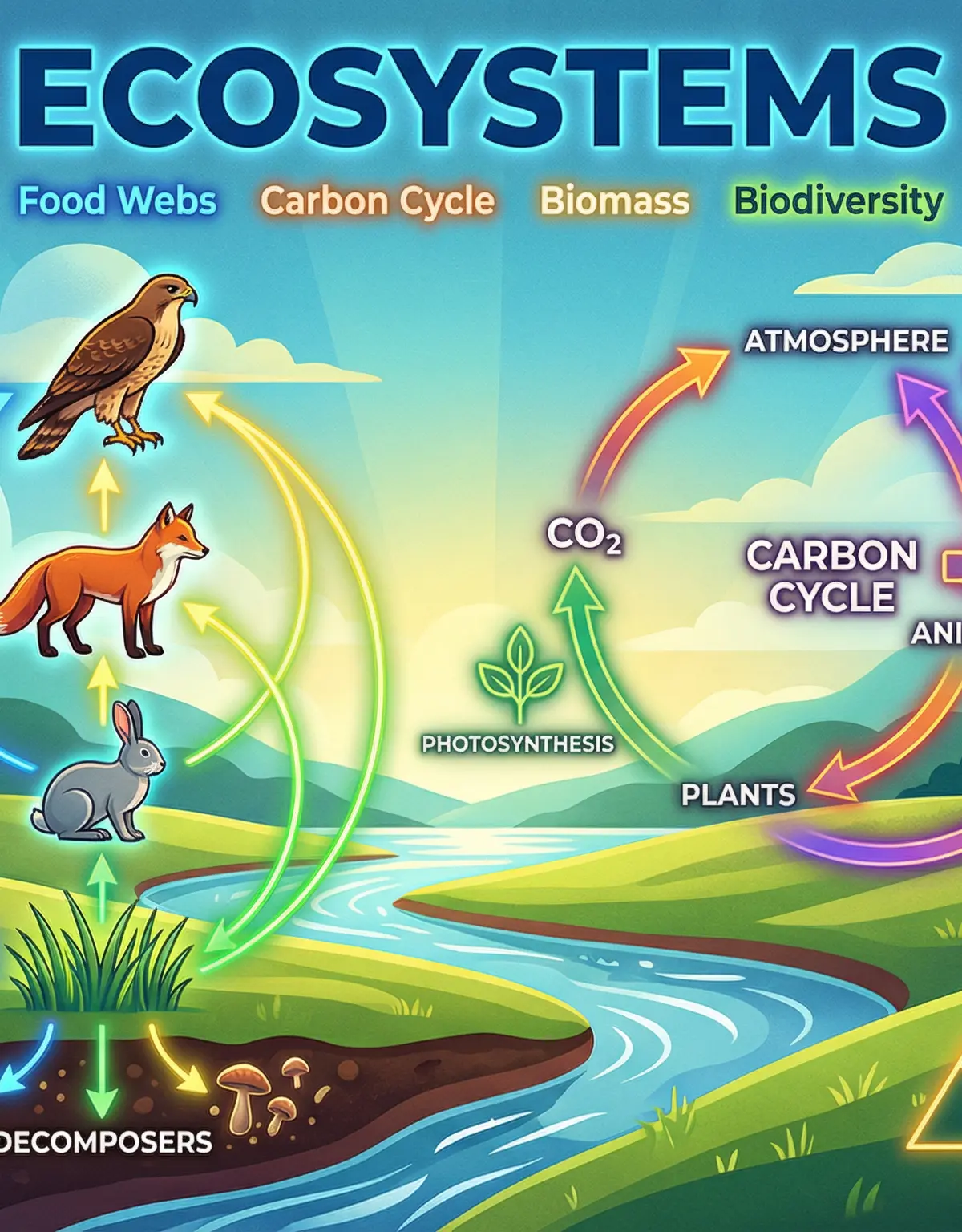
Welcome to Ecosystems! This topic explores the fundamental relationships that sustain life on Earth. You'll investigate how organisms interact with their physical environment (abiotic factors) and with each other (biotic factors). It is a cornerstone of Biology because it connects cellular processes like photosynthesis and respiration to global issues like climate change and food security.
Examiners frequently test this topic through data interpretation questions, calculations of biomass transfer efficiency, and extended response questions evaluating human impacts on biodiversity. You must be comfortable applying your knowledge to unfamiliar examples, such as a food web you've never seen before. Strong candidates can clearly distinguish between the roles of producers, consumers, and decomposers, and can explain precisely why energy is lost at each trophic level.
Key Concepts
Concept 1: Organisation of an Ecosystem
An ecosystem consists of all the living organisms (the community) in a given area, interacting with each other and their non-living environment.
- Biotic factors are living elements: predation, competition, disease, and food availability.
- Abiotic factors are non-living elements: light intensity, temperature, moisture levels, soil pH, and mineral content.
Examiner Tip: When asked how a factor affects a community, explicitly state if it is biotic or abiotic, and explain the mechanism. For example, 'A decrease in light intensity (abiotic) reduces the rate of photosynthesis, meaning less biomass is produced to support the food web.'
Concept 2: Trophic Levels and Biomass
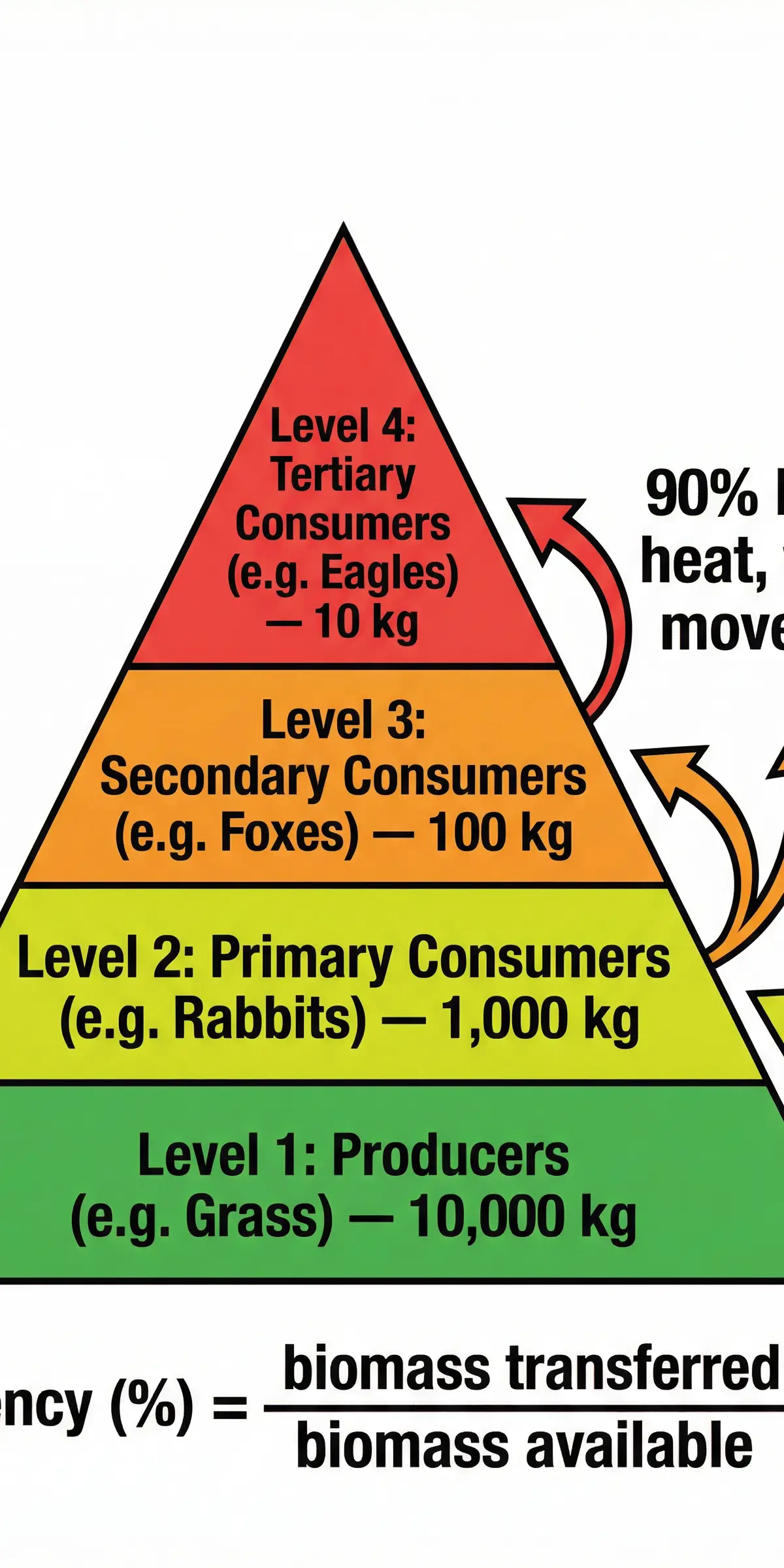
Feeding relationships are represented by food chains and webs. Every chain starts with a producer (usually a photosynthetic plant or algae) which synthesises molecules. These are eaten by primary consumers, which are eaten by secondary consumers, and so on.
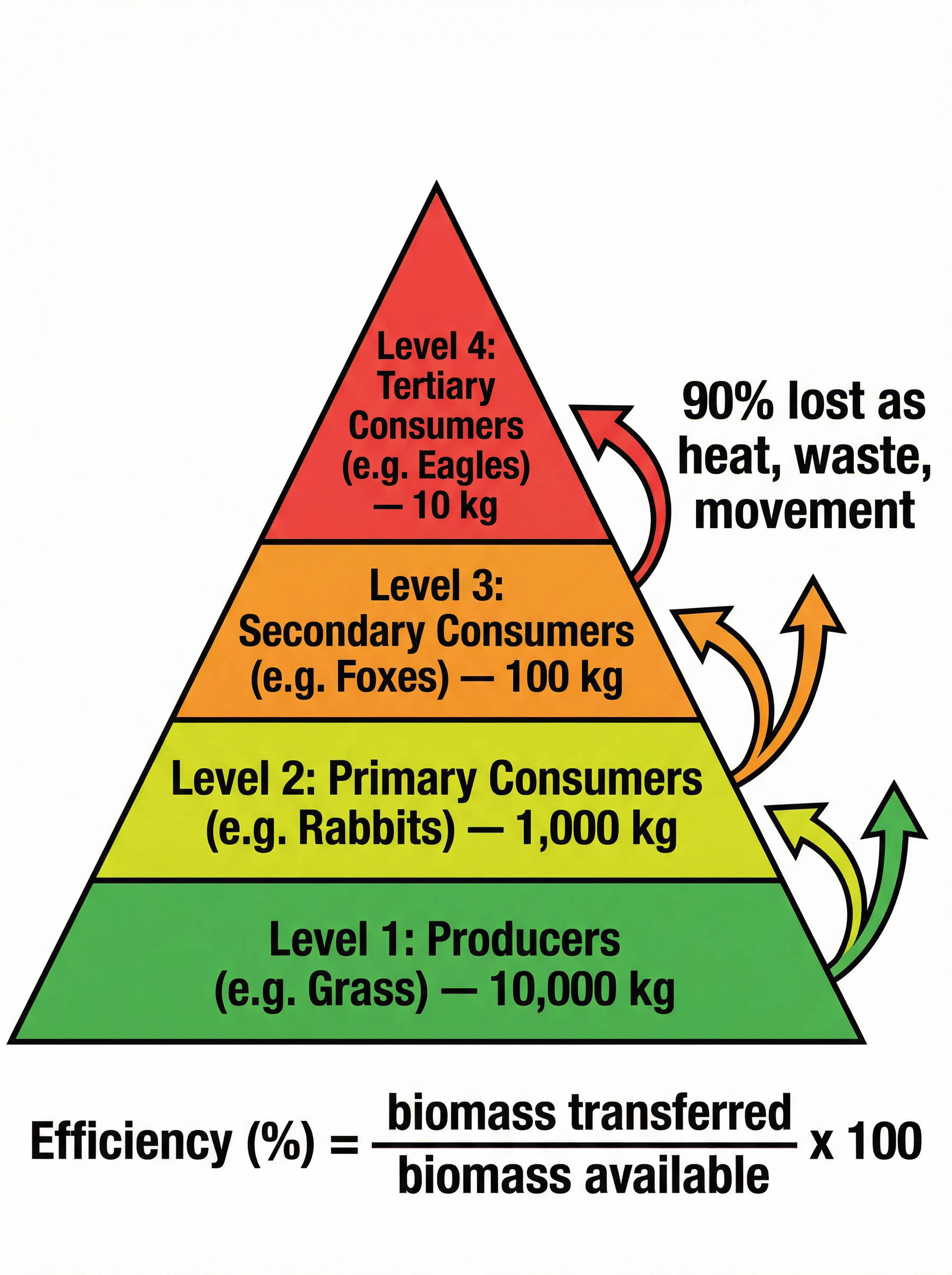
Biomass is the mass of living material at each stage. Only about 10% of the biomass from each trophic level is transferred to the level above it. This is a crucial concept! Biomass is lost because:
- Not all of the ingested material is absorbed (some is egested as faeces).
- Some absorbed material is lost as waste (e.g., carbon dioxide and water in respiration, water and urea in urine).
- Large amounts of glucose are used in respiration to release energy for movement and thermoregulation.
Concept 3: The Carbon Cycle
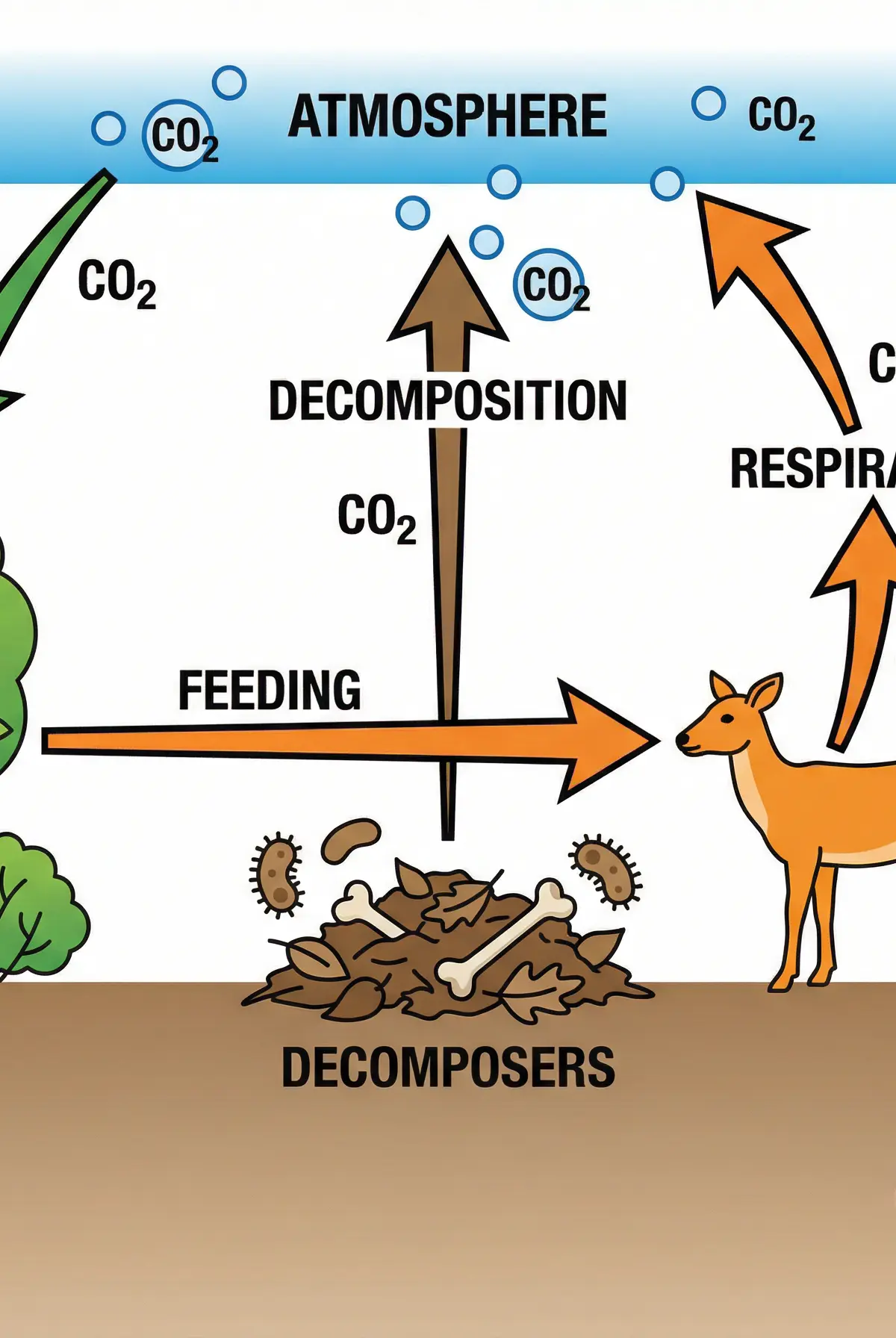
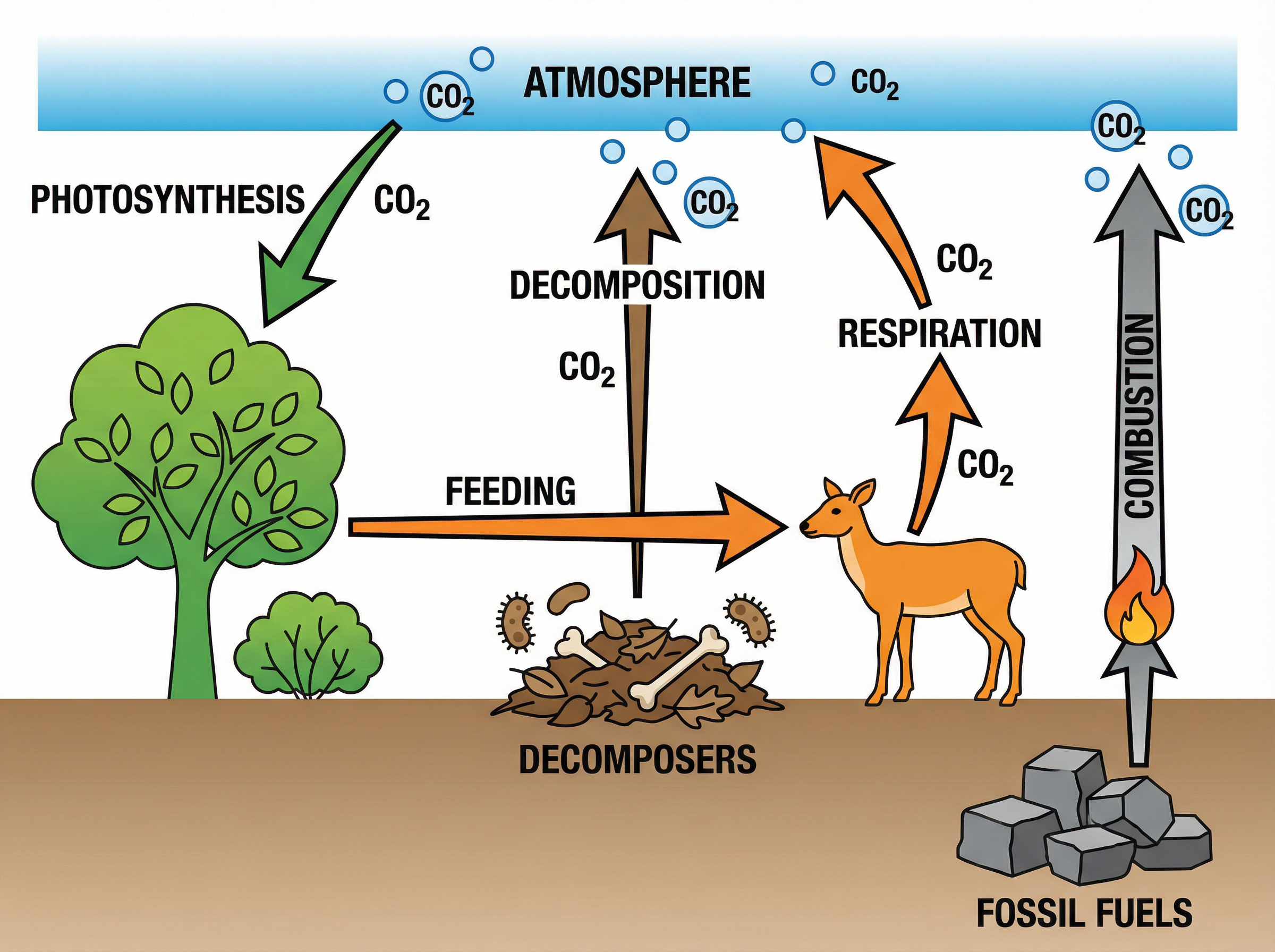
The carbon cycle describes how carbon is recycled through ecosystems. It relies on four key processes:
- Photosynthesis: Plants absorb CO2 from the atmosphere to make glucose.
- Respiration: Plants, animals, and decomposers release CO2 back into the atmosphere as they break down glucose for energy.
- Decomposition: Microorganisms (bacteria and fungi) break down dead organic matter, releasing CO2 as they respire.
- Combustion: Burning fossil fuels or wood releases stored carbon as CO2.
Concept 4: Biodiversity and Human Impact
Biodiversity is the variety of all the different species of organisms on Earth, or within an ecosystem. High biodiversity ensures the stability of ecosystems by reducing the dependence of one species on another for food and shelter.
Human activities are reducing biodiversity through:
- Land use: Destroying habitats for building, quarrying, farming, and dumping waste.
- Deforestation: Cutting down forests to provide land for cattle, rice fields, or biofuel crops.
- Global warming: Releasing greenhouse gases (CO2 and methane) which cause climate change, leading to habitat loss (e.g., melting ice caps).
To protect biodiversity, strategies include breeding programmes for endangered species, protection of rare habitats, reintroduction of field margins in agricultural areas, and recycling resources.
Mathematical/Scientific Relationships
Efficiency of Biomass Transfer:
Efficiency (%) = (Biomass transferred to next level / Biomass available at previous level) × 100
- Examiner Tip: Always show your working. If you calculate the wrong percentage but show the correct method, you can still gain marks.
Practical Applications
**Field Investigations (Required Practical):**You must know how to measure the population size of a common species in a habitat.
- Use quadrats for random sampling to estimate population size in a uniform area.
- Use a transect to investigate the effect of a factor on the distribution of a species (e.g., how light intensity affects daisy distribution moving away from a tree).
Interactive Diagrams
2 interactive diagrams to visualise key concepts
Conceptual Flow Outline
A simple food chain showing the flow of energy and the role of decomposers.
Conceptual Flow Outline
The Carbon Cycle highlighting the continuous movement of carbon.
Worked Examples
3 worked examples — open one to explore the question and available guidance.
Practice Questions
Test your understanding — click to reveal model answers
State two abiotic factors that could affect the distribution of a plant species. [2 marks]
Hint: Think about non-living things that plants need to survive.
Explain why food chains rarely have more than four or five trophic levels. [3 marks]
Hint: Think about what happens to biomass and energy at each stage.
A student used a quadrat to estimate the number of dandelions in a field. Describe how they should carry out this investigation to ensure their estimate is valid. [4 marks]
Hint: How do you avoid bias when sampling?
Describe the role of microorganisms in the carbon cycle. [3 marks]
Hint: What do microorganisms do to dead things, and what gas do they release?
Evaluate the environmental implications of clearing a large area of tropical rainforest to grow crops for biofuels. [6 marks]
Hint: Consider biodiversity, the carbon cycle, and the purpose of the crops.