Eduqas · GCSE · Biology
The genome and gene expression
Master the instruction manual of life: from the double helix structure of DNA to the complex machinery of protein synthesis. This topic is heavily tested in exams, particularly the distinction between coding and non-coding DNA, and the step-by-step mechanism of transcription and translation.
- 7 min read
- 3 worked examples
- 5 practice questions
- 6 key terms
Study Notes
Overview
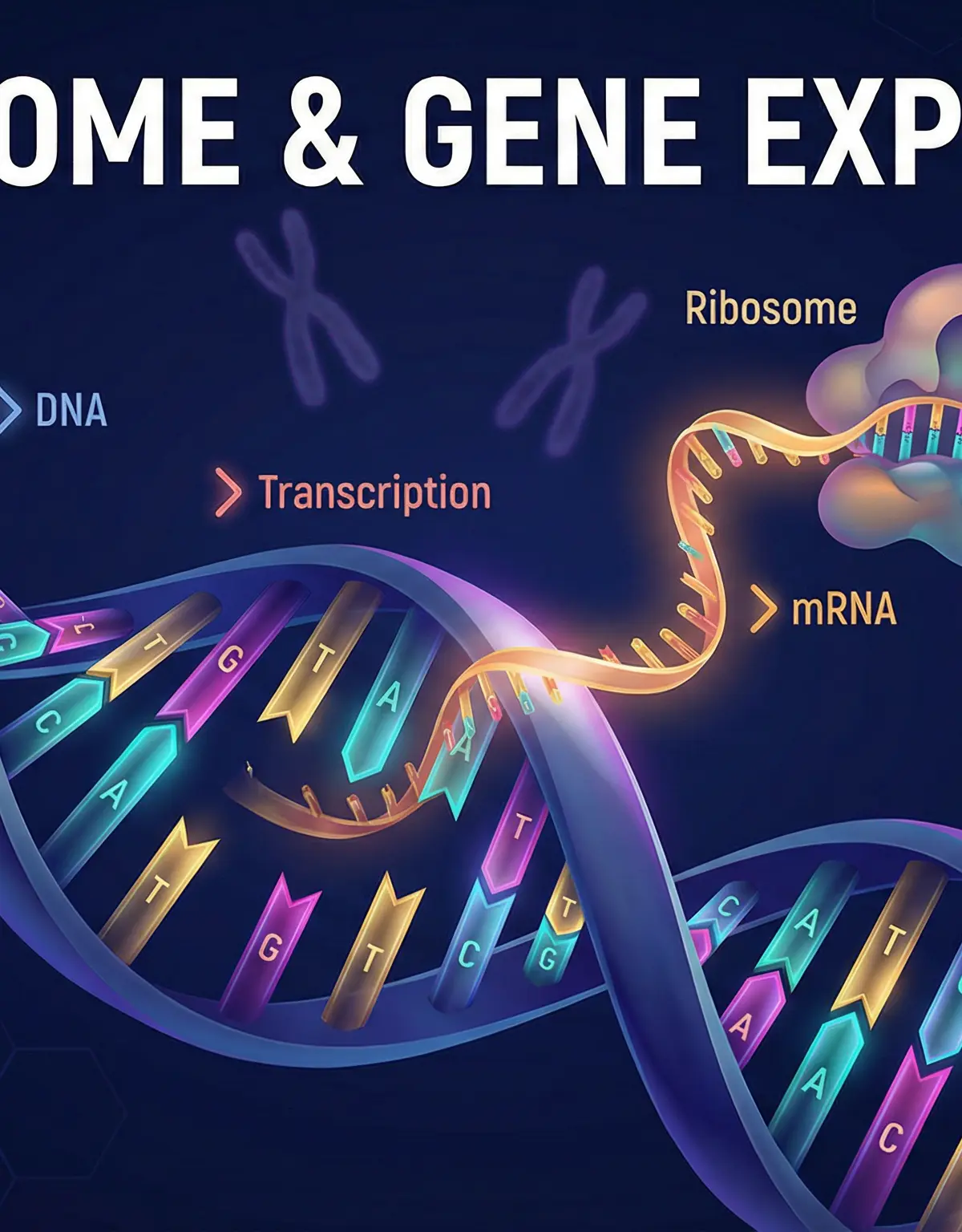
The genome and gene expression lie at the very heart of molecular biology. This topic explores the 'instruction manual' of life—how genetic information is stored, protected, and ultimately expressed as the proteins that build and run every living organism. For your exam, this is a high-yield topic. Examiners frequently test your understanding of DNA structure, the sequence of events in protein synthesis, and the crucial differences between coding and non-coding DNA.
You must be prepared to link the microscopic structure of a nucleotide to the macroscopic characteristics of an organism. This topic synoptically links to cell division (mitosis and meiosis), genetic inheritance, and evolution. Expect questions ranging from simple factual recall of base pairing rules to complex, extended-response questions asking you to evaluate the impact of a specific mutation on protein function.
Key Concepts
Concept 1: The Structure of DNA and the Genome
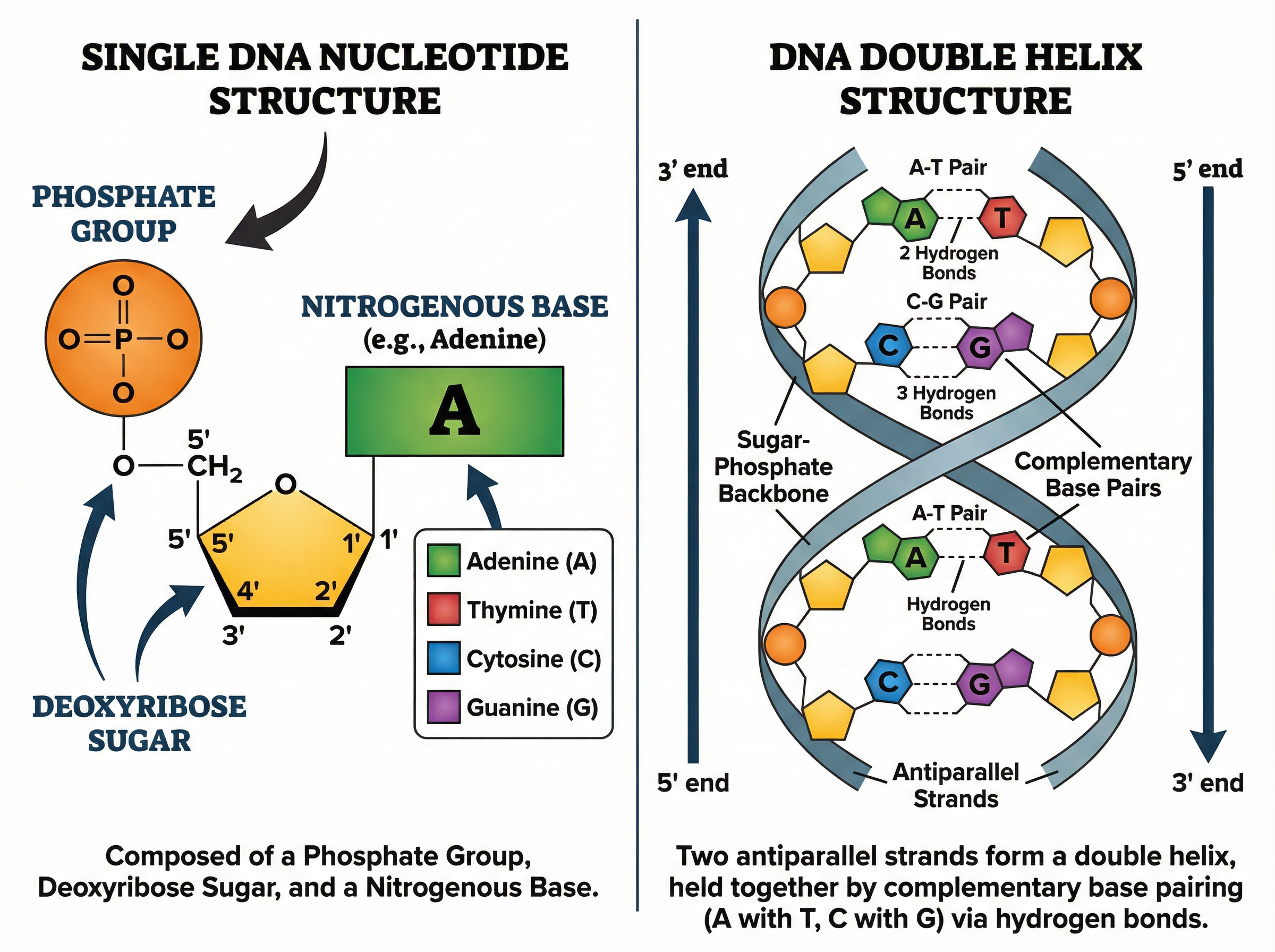
DNA (deoxyribonucleic acid) is a polymer composed of repeating monomer units called nucleotides. Each nucleotide consists of three fundamental components: a phosphate group, a 5-carbon deoxyribose sugar, and a nitrogenous base. There are four possible bases: Adenine (A), Thymine (T), Cytosine (C), and Guanine (G).
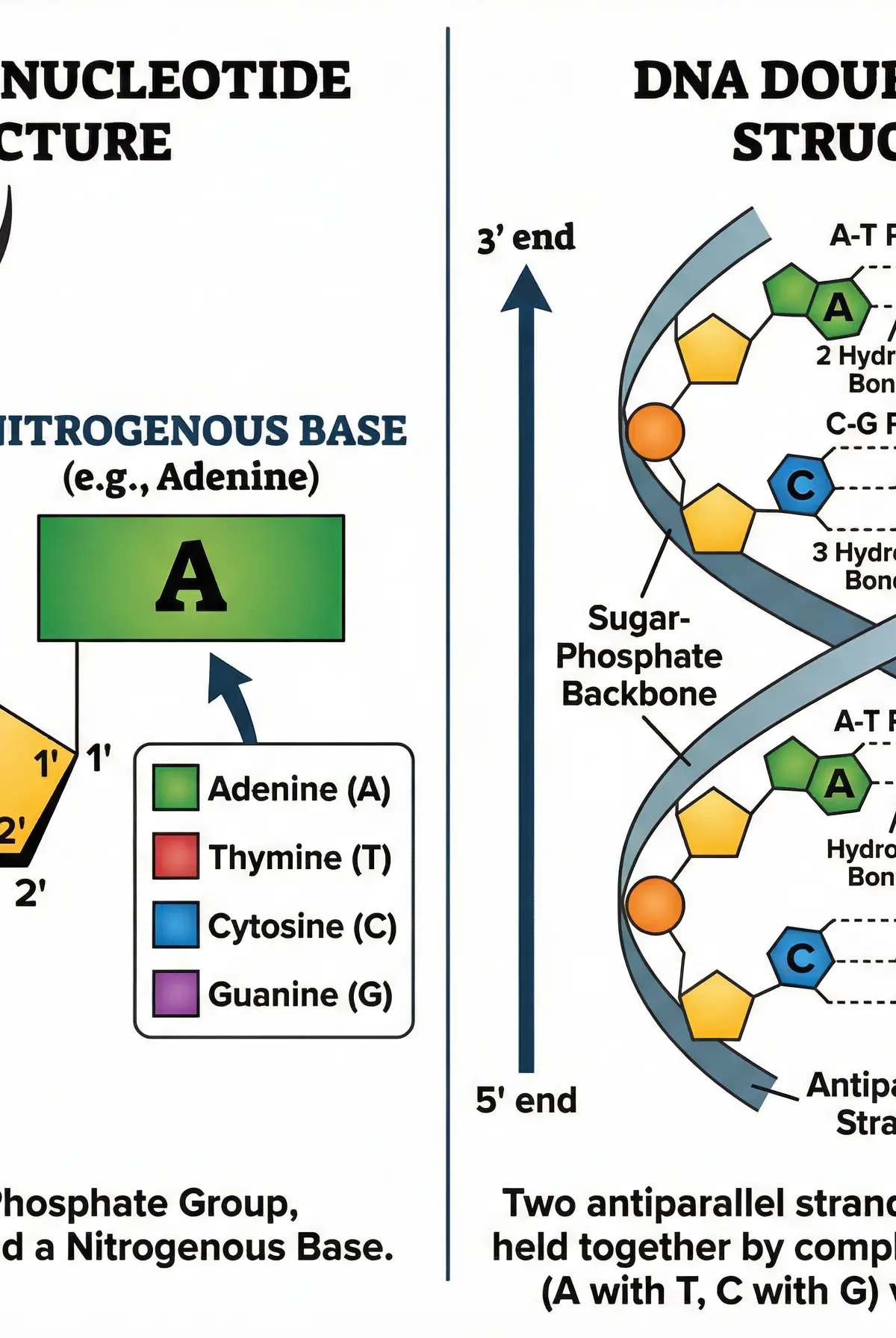
The structure of DNA is a double helix, formed by two antiparallel polynucleotide strands. These strands are held together by hydrogen bonds between complementary base pairs. Complementary base pairing is a strict rule: Adenine always pairs with Thymine (forming two hydrogen bonds), and Cytosine always pairs with Guanine (forming three hydrogen bonds). This consistent pairing is what allows DNA to be replicated accurately during cell division.
The genome is defined as the entire genetic material of an organism. In humans, this consists of approximately 3 billion base pairs packaged into 46 chromosomes (23 pairs) within the nucleus, plus a small amount of mitochondrial DNA. A gene is a specific, short section of DNA on a chromosome that codes for a particular sequence of amino acids, which join together to make a specific protein.
Why does this matter for the exam? Examiners often ask candidates to distinguish between the genome, a chromosome, and a gene. Remember the hierarchy: Genome > Chromosome > Gene > DNA > Nucleotide.
Concept 2: Coding vs Non-Coding DNA
A common misconception is that all DNA codes for proteins. In reality, only about 1-2% of the human genome consists of coding DNA (genes). The vast majority is non-coding DNA.
Historically dismissed as "junk DNA", we now know non-coding DNA serves vital functions:
- Regulatory roles: It controls gene expression, switching genes 'on' or 'off' depending on the cell's requirements.
- Introns: These are non-coding sequences within genes that are transcribed into mRNA but are spliced (cut) out before translation.
- Structural roles: It forms telomeres (protecting chromosome ends) and centromeres.
- Genetic profiling: It contains Short Tandem Repeats (STRs) used in DNA fingerprinting.
Example: If an exam question asks about the function of non-coding DNA, never state that it has no function. State that it regulates gene expression or is used to synthesise RNA molecules like tRNA and rRNA.
Concept 3: The Triplet Code
The sequence of bases in a gene acts as a code for building a protein. Because there are 20 different amino acids but only 4 DNA bases, the bases are read in groups of three. This is known as the triplet code (or codon in mRNA).
The genetic code has three key features examiners test:
- Degenerate: Most amino acids are coded for by more than one triplet (e.g., both UUU and UUC code for Phenylalanine). This protects against the effects of some mutations.
- Non-overlapping: Each base is read only once, as part of one specific triplet.
- Universal: The same specific triplets code for the same amino acids in almost all living organisms, providing strong evidence for a common evolutionary ancestor.
Concept 4: Protein Synthesis (Transcription and Translation)
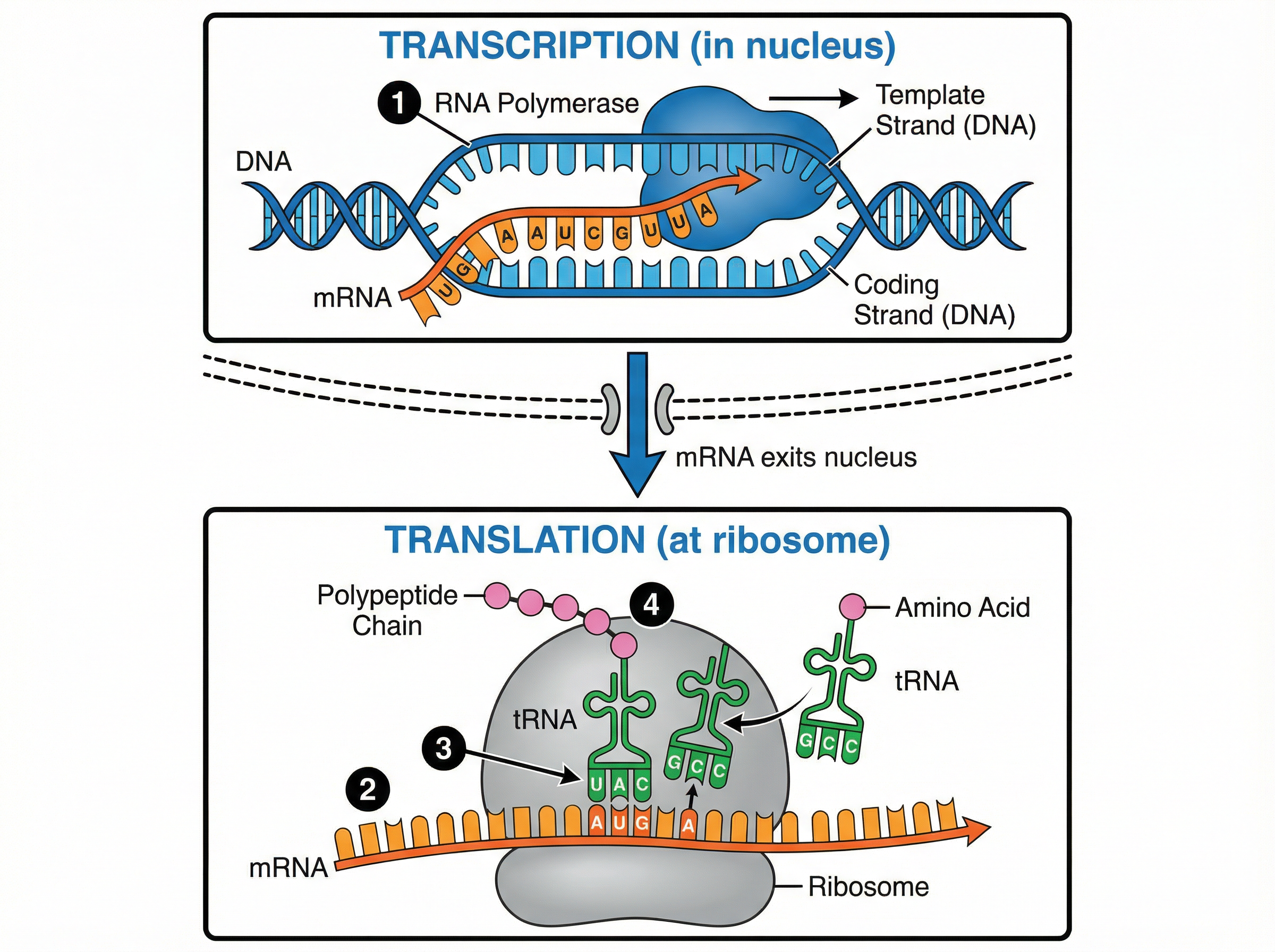
Protein synthesis is the process by which the genetic code is used to build functional proteins. It occurs in two main stages: transcription (in the nucleus) and translation (at the ribosome).
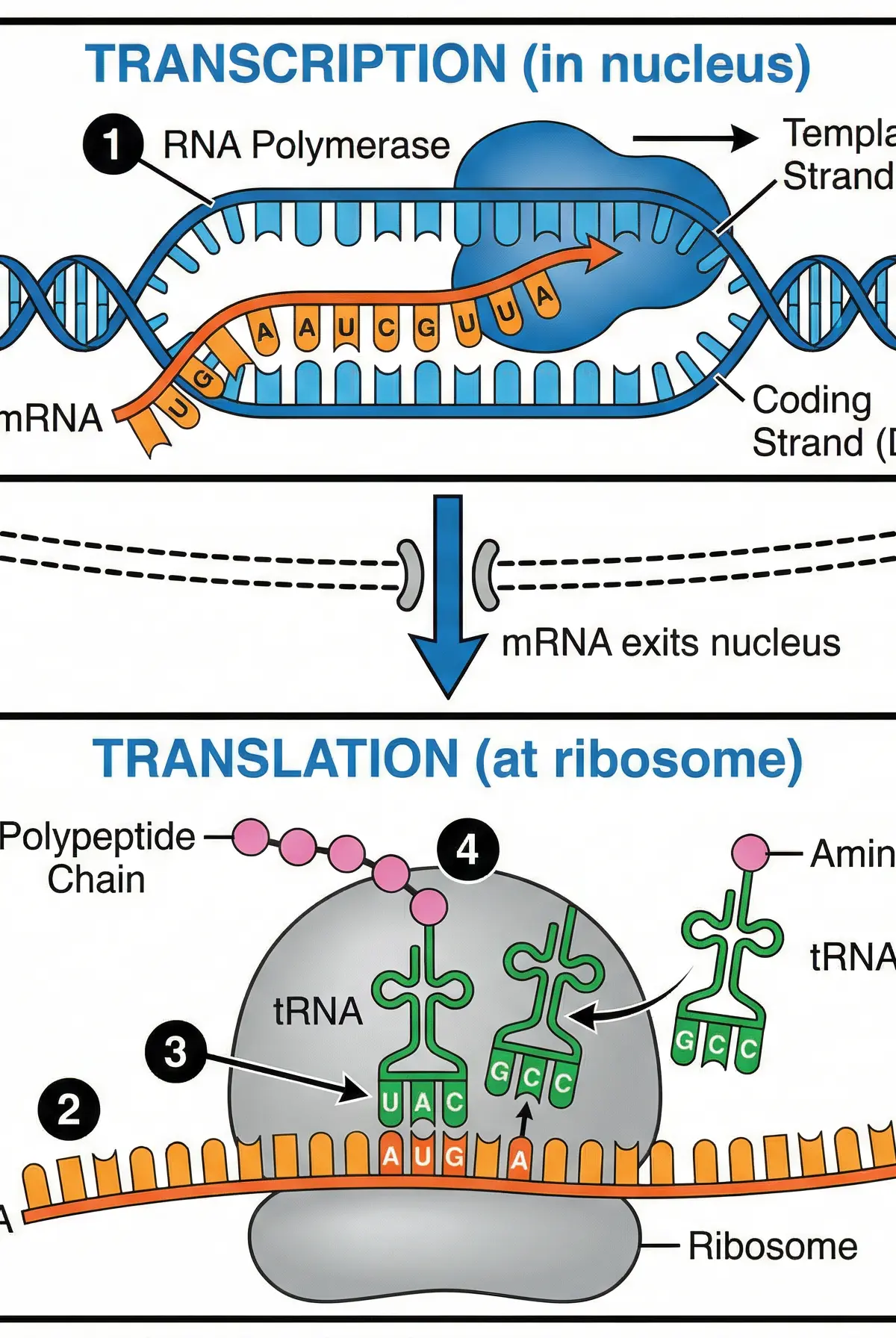
Stage 1: TranscriptionTranscription is the process of making a messenger RNA (mRNA) copy of a gene.
- The DNA double helix unwinds and the hydrogen bonds between the strands break, exposing the bases.
- Only one strand acts as a template (the template strand).
- The enzyme RNA polymerase binds to the non-coding region just before the gene.
- RNA polymerase moves along the template strand, joining free RNA nucleotides to form an mRNA strand.
- The mRNA strand is complementary to the template strand. Crucially, RNA contains Uracil (U) instead of Thymine (T). So, if the DNA template is A-T-C-G, the mRNA will be U-A-G-C.
- The mRNA detaches and leaves the nucleus through a nuclear pore.
Stage 2: TranslationTranslation is the process of converting the mRNA sequence into a polypeptide chain (protein).
- The mRNA attaches to a ribosome in the cytoplasm.
- Carrier molecules called tRNA (transfer RNA) bring specific amino acids to the ribosome.
- Each tRNA molecule has an anticodon (three bases) that is complementary to a specific mRNA codon.
- The ribosome reads the mRNA one codon at a time. The tRNA with the complementary anticodon binds to the mRNA, bringing its specific amino acid into position.
- The ribosome joins the amino acids together with peptide bonds to form a polypeptide chain.
- Once a 'stop' codon is reached, the polypeptide is released and folds into its unique 3D functional shape (e.g., an enzyme active site).
Concept 5: Mutations and Genetic Profiling
A mutation is a random, spontaneous change in the sequence of DNA bases. If a mutation occurs in a gene, it changes the sequence of bases. This changes the triplet code, which may change the sequence of amino acids in the polypeptide. If the amino acid sequence changes, the protein will fold differently, altering its 3D shape and potentially its function (e.g., an enzyme's active site may no longer fit its substrate).
Genetic profiling (DNA fingerprinting) exploits the highly variable non-coding regions of DNA, specifically Short Tandem Repeats (STRs).
- A DNA sample is extracted (e.g., from blood or saliva).
- The DNA is cut into fragments using specific restriction enzymes.
- The fragments are separated by size using a technique called gel electrophoresis.
- This creates a unique pattern of bands (a profile) that can be compared to other samples to identify individuals in forensic science or establish paternity.
Listen to our deep-dive podcast episode covering these concepts in detail:
Visual Resources
2 diagrams and illustrations
Interactive Diagrams
2 interactive diagrams to visualise key concepts
Conceptual Flow Outline
The sequence of events in protein synthesis: from transcription in the nucleus to translation at the ribosome.
Conceptual Flow Outline
The organisation of the genome, showing the hierarchy from the entire genome down to coding and non-coding regions.
Worked Examples
3 worked examples — open one to explore the question and available guidance.
Practice Questions
Test your understanding — click to reveal model answers
Define the term 'genome'. (1 mark)
Hint: Think about the *entirety* of the genetic information.
A DNA molecule contains 28% Adenine. Calculate the percentage of Cytosine in this DNA molecule. Show your working. (2 marks)
Hint: Remember complementary base pairing rules. If there is 28% Adenine, how much Thymine must there be?
Describe the role of tRNA in protein synthesis. (3 marks)
Hint: Where does tRNA go, what does it carry, and how does it know where to bind?
Explain why a mutation in a non-coding region of DNA could still affect the phenotype of an organism. (3 marks)
Hint: What is the function of non-coding DNA? How does it affect genes?
Compare the processes of transcription and translation. (4 marks)
Hint: Use comparative language. Think about location, templates, products, and molecules involved.