AQA · GCSE · Business
Course version: 8132 · Version from Sept 2017
What business operations involve, their role within the production of…
Full specification wording
Business operations: What business operations involve, their role within the production of goods and the provision of services, and how they influence business activity.
Business operations are the day-to-day activities that turn inputs into finished goods or services.
Checked against the AQA 8132 specification (opens in a new tab) on .
- Point 2 of 2
- 4 key terms
Study notes
From the checked teaching notes for this specification point.
The idea
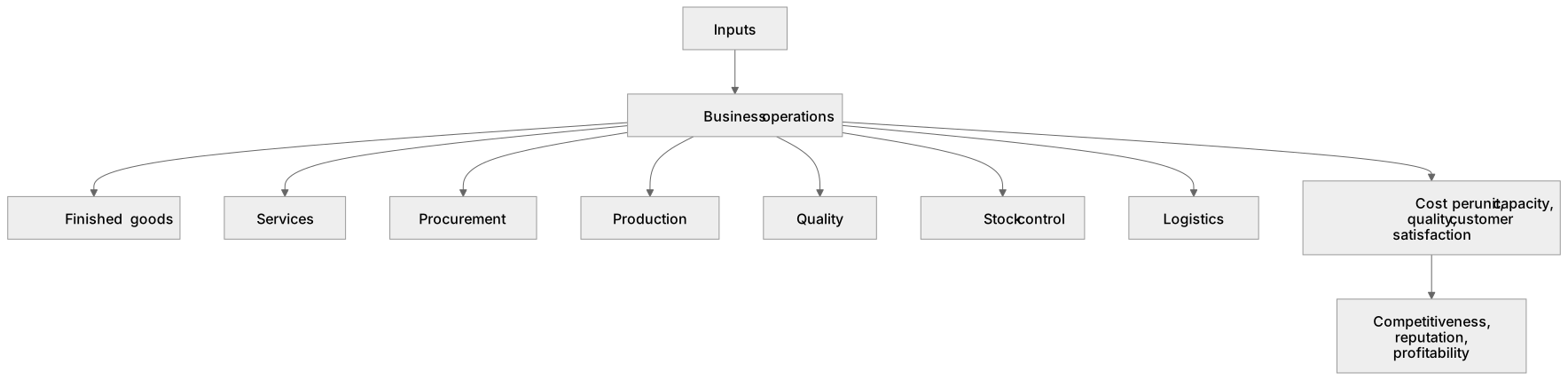
Business operations are the day-to-day activities that turn inputs into finished goods or services. They cover procurement, production, quality, stock control and logistics. In manufacturing, operations transform raw materials into tangible products; in services, they organise people, facilities and information to deliver an experience. Operations influence cost per unit, capacity, quality, customer satisfaction and competitiveness. For example, a bakery combines flour, labour and ovens to produce bread; a hotel combines rooms, staff and booking systems to provide hospitality. Efficient operations lower waste and lead times, while poor operations raise costs and damage reputation. Operations therefore sit at the centre of business activity, linking finance, marketing and human resources.
What earns the marks
- Define business operations as the processes that convert inputs into outputs of goods or services.
- Explain the role of operations in producing tangible goods, such as transforming raw materials into finished products.
- Explain the role of operations in providing services, such as organising people and facilities to deliver an experience.
- Analyse how operations decisions influence cost per unit, capacity, quality and customer satisfaction.
- Assess how effective or ineffective operations affect competitiveness, reputation and profitability.
Common mistakes and how to put them right
Treating operations as only factory production.
Put it right: Operations also cover service delivery, logistics and quality control.
Confusing operations with marketing.
Put it right: Operations focuses on creating and delivering the product, while marketing focuses on promoting and selling it.
Assuming efficient operations always guarantee profit.
Put it right: Operations must still align with demand, pricing and wider business strategy.
Exam tips
- Use a named business to show how operations convert specific inputs into outputs.
- Link each operational point to a consequence such as lower cost, higher quality or repeat custom.
- For longer answers, compare efficient and inefficient operations before reaching a judgement.
Try the lesson
The start of the Business operations: What business operations involve, their role within the production of goods and the provision of services, and how they influence business activity. lesson, made from checked teaching notes for this specification point.
Have a go first
Which of the following best describes what business operations involve?
Listen
Business operations are the day-to-day activities that turn inputs into finished goods or services. They cover procurement, production, quality, stock control and logistics. In manufacturing, operations transform raw materials into tangible products; in services, they organise people, facilities and information to deliver an experience. Operations influence cost per unit, capacity, quality, customer satisfaction and competitiveness. For example, a bakery combines flour, labour and ovens to produce bread; a hotel combines rooms, staff and booking systems to provide hospitality. Efficient operations lower waste and lead times, while poor operations raise costs and damage reputation. Operations therefore sit at the centre of business activity, linking finance, marketing and human resources. A strong answer earns marks for these points. Define business operations as the processes that convert inputs into outputs of goods or services. Explain the role of operations in producing tangible goods, such as transforming raw materials into finished products. Explain the role of operations in providing services, such as organising people and facilities to deliver an experience. Analyse how operations decisions influence cost per unit, capacity, quality and customer satisfaction. A common slip: Treating operations as only factory production. Instead, operations also cover service delivery, logistics and quality control. Exam tip: Use a named business to show how operations convert specific inputs into outputs.
See it
Watch it explained
What is the one idea the video explains? Say it in a sentence.
Read the described scene instead
Business operations are the day-to-day activities that turn inputs into finished goods or services. They include procurement, production, quality, stock control and logistics. Operations are not only factory work; they also cover service delivery and quality control. Operations link with finance, marketing and human resources. In manufacturing, they transform raw materials into tangible products. In services, they organise people, facilities and information to deliver an experience. This makes operations central to business activity. The core process is transformation: inputs become outputs. A bakery combines flour, labour and ovens to produce bread. A hotel combines rooms, staff and booking systems to provide hospitality. Efficient operations lower waste and lead times, while poor operations raise costs and damage reputation. Pause and think: how do operations affect a bakery's competitiveness? A bakery combines flour, labour and ovens to produce bread. If operations lower waste and lead times, cost per unit can fall. Operations also influence quality and customer satisfaction. A hotel uses rooms, staff and booking systems; poor operations can raise costs and damage reputation, reducing repeat custom. A common mistake is treating operations as only factory production. Operations also cover service delivery, logistics and quality control. Another mistake is confusing operations with marketing. Operations create and deliver the product, while marketing promotes and sells it. Also, efficient operations do not always guarantee profit; they must still align with demand, pricing and wider business strategy. To recap, operations convert inputs into outputs of goods or services. They influence cost per unit, capacity, quality and customer satisfaction. Effective operations can support competitiveness and profitability, while ineffective operations can raise costs and damage reputation. Operations therefore sit at the centre of business activity.
Key words
Say what each word means before you turn the card.
Business operations
Try answering aloud or in your head before turning the card.
Role of operations in goods and services
Try answering aloud or in your head before turning the card.
Impact on cost, quality and capacity
Try answering aloud or in your head before turning the card.
Link between operations and competitiveness
Try answering aloud or in your head before turning the card.
See every definition
- Business operations
- The day-to-day activities that turn inputs into finished goods or services, covering procurement, production, quality, stock control and logistics.
- Role of operations in goods and services
- In manufacturing, raw materials are transformed into tangible products; in services, people, facilities and information are organised to deliver an experience.
- Impact on cost, quality and capacity
- Operations influence cost per unit, capacity, quality and customer satisfaction, with efficient operations lowering waste and lead times.
- Link between operations and competitiveness
- Operations sit at the centre of business activity, linking finance, marketing and human resources, and affect competitiveness, reputation and profitability.
Label the diagram
Some boxes have lost their names. Pick the right name for each number.
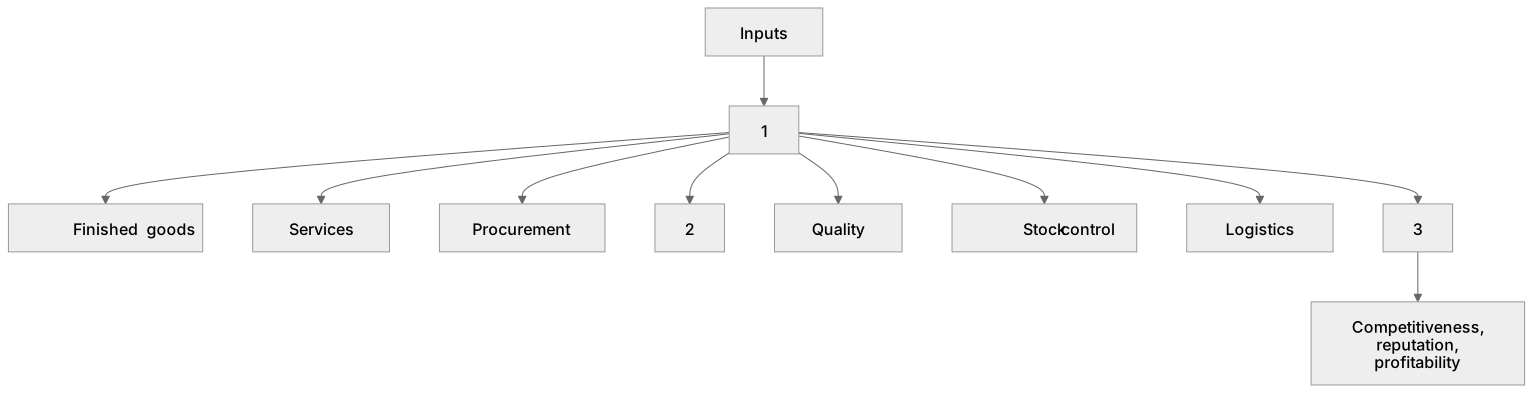
1Box 1
2Box 2
3Box 3
There is more to this lesson
The full lesson goes on to check your understanding and help you earn the marks. Create a free account to carry on, with your progress saved.
A week of Premium from your first lesson · Then the free plan continues · No card, no charge
Test your understanding of Business operations: What business operations involve, their role within the production of goods and the provision of services, and how they influence business activity.
Active recall beats re-reading. Take an instant quiz now to test what you’ve learned and lock it into long-term memory.
A week of Premium from your first lesson · Then the free plan continues · No card, no charge