AQA · GCSE · Business
Course version: 8132 · Version from Sept 2017
Customer engagement (creating a positive experience for the customer)
Full specification wording
Good customer services: customer engagement (creating a positive experience for the customer)
Customer engagement means the ways a business builds an ongoing, positive relationship with customers so they feel valued and want to return.
Checked against the AQA 8132 specification (opens in a new tab) on .
- Point 4 of 19
- 4 key terms
Study notes
From the checked teaching notes for this specification point.
The idea
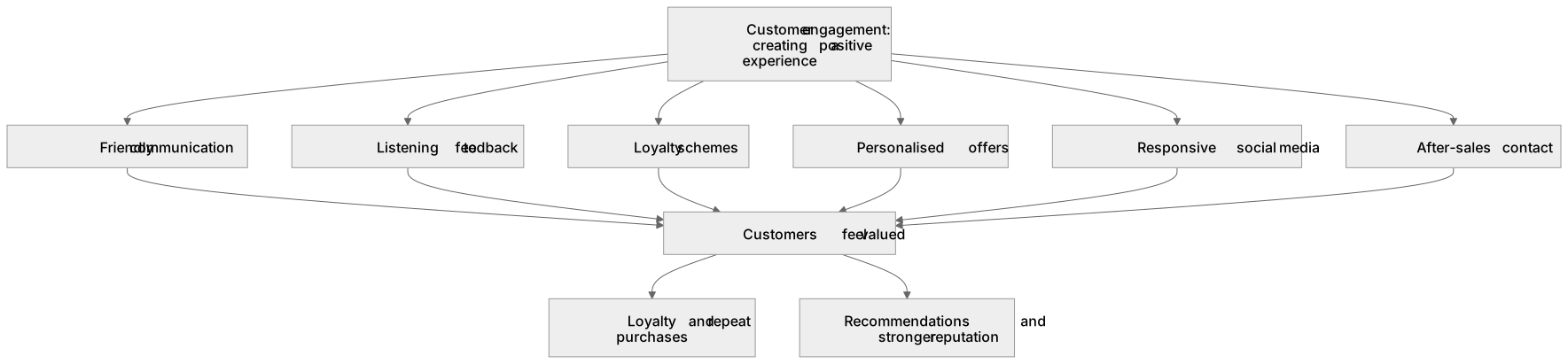
Customer engagement means the ways a business builds an ongoing, positive relationship with customers so they feel valued and want to return. It goes beyond a single transaction and includes friendly communication, listening to feedback, loyalty schemes, personalised offers, responsive social media and after-sales contact. For example, a café that remembers regulars' orders, replies to reviews and rewards repeat visits creates a positive experience that encourages loyalty. Engagement supports good customer service because customers who feel involved and appreciated are more likely to buy again, recommend the business and forgive minor problems. Poor engagement, such as ignoring complaints or sending irrelevant messages, damages trust. Assessed by explaining methods of engagement and analysing how a positive experience affects loyalty, reputation and sales.
What earns the marks
- Defines customer engagement as building an ongoing positive relationship and experience for customers.
- Identifies methods such as friendly communication, feedback, loyalty schemes, personalisation and social media interaction.
- Explains how engagement creates a positive customer experience and makes customers feel valued.
- Analyses benefits such as repeat purchases, loyalty, positive word of mouth and stronger reputation.
- Analyses risks of poor engagement, such as lost customers, negative reviews and damaged trust.
- Applies engagement methods to a specific business context and customer type.
Common mistakes and how to put them right
Confusing customer engagement with a single sale.
Put it right: Engagement is an ongoing relationship, not one transaction.
Listing methods without explaining the positive experience created.
Put it right: Link each method to how the customer feels or behaves.
Assuming engagement only means discounts.
Put it right: Communication, feedback and personalisation also build engagement.
Exam tips
- Explain the method and then the customer experience it creates, then the business benefit.
- Use a real or named business type to make the answer applied.
- For analysis, chain the effect: positive experience leads to loyalty, which leads to repeat sales and recommendations.
Try the lesson
The start of the Good customer services: customer engagement (creating a positive experience for the customer) lesson, made from checked teaching notes for this specification point.
Have a go first
What is meant by customer engagement in the context of good customer services?
Listen
Customer engagement means the ways a business builds an ongoing, positive relationship with customers so they feel valued and want to return. It goes beyond a single transaction and includes friendly communication, listening to feedback, loyalty schemes, personalised offers, responsive social media and after-sales contact. For example, a café that remembers regulars' orders, replies to reviews and rewards repeat visits creates a positive experience that encourages loyalty. Engagement supports good customer service because customers who feel involved and appreciated are more likely to buy again, recommend the business and forgive minor problems. Poor engagement, such as ignoring complaints or sending irrelevant messages, damages trust. Assessed by explaining methods of engagement and analysing how a positive experience affects loyalty, reputation and sales. A strong answer earns marks for these points. Defines customer engagement as building an ongoing positive relationship and experience for customers. Identifies methods such as friendly communication, feedback, loyalty schemes, personalisation and social media interaction. Explains how engagement creates a positive customer experience and makes customers feel valued. Analyses benefits such as repeat purchases, loyalty, positive word of mouth and stronger reputation. A common slip: Confusing customer engagement with a single sale. Instead, engagement is an ongoing relationship, not one transaction. Exam tip: Explain the method and then the customer experience it creates, then the business benefit.
See it
Key words
Say what each word means before you turn the card.
Customer engagement
Try answering aloud or in your head before turning the card.
Customer loyalty and retention
Try answering aloud or in your head before turning the card.
Communication and feedback
Try answering aloud or in your head before turning the card.
Business reputation
Try answering aloud or in your head before turning the card.
See every definition
- Customer engagement
- Creating a positive experience for the customer, building an ongoing, positive relationship so they feel valued and want to return.
- Customer loyalty and retention
- Encouraging customers who feel involved and appreciated to buy again, recommend the business and forgive minor problems.
- Communication and feedback
- Friendly communication and listening to feedback, including responsive social media and after-sales contact, which build engagement.
- Business reputation
- A stronger reputation arising from positive word of mouth, while poor engagement such as ignoring complaints damages trust.
Label the diagram
Some boxes have lost their names. Pick the right name for each number.
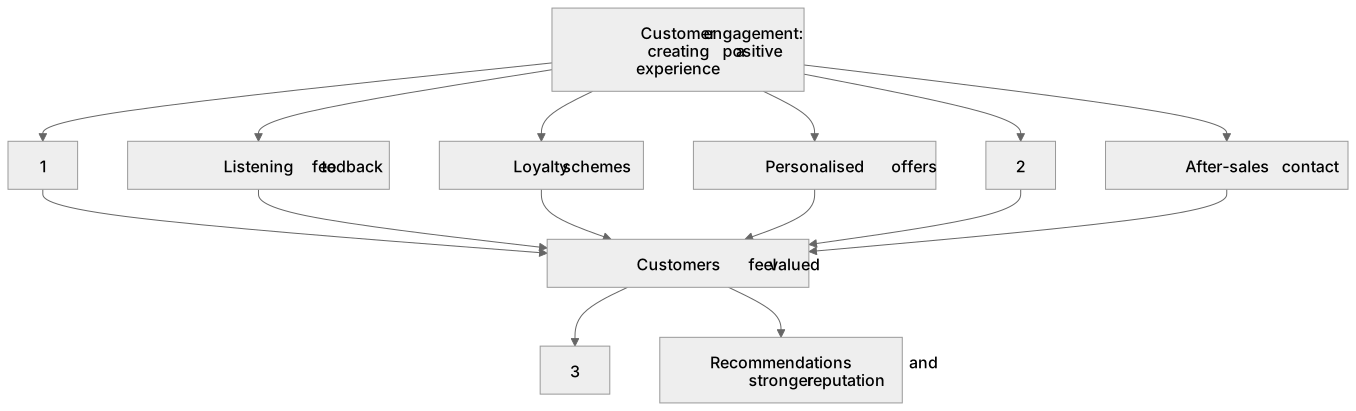
1Box 1
2Box 2
3Box 3
There is more to this lesson
The full lesson goes on to check your understanding and help you earn the marks. Create a free account to carry on, with your progress saved.
A week of Premium from your first lesson · Then the free plan continues · No card, no charge
Test your understanding of Good customer services: customer engagement (creating a positive experience for the customer)
Active recall beats re-reading. Take an instant quiz now to test what you’ve learned and lock it into long-term memory.
A week of Premium from your first lesson · Then the free plan continues · No card, no charge