AQA · GCSE · Business
Course version: 8132 · Version from Sept 2017
Influences on business: finance.
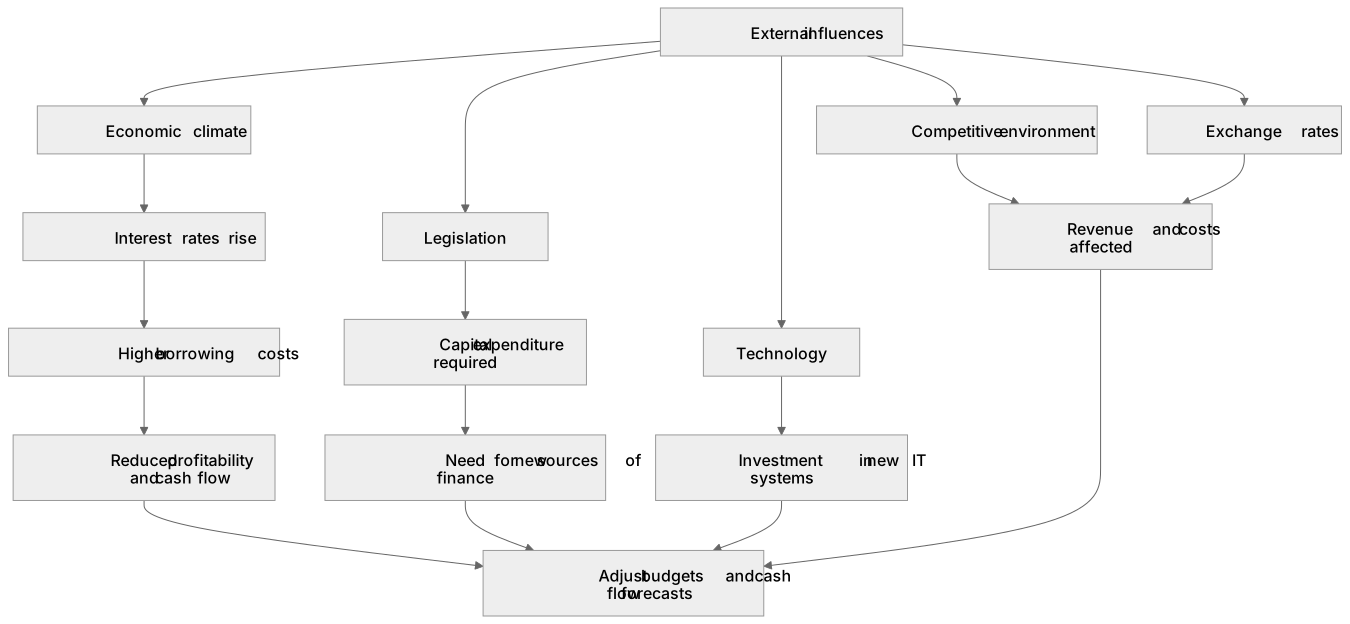
External influences such as the economic climate, legislation, and technology have a significant impact on a business's finance function.
Checked against the AQA 8132 specification (opens in a new tab) on .
- Point 6 of 6
- 3 key terms
Study notes
From the checked teaching notes for this specification point.
The idea
External influences such as the economic climate, legislation, and technology have a significant impact on a business's finance function. For example, if the Bank of England raises interest rates from 4% to 5%, a business with a £100,000 variable-rate loan will see its annual interest costs rise from £4,000 to £5,000, reducing profitability and cash flow. Similarly, new environmental legislation might require capital expenditure to upgrade machinery, forcing the business to seek new sources of finance. Technological changes can require investment in new IT systems but may also lower long-term costs.
What earns the marks
- Identifies external influences that impact finance, such as interest rates, exchange rates, or new legislation.
- Explains how an increase in interest rates raises the cost of borrowing, reducing profit margins and cash flow.
- Analyses the financial impact of new legislation or environmental standards, which may require unexpected capital expenditure.
- Evaluates how businesses might adjust their financial planning, such as revising cash flow forecasts, in response to economic changes.
Common mistakes and how to put them right
Confusing the finance function generally with the specific impact of external influences on finance.
Put it right: Is to focus on how external factors change costs, revenues, or funding needs.
Assuming an increase in interest rates only affects consumers.
Put it right: Is that it also directly increases borrowing costs for businesses with variable-rate debt.
Ignoring the financial cost of compliance.
Put it right: Is that new legislation often requires capital expenditure or increases operating costs.
Exam tips
- Always link the external influence (e.g., a change in exchange rates) directly to a financial outcome, such as increased costs for imported raw materials.
- Use numerical examples to show the impact, such as calculating the extra interest paid if rates rise.
Try the lesson
The start of the Influences on business: finance. lesson, made from checked teaching notes for this specification point.
Have a go first
A small manufacturing business is planning to purchase new machinery to increase its production capacity. How would a significant increase in interest rates most likely influence this business decision?
Listen
External influences such as the economic climate, legislation, and technology have a significant impact on a business's finance function. For example, if the Bank of England raises interest rates from 4% to 5%, a business with a £100,000 variable-rate loan will see its annual interest costs rise from £4,000 to £5,000, reducing profitability and cash flow. Similarly, new environmental legislation might require capital expenditure to upgrade machinery, forcing the business to seek new sources of finance. Technological changes can require investment in new IT systems but may also lower long-term costs. A strong answer earns marks for these points. Identifies external influences that impact finance, such as interest rates, exchange rates, or new legislation. Explains how an increase in interest rates raises the cost of borrowing, reducing profit margins and cash flow. Analyses the financial impact of new legislation or environmental standards, which may require unexpected capital expenditure. Evaluates how businesses might adjust their financial planning, such as revising cash flow forecasts, in response to economic changes. A common slip: Confusing the finance function generally with the specific impact of external influences on finance. Instead, is to focus on how external factors change costs, revenues, or funding needs. Exam tip: Always link the external influence (e.g., a change in exchange rates) directly to a financial outcome, such as increased costs for imported raw materials.
See it
Key words
Say what each word means before you turn the card.
Economic climate and borrowing costs
Try answering aloud or in your head before turning the card.
Financial impact of legislation
Try answering aloud or in your head before turning the card.
Adjusting financial plans
Try answering aloud or in your head before turning the card.
See every definition
- Economic climate and borrowing costs
- Changes such as a rise in interest rates increase the cost of borrowing for a business with a variable-rate loan, reducing profitability and cash flow.
- Financial impact of legislation
- New legislation or environmental standards may require unexpected capital expenditure, forcing the business to seek new sources of finance.
- Adjusting financial plans
- Businesses must adjust budgets and cash flow forecasts accordingly in response to economic changes.
Label the diagram
Some boxes have lost their names. Pick the right name for each number.
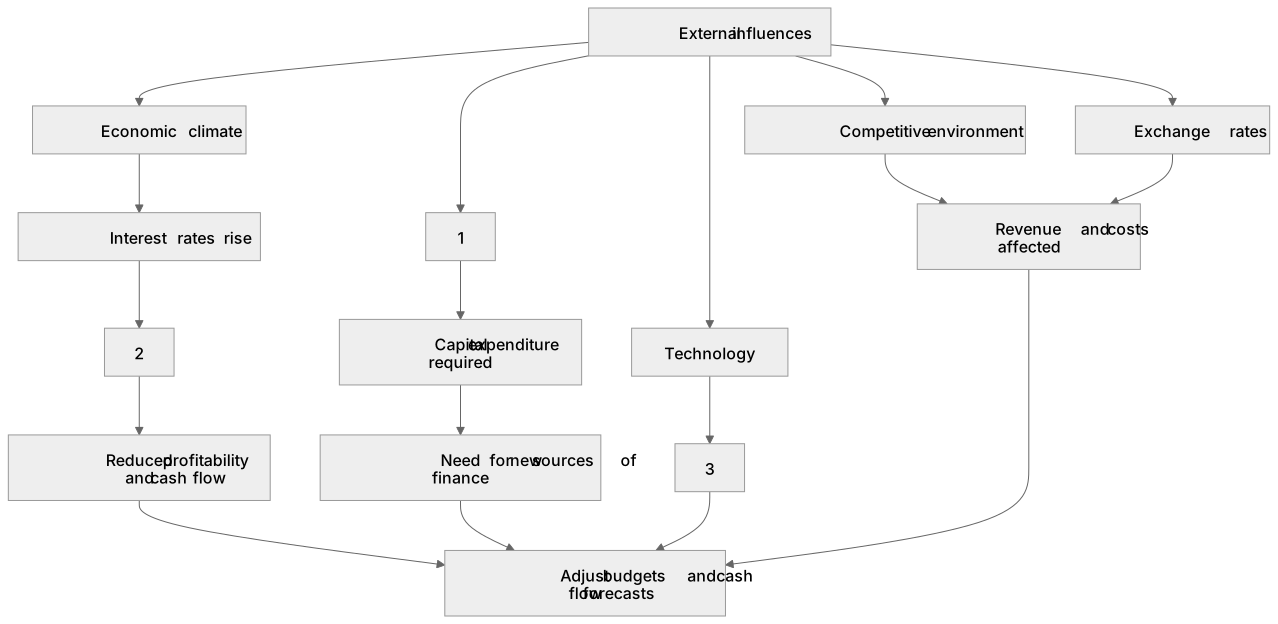
1Box 1
2Box 2
3Box 3
There is more to this lesson
The full lesson goes on to check your understanding and help you earn the marks. Create a free account to carry on, with your progress saved.
A week of Premium from your first lesson · Then the free plan continues · No card, no charge
Test your understanding of Influences on business: finance.
Active recall beats re-reading. Take an instant quiz now to test what you’ve learned and lock it into long-term memory.
A week of Premium from your first lesson · Then the free plan continues · No card, no charge