AQA · GCSE · Business
Course version: 8132 · Version from Sept 2017
Outline the main stages in the recruitment and selection process,…
Full specification wording
Recruitment and selection of employees: outline the main stages in the recruitment and selection process, including an understanding of job analysis, job description, person specification, and selection methods
The recruitment and selection process begins when a vacancy is identified.
Checked against the AQA 8132 specification (opens in a new tab) on .
- Point 5 of 8
- 4 key terms
Study notes
From the checked teaching notes for this specification point.
The idea
The recruitment and selection process begins when a vacancy is identified. Job analysis examines the tasks, responsibilities and skills required. This informs the job description, which states the job title, duties, location, pay and conditions. The person specification then lists the essential and desirable qualities, experience and qualifications of the ideal candidate. The business advertises the vacancy internally or externally, then shortlists applicants. Selection methods such as interviews, tests, presentations and references help assess candidates. Finally, the best candidate is offered the job and induction begins.
For example: A hotel may analyse the role of receptionist, write a job description, specify good communication and IT skills, advertise, shortlist, interview and then appoint.
What earns the marks
- Job analysis identifies the duties, responsibilities and skills needed for the role before any advertisement is written.
- A job description is a document that outlines the job title, main duties, location, pay and working conditions.
- A person specification describes the essential and desirable skills, experience, qualifications and personal qualities of the ideal candidate.
- Selection methods include interviews, aptitude or skills tests, presentations, group exercises and taking up references.
- The process typically moves from identifying a vacancy, through job analysis, job description and person specification, to advertising, shortlisting, selection and appointment.
- Shortlisting involves comparing applications against the person specification to decide who to invite for selection.
Common mistakes and how to put them right
Confusing the job description with the person specification.
Put it right: The job description describes the job itself, while the person specification describes the person needed to do it.
Thinking job analysis happens after advertising.
Put it right: Job analysis is carried out before the job description and person specification are written, so the vacancy can be advertised accurately.
Believing selection is only an interview.
Put it right: Selection can include tests, presentations, group tasks and references, not just a face-to-face interview.
Exam tips
- Learn the stages in order and be ready to outline them as a sequence, using connectives such as first, then and finally.
- Use a specific job example to show how each document or method is used, for example a trainee chef or a sales assistant.
- When asked about selection methods, explain how each method helps the business judge a candidate against the person specification.
Try the lesson
The start of the Recruitment and selection of employees: outline the main stages in the recruitment and selection process, including an understanding of job analysis, job description, person specification, and selection methods lesson, made from checked teaching notes for this specification point.
Have a go first
Which document states the duties, responsibilities and working conditions of a vacant post?
Listen
The recruitment and selection process begins when a vacancy is identified. Job analysis examines the tasks, responsibilities and skills required. This informs the job description, which states the job title, duties, location, pay and conditions. The person specification then lists the essential and desirable qualities, experience and qualifications of the ideal candidate. The business advertises the vacancy internally or externally, then shortlists applicants. Selection methods such as interviews, tests, presentations and references help assess candidates. Finally, the best candidate is offered the job and induction begins. For example, a hotel may analyse the role of receptionist, write a job description, specify good communication and IT skills, advertise, shortlist, interview and then appoint. A strong answer earns marks for these points. Job analysis identifies the duties, responsibilities and skills needed for the role before any advertisement is written. A job description is a document that outlines the job title, main duties, location, pay and working conditions. A person specification describes the essential and desirable skills, experience, qualifications and personal qualities of the ideal candidate. Selection methods include interviews, aptitude or skills tests, presentations, group exercises and taking up references. A common slip: Confusing the job description with the person specification. Instead, the job description describes the job itself, while the person specification describes the person needed to do it. Exam tip: Learn the stages in order and be ready to outline them as a sequence, using connectives such as first, then and finally.
See it
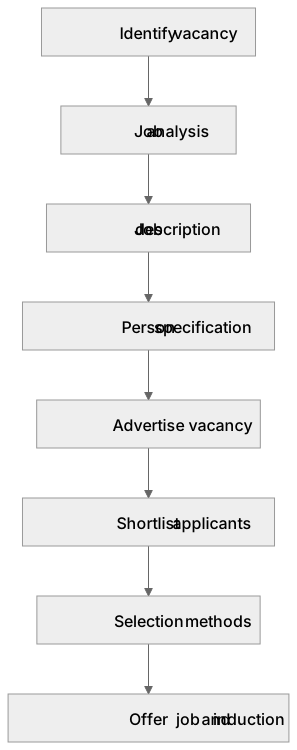
Put it in order
Put these steps in the order they happen.
- 1. Advertise vacancy
- 2. Offer job and induction
- 3. Shortlist applicants
- 4. Identify vacancy
- 5. Job analysis
- 6. Selection methods
- 7. Job description
- 8. Person specification
Key words
Say what each word means before you turn the card.
Job analysis
Try answering aloud or in your head before turning the card.
Job description
Try answering aloud or in your head before turning the card.
Person specification
Try answering aloud or in your head before turning the card.
Selection methods
Try answering aloud or in your head before turning the card.
See every definition
- Job analysis
- Examines the tasks, responsibilities and skills required for the role, and is carried out before the job description and person specification are written.
- Job description
- A document that states the job title, duties, location, pay and conditions.
- Person specification
- Lists the essential and desirable qualities, experience and qualifications of the ideal candidate.
- Selection methods
- Methods such as interviews, tests, presentations and references that help assess candidates.
Label the diagram
Some boxes have lost their names. Pick the right name for each number.
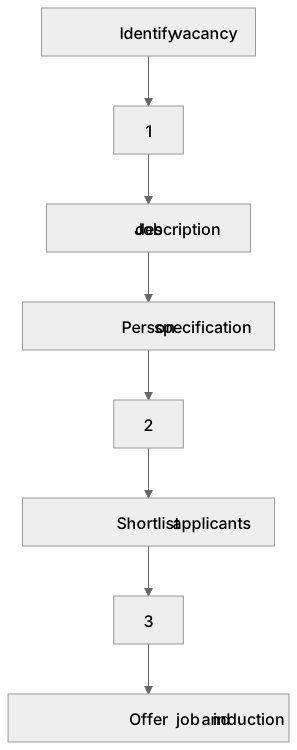
1Box 1
2Box 2
3Box 3
There is more to this lesson
The full lesson goes on to check your understanding and help you earn the marks. Create a free account to carry on, with your progress saved.
A week of Premium from your first lesson · Then the free plan continues · No card, no charge
Test your understanding of Recruitment and selection of employees: outline the main stages in the recruitment and selection process, including an understanding of job analysis, job description, person specification, and selection methods
Active recall beats re-reading. Take an instant quiz now to test what you’ve learned and lock it into long-term memory.
A week of Premium from your first lesson · Then the free plan continues · No card, no charge