AQA · GCSE · Business
Course version: 8132 · Version from Sept 2017
Price, product, promotion and place (4Ps): brand image.
Full specification wording
The elements of the marketing mix: price, product, promotion and place (4Ps): brand image.
Brand image is the overall perception customers have of a brand, shaped by their experiences, advertising, packaging, price and word of mouth.
Checked against the AQA 8132 specification (opens in a new tab) on .
- Point 20 of 80
- 2 key terms
Study notes
From the checked teaching notes for this specification point.
The idea
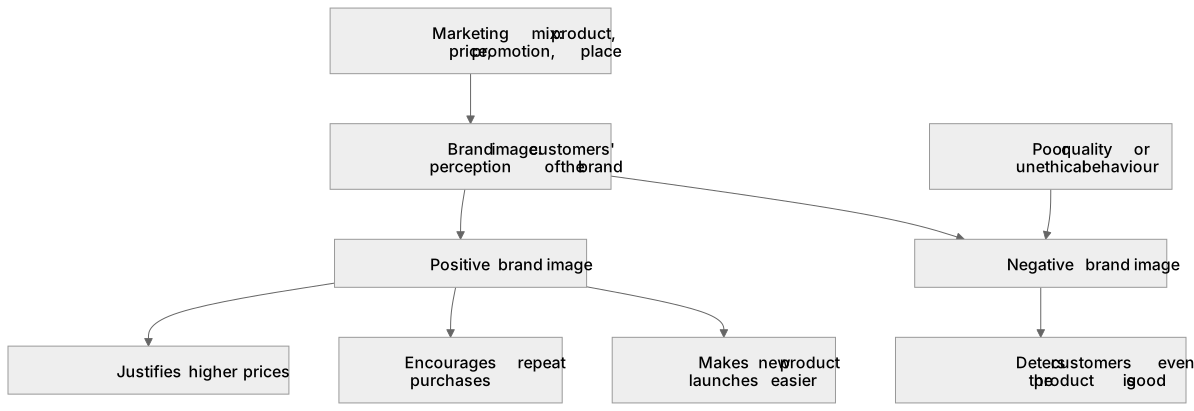
Brand image is the overall perception customers have of a brand, shaped by their experiences, advertising, packaging, price and word of mouth. It is not controlled directly by the business; it exists in customers' minds. A positive brand image can justify higher prices, encourage repeat purchases and make new product launches easier. A negative image can deter customers even if the product itself is good. For example, a budget supermarket may build an image of value, while a luxury car brand may build an image of prestige. In the marketing mix, brand image influences product design, pricing strategy, promotional tone and choice of place. It is built consistently over time and can be damaged quickly by poor quality or unethical behaviour. Businesses use market research and social media monitoring to measure and manage brand image.
What earns the marks
- Defines brand image as the perception of a brand held by customers, distinct from brand identity which is how the business wants to be seen.
- Explains how elements of the marketing mix, such as product quality, price, promotion and place, contribute to brand image.
- Analyses the benefits of a positive brand image, including customer loyalty, pricing power and easier new product acceptance.
- Analyses the risks of a negative brand image, such as lost sales, difficulty charging premium prices and damage from poor customer service or unethical behaviour.
- Evaluates how brand image can be managed over time through consistent marketing, quality control and responding to customer feedback.
Common mistakes and how to put them right
Confusing brand image with brand identity.
Put it right: Brand image is the customer's perception, while brand identity is the business's intended presentation.
Believing brand image is fixed.
Put it right: It changes with customer experiences, competitor actions and wider social trends.
Assuming a strong brand image always allows higher prices.
Put it right: Customers must still perceive value, and a mismatch can reduce sales.
Exam tips
- Use a specific brand example and explain how its image affects customer behaviour.
- Connect brand image to at least two marketing mix elements to show integrated understanding.
- When evaluating, consider both the benefits of a strong image and the difficulties of repairing a damaged one.
Try the lesson
The start of the The elements of the marketing mix: price, product, promotion and place (4Ps): brand image. lesson, made from checked teaching notes for this specification point.
Have a go first
What is meant by the brand image of a business?
Listen
Brand image is the overall perception customers have of a brand, shaped by their experiences, advertising, packaging, price and word of mouth. It is not controlled directly by the business; it exists in customers' minds. A positive brand image can justify higher prices, encourage repeat purchases and make new product launches easier. A negative image can deter customers even if the product itself is good. For example, a budget supermarket may build an image of value, while a luxury car brand may build an image of prestige. In the marketing mix, brand image influences product design, pricing strategy, promotional tone and choice of place. It is built consistently over time and can be damaged quickly by poor quality or unethical behaviour. Businesses use market research and social media monitoring to measure and manage brand image. A strong answer earns marks for these points. Defines brand image as the perception of a brand held by customers, distinct from brand identity which is how the business wants to be seen. Explains how elements of the marketing mix, such as product quality, price, promotion and place, contribute to brand image. Analyses the benefits of a positive brand image, including customer loyalty, pricing power and easier new product acceptance. Analyses the risks of a negative brand image, such as lost sales, difficulty charging premium prices and damage from poor customer service or unethical behaviour. A common slip: Confusing brand image with brand identity. Instead, brand image is the customer's perception, while brand identity is the business's intended presentation. Exam tip: Use a specific brand example and explain how its image affects customer behaviour.
See it
Key words
Say what each word means before you turn the card.
Brand image
Try answering aloud or in your head before turning the card.
Brand identity
Try answering aloud or in your head before turning the card.
See every definition
- Brand image
- The overall perception customers have of a brand, shaped by their experiences, advertising, packaging, price and word of mouth.
- Brand identity
- How the business wants to be seen, which is distinct from the perception of a brand held by customers.
Label the diagram
Some boxes have lost their names. Pick the right name for each number.
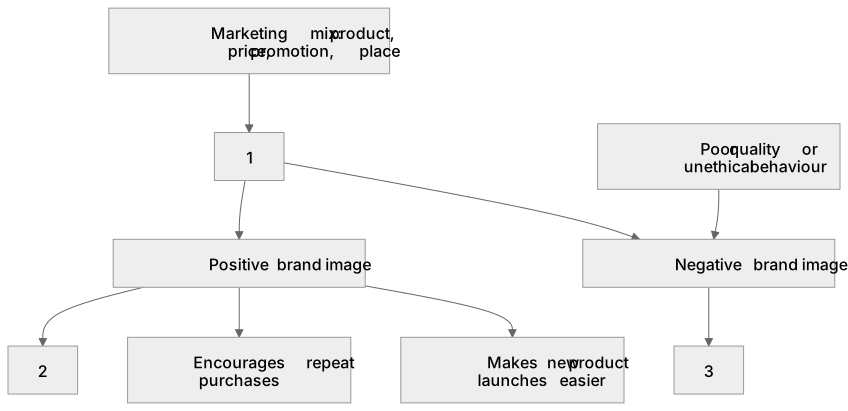
1Box 1
2Box 2
3Box 3
There is more to this lesson
The full lesson goes on to check your understanding and help you earn the marks. Create a free account to carry on, with your progress saved.
A week of Premium from your first lesson · Then the free plan continues · No card, no charge
Test your understanding of The elements of the marketing mix: price, product, promotion and place (4Ps): brand image.
Active recall beats re-reading. Take an instant quiz now to test what you’ve learned and lock it into long-term memory.
A week of Premium from your first lesson · Then the free plan continues · No card, no charge