AQA · GCSE · Business
Course version: 8132 · Version from Sept 2017
Price, product, promotion and place (4Ps): create or change the image of…
Full specification wording
The elements of the marketing mix: price, product, promotion and place (4Ps): create or change the image of the product
Promotion does more than persuade customers to buy; it also shapes what customers think and feel about a product, which is the product's image.
Checked against the AQA 8132 specification (opens in a new tab) on .
- Point 66 of 80
- 4 key terms
Study notes
From the checked teaching notes for this specification point.
The idea
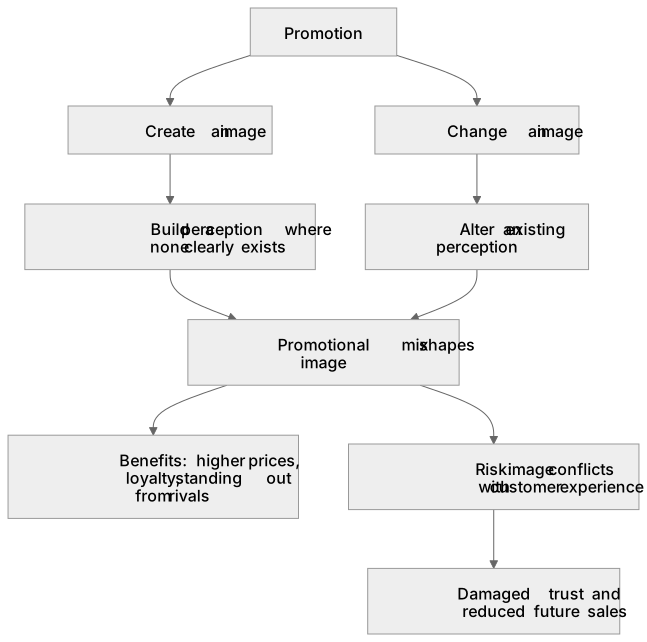
Promotion does more than persuade customers to buy; it also shapes what customers think and feel about a product, which is the product's image. Creating an image means building a perception where none clearly exists, for example a new soft drink using bright, youthful advertising to position itself as fun and modern. Changing an image means altering an existing perception, for example a budget supermarket running quality-focused advertising to move customers away from seeing it as cheap and basic. Image is built through every element of the promotional mix, including advertising style, celebrity endorsement, sponsorship, packaging messages and social media tone. A successful image helps a business charge higher prices, build customer loyalty and stand out from rivals, but an image that conflicts with what customers actually experience can damage trust and reduce future sales.
What earns the marks
- Explains that promotion can create an image by establishing a perception of the product for the first time, such as positioning a new brand as premium or environmentally friendly.
- Explains that promotion can change an image by altering existing customer perceptions, for example rebranding a value product as a higher-quality choice.
- Identifies the promotional methods that shape image, including advertising style, celebrity endorsement, sponsorship, packaging and social media content.
- Links image to commercial benefits such as higher prices, customer loyalty and differentiation from competitors.
- Recognises the risk that a promotional image inconsistent with customer experience can damage trust and sales.
- Applies image creation or change to the specific business in the case study and judges how effective the approach is likely to be.
Common mistakes and how to put them right
Assuming image change happens through advertising alone.
Put it right: Candidates should recognise that price, product quality, packaging and place also contribute to the image customers form.
Describing an image without linking it to a business benefit.
Put it right: Candidates should explain how the new or changed image affects pricing power, loyalty or competitiveness.
Overlooking the risk of a mismatch between promoted image and actual experience.
Put it right: Candidates should note that disappointed customers may reject the brand and reduce repeat purchases.
Exam tips
- Use the case study to identify the current image of the product and the image the business wants to create or change to.
- Develop image points by explaining the promotional method used and the customer perception it is intended to produce.
- For evaluation, weigh the benefits of the new image against the cost of the campaign and the risk that customers may not accept the change.
Try the lesson
The start of the The elements of the marketing mix: price, product, promotion and place (4Ps): create or change the image of the product lesson, made from checked teaching notes for this specification point.
Have a go first
A budget clothing brand wants to be seen as a luxury fashion label. It launches a high-profile magazine advertising campaign featuring famous celebrities. What is the main purpose of this promotional activity?
Listen
Promotion does more than persuade customers to buy; it also shapes what customers think and feel about a product, which is the product's image. Creating an image means building a perception where none clearly exists, for example a new soft drink using bright, youthful advertising to position itself as fun and modern. Changing an image means altering an existing perception, for example a budget supermarket running quality-focused advertising to move customers away from seeing it as cheap and basic. Image is built through every element of the promotional mix, including advertising style, celebrity endorsement, sponsorship, packaging messages and social media tone. A successful image helps a business charge higher prices, build customer loyalty and stand out from rivals, but an image that conflicts with what customers actually experience can damage trust and reduce future sales. A strong answer earns marks for these points. Explains that promotion can create an image by establishing a perception of the product for the first time, such as positioning a new brand as premium or environmentally friendly. Explains that promotion can change an image by altering existing customer perceptions, for example rebranding a value product as a higher-quality choice. Identifies the promotional methods that shape image, including advertising style, celebrity endorsement, sponsorship, packaging and social media content. Links image to commercial benefits such as higher prices, customer loyalty and differentiation from competitors. Exam tip: Use the case study to identify the current image of the product and the image the business wants to create or change to.
See it
Key words
Say what each word means before you turn the card.
Creating a new image
Try answering aloud or in your head before turning the card.
Changing an established image
Try answering aloud or in your head before turning the card.
Impact of image on pricing, loyalty and competitiveness
Try answering aloud or in your head before turning the card.
Risk of an inconsistent image
Try answering aloud or in your head before turning the card.
See every definition
- Creating a new image
- Building a perception of the product where none clearly exists, for example a new soft drink using bright, youthful advertising to position itself as fun and modern.
- Changing an established image
- Altering an existing perception, for example a budget supermarket running quality-focused advertising to move customers away from seeing it as cheap and basic.
- Impact of image on pricing, loyalty and competitiveness
- A successful image helps a business charge higher prices, build customer loyalty and stand out from rivals.
- Risk of an inconsistent image
- An image that conflicts with what customers actually experience can damage trust and reduce future sales.
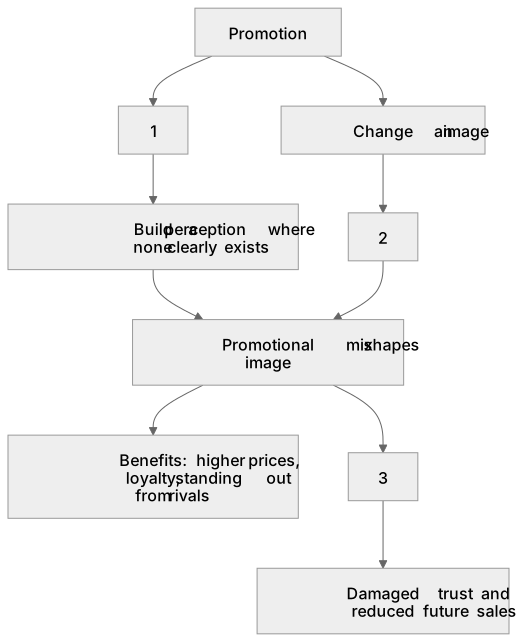
Label the diagram
Some boxes have lost their names. Pick the right name for each number.
1Box 1
2Box 2
3Box 3
There is more to this lesson
The full lesson goes on to check your understanding and help you earn the marks. Create a free account to carry on, with your progress saved.
A week of Premium from your first lesson · Then the free plan continues · No card, no charge
Test your understanding of The elements of the marketing mix: price, product, promotion and place (4Ps): create or change the image of the product
Active recall beats re-reading. Take an instant quiz now to test what you’ve learned and lock it into long-term memory.
A week of Premium from your first lesson · Then the free plan continues · No card, no charge