AQA · GCSE · Business
Course version: 8132 · Version from Sept 2017
Price, product, promotion and place (4Ps): price skimming
Full specification wording
The elements of the marketing mix: price, product, promotion and place (4Ps): price skimming
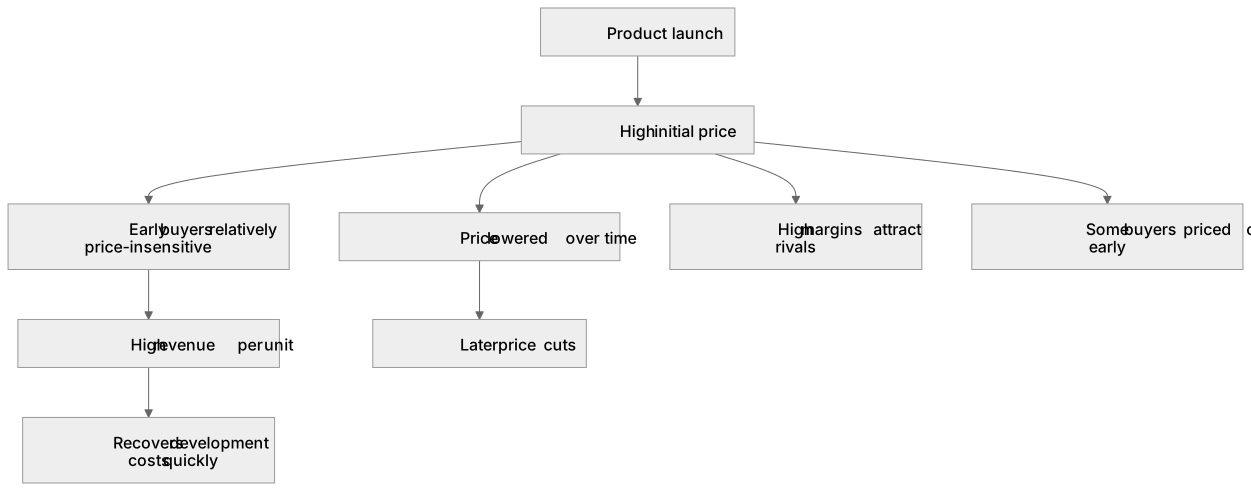
Price skimming sets a high initial price when a product launches, then lowers it over time.
Checked against the AQA 8132 specification (opens in a new tab) on .
- Point 3 of 80
- 2 key terms
Study notes
From the checked teaching notes for this specification point.
The idea
Price skimming sets a high initial price when a product launches, then lowers it over time. It works when early buyers are relatively price-insensitive and want the newest technology, so the business earns high revenue per unit before rivals enter. A phone launched at £899, later cut to £749 and then £599, shows the pattern. Skimming suits innovative or premium goods with limited competition and strong branding. It recovers development costs quickly and signals quality, but high prices can attract competitors and deter some buyers. It differs from penetration pricing, which starts low to build share.
What earns the marks
- Defines price skimming as charging a high launch price that is reduced over the product's life cycle.
- Explains that early adopters are relatively price-insensitive and pay more for newness or prestige.
- Links skimming to innovation, limited competition and strong branding, which support a premium price.
- Explains the benefit of recovering high development costs quickly while demand is inelastic.
- Contrasts skimming with penetration pricing, which starts low to win market share quickly.
- Evaluates drawbacks: high margins attract rivals, and some potential buyers are priced out early.
Common mistakes and how to put them right
Confusing skimming with penetration pricing.
Put it right: Skimming starts high and falls, while penetration starts low and may rise.
Assuming skimming suits every new product.
Put it right: It needs low price sensitivity, novelty or strong branding.
Treating the price as fixed forever.
Put it right: Skimming involves planned reductions over time.
Exam tips
- Define the term briefly, then apply it to the case business rather than leaving it abstract.
- Use the data given, such as launch price and later price cuts, to support your analysis.
- When evaluating, weigh higher early revenue against lost sales and quicker competitor entry.
Try the lesson
The start of the The elements of the marketing mix: price, product, promotion and place (4Ps): price skimming lesson, made from checked teaching notes for this specification point.
Have a go first
Which pricing strategy involves setting a high initial price for a new product and then lowering it over time?
Listen
Price skimming sets a high initial price when a product launches, then lowers it over time. It works when early buyers are relatively price-insensitive and want the newest technology, so the business earns high revenue per unit before rivals enter. A phone launched at £899, later cut to £749 and then £599, shows the pattern. Skimming suits innovative or premium goods with limited competition and strong branding. It recovers development costs quickly and signals quality, but high prices can attract competitors and deter some buyers. It differs from penetration pricing, which starts low to build share. A strong answer earns marks for these points. Defines price skimming as charging a high launch price that is reduced over the product's life cycle. Explains that early adopters are relatively price-insensitive and pay more for newness or prestige. Links skimming to innovation, limited competition and strong branding, which support a premium price. Explains the benefit of recovering high development costs quickly while demand is inelastic. A common slip: Confusing skimming with penetration pricing. Instead, skimming starts high and falls, while penetration starts low and may rise. Exam tip: Define the term briefly, then apply it to the case business rather than leaving it abstract.
See it
Key words
Say what each word means before you turn the card.
Price skimming
Try answering aloud or in your head before turning the card.
Penetration pricing
Try answering aloud or in your head before turning the card.
See every definition
- Price skimming
- Charging a high launch price that is reduced over the product's life cycle.
- Penetration pricing
- A contrasting approach that starts low to win market share quickly.
Label the diagram
Some boxes have lost their names. Pick the right name for each number.
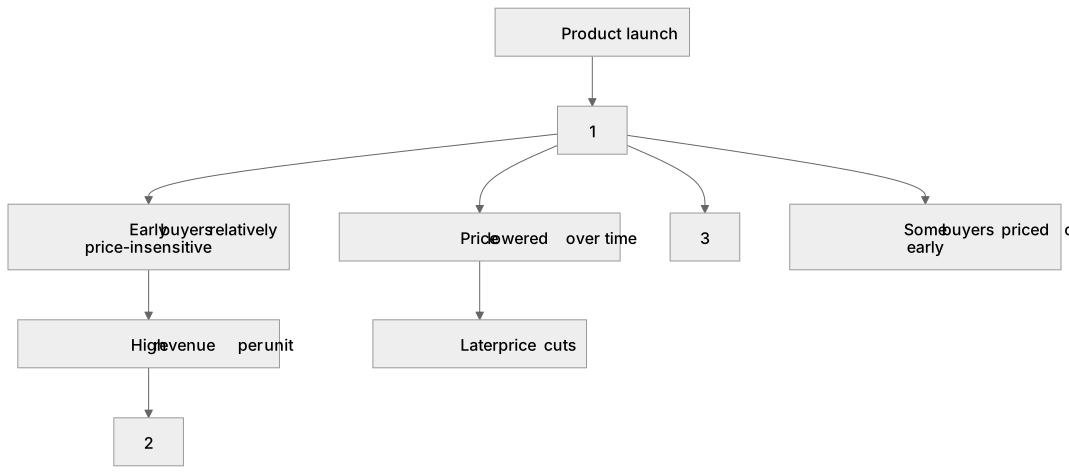
1Box 1
2Box 2
3Box 3
There is more to this lesson
The full lesson goes on to check your understanding and help you earn the marks. Create a free account to carry on, with your progress saved.
A week of Premium from your first lesson · Then the free plan continues · No card, no charge
Test your understanding of The elements of the marketing mix: price, product, promotion and place (4Ps): price skimming
Active recall beats re-reading. Take an instant quiz now to test what you’ve learned and lock it into long-term memory.
A week of Premium from your first lesson · Then the free plan continues · No card, no charge