AQA · GCSE · Business
Course version: 8132 · Version from Sept 2017
Price, product, promotion and place (4Ps): Students should have an…
Full specification wording
The elements of the marketing mix: price, product, promotion and place (4Ps): Students should have an understanding of the main features of pricing methods and the impact they will have on a business.
Features include how the price is set: adding a mark-up to unit cost, matching competitors, setting a high initial price for a new product, setting a low initial price to gain market share, using…
Checked against the AQA 8132 specification (opens in a new tab) on .
- Point 2 of 80
- 4 key terms
Study notes
From the checked teaching notes for this specification point.
The idea
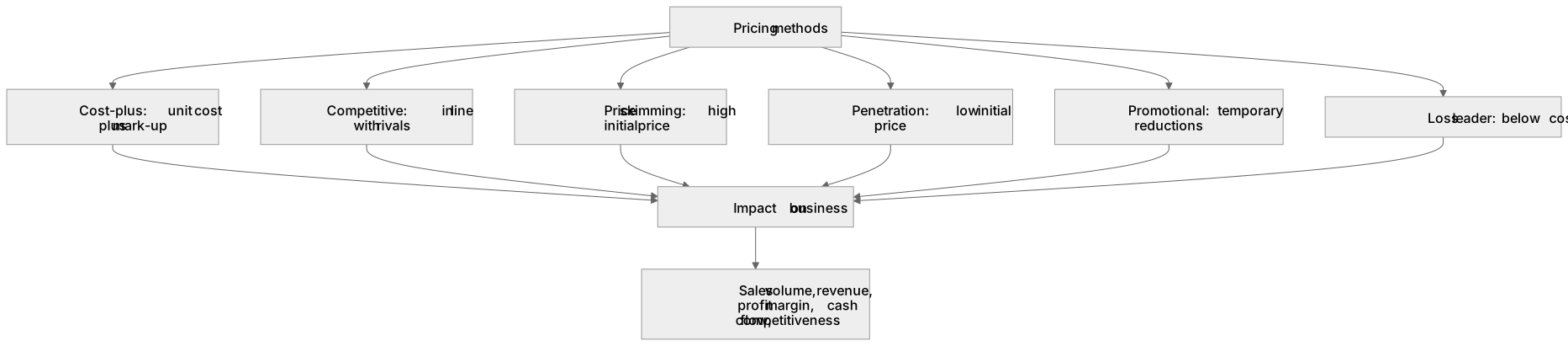
Features include how the price is set: adding a mark-up to unit cost, matching competitors, setting a high initial price for a new product, setting a low initial price to gain market share, using temporary reductions, or using a loss leader by pricing below cost. The impact can be positive or negative, affecting sales volume, revenue, profit margin, cash flow and competitiveness.
For example: Penetration pricing increases market share but reduces profit per unit; a loss leader drives footfall but causes a loss on that specific item.
What earns the marks
- Main features of cost-plus pricing: unit cost plus a percentage mark-up; impact includes guaranteed coverage of costs and a predictable profit margin.
- Main features of competitive pricing: prices set in line with rivals; impact includes maintaining competitiveness but risking lower margins if rivals cut prices.
- Main features of price skimming: high initial price for a new or innovative product; impact includes high initial revenue and profit, but may limit sales volume and attract competitors.
- Main features of penetration pricing: low initial price to attract customers; impact includes rapid market share growth but lower short-term profit per unit.
- Main features of promotional pricing: temporary price reductions; impact includes short-term sales boost but possible damage to brand image if used too often.
- Main features of loss leader pricing: selling a product below cost; impact includes increased footfall and sales of other profitable goods, despite the loss on the leader item.
Common mistakes and how to put them right
Describing a pricing method without explaining its impact.
Put it right: Link the feature to a business consequence.
Assuming all impacts are positive.
Put it right: Give both an advantage and a disadvantage.
Misunderstanding the impact of a loss leader.
Put it right: Clarify that the loss on the leader is a deliberate tactic to generate overall profit from other purchases.
Exam tips
- Use connectives such as 'therefore' or 'as a result' to link the pricing feature to its impact on the business.
- When evaluating, consider short-term and long-term effects, for example penetration pricing may reduce profit now but build loyalty later.
Try the lesson
The start of the The elements of the marketing mix: price, product, promotion and place (4Ps): Students should have an understanding of the main features of pricing methods and the impact they will have on a business. lesson, made from checked teaching notes for this specification point.
Have a go first
Which of the following is a main feature of competitive pricing?
Listen
Features include how the price is set: adding a mark-up to unit cost, matching competitors, setting a high initial price for a new product, setting a low initial price to gain market share, using temporary reductions, or using a loss leader by pricing below cost. The impact can be positive or negative, affecting sales volume, revenue, profit margin, cash flow and competitiveness. For example, penetration pricing increases market share but reduces profit per unit; a loss leader drives footfall but causes a loss on that specific item. A strong answer earns marks for these points. Main features of cost-plus pricing: unit cost plus a percentage mark-up; impact includes guaranteed coverage of costs and a predictable profit margin. Main features of competitive pricing: prices set in line with rivals; impact includes maintaining competitiveness but risking lower margins if rivals cut prices. Main features of price skimming: high initial price for a new or innovative product; impact includes high initial revenue and profit, but may limit sales volume and attract competitors. Main features of penetration pricing: low initial price to attract customers; impact includes rapid market share growth but lower short-term profit per unit. A common slip: Describing a pricing method without explaining its impact: for example, stating that penetration pricing is low without saying it can increase market share but reduce profit margin. Instead, link the feature to a business consequence. Exam tip: Use connectives such as 'therefore' or 'as a result' to link the pricing feature to its impact on the business.
See it
Key words
Say what each word means before you turn the card.
Pricing methods
Try answering aloud or in your head before turning the card.
Business impact
Try answering aloud or in your head before turning the card.
Marketing mix
Try answering aloud or in your head before turning the card.
Decision making
Try answering aloud or in your head before turning the card.
See every definition
- Pricing methods
- Ways of setting a price, such as adding a mark-up to unit cost, matching competitors, setting a high or low initial price, using temporary reductions or using a loss leader.
- Business impact
- The positive or negative effect on a business, affecting sales volume, revenue, profit margin, cash flow and competitiveness.
- Marketing mix
- The elements of price, product, promotion and place, known as the 4Ps.
- Decision making
- Judging which pricing method suits a given business context.
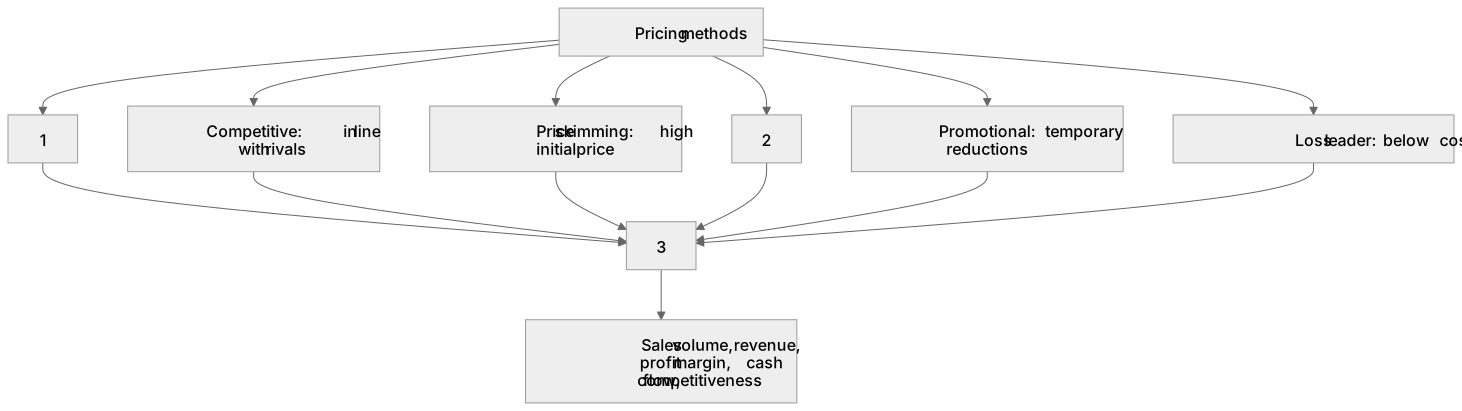
Label the diagram
Some boxes have lost their names. Pick the right name for each number.
1Box 1
2Box 2
3Box 3
There is more to this lesson
The full lesson goes on to check your understanding and help you earn the marks. Create a free account to carry on, with your progress saved.
A week of Premium from your first lesson · Then the free plan continues · No card, no charge
Test your understanding of The elements of the marketing mix: price, product, promotion and place (4Ps): Students should have an understanding of the main features of pricing methods and the impact they will have on a business.
Active recall beats re-reading. Take an instant quiz now to test what you’ve learned and lock it into long-term memory.
A week of Premium from your first lesson · Then the free plan continues · No card, no charge