AQA · GCSE · Business
Course version: 8132 · Version from Sept 2017
The role of procurement: efficiency
Efficiency in procurement and logistics means achieving desired outcomes with minimum waste of resources such as time, money and materials.
Checked against the AQA 8132 specification (opens in a new tab) on .
- Point 14 of 21
- 2 key terms
Study notes
From the checked teaching notes for this specification point.
The idea
Efficiency in procurement and logistics means achieving desired outcomes with minimum waste of resources such as time, money and materials. It involves getting the right quality and quantity of inputs, at the right time and place, at the lowest possible cost. For example, efficient procurement reduces excess stock and storage costs; efficient logistics ensures timely delivery and reduces transport costs. Efficiency can be measured by indicators such as stock turnover, order lead times and unit costs. Improvements can come from better supplier relationships, just-in-time systems, route optimisation and technology. However, efficiency must be balanced against reliability and quality; over-focus on cost can lead to disruptions.
What earns the marks
- Define efficiency as achieving outcomes with minimum waste of resources.
- Explain how procurement can improve efficiency through supplier selection, negotiation and inventory management.
- Explain how logistics can improve efficiency through transport optimisation, warehousing and delivery scheduling.
- Analyse the effects of efficiency on costs, customer satisfaction and competitiveness.
- Evaluate trade-offs between efficiency and other objectives such as reliability and quality.
- Use examples to illustrate efficient practices, such as just-in-time inventory or route planning.
Common mistakes and how to put them right
Confusing efficiency with effectiveness.
Put it right: Efficiency is about minimising waste, effectiveness is about achieving goals.
Assuming efficiency always reduces costs.
Put it right: Efficiency may require investment, and cost savings may be long-term.
Ignoring negative effects; correction: over-emphasis on efficiency can reduce flexibility and increase risk.
Exam tips
- Define efficiency clearly and link it to procurement and logistics.
- Use specific examples to show how efficiency is improved and its effects.
- Consider both benefits and drawbacks of pursuing efficiency.
Try the lesson
The start of the The role of procurement: efficiency lesson, made from checked teaching notes for this specification point.
Have a go first
In the context of procurement, what does efficiency mean for a business?
Listen
Efficiency in procurement and logistics means achieving desired outcomes with minimum waste of resources such as time, money and materials. It involves getting the right quality and quantity of inputs, at the right time and place, at the lowest possible cost. For example, efficient procurement reduces excess stock and storage costs; efficient logistics ensures timely delivery and reduces transport costs. Efficiency can be measured by indicators such as stock turnover, order lead times and unit costs. Improvements can come from better supplier relationships, just-in-time systems, route optimisation and technology. However, efficiency must be balanced against reliability and quality; over-focus on cost can lead to disruptions. A strong answer earns marks for these points. Define efficiency as achieving outcomes with minimum waste of resources. Explain how procurement can improve efficiency through supplier selection, negotiation and inventory management. Explain how logistics can improve efficiency through transport optimisation, warehousing and delivery scheduling. Analyse the effects of efficiency on costs, customer satisfaction and competitiveness. A common slip: Confusing efficiency with effectiveness. Instead, efficiency is about minimising waste, effectiveness is about achieving goals. Exam tip: Define efficiency clearly and link it to procurement and logistics.
See it
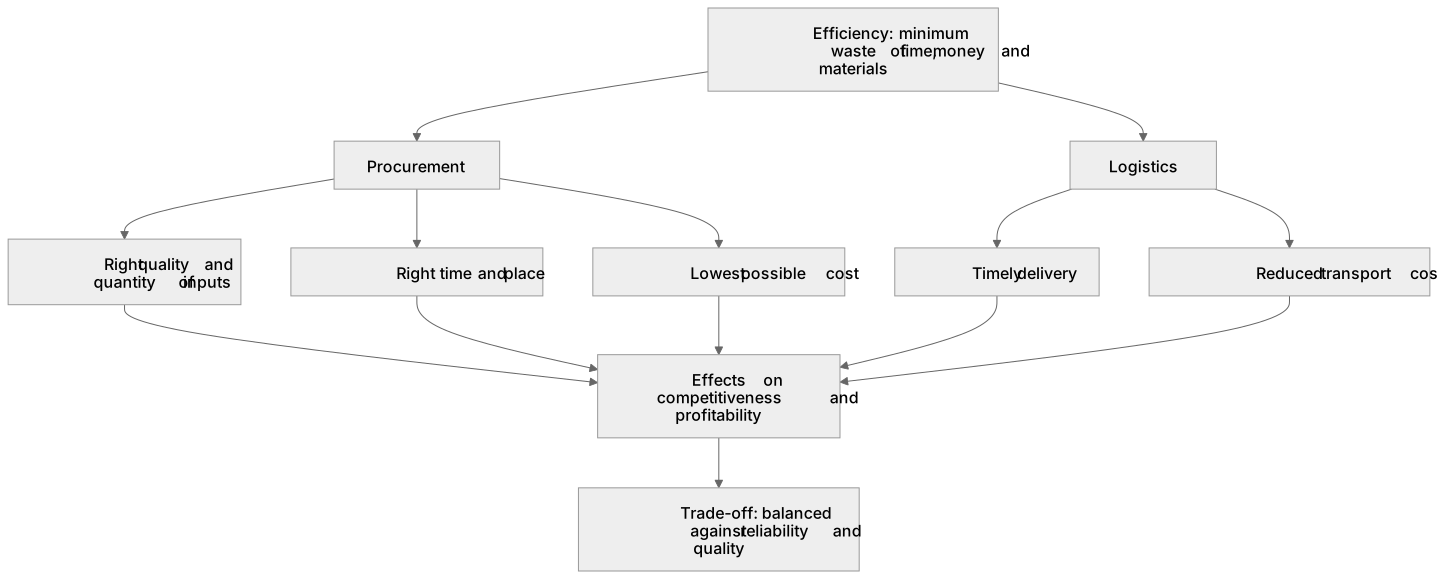
Key words
Say what each word means before you turn the card.
Efficiency
Try answering aloud or in your head before turning the card.
Trade-offs
Try answering aloud or in your head before turning the card.
See every definition
- Efficiency
- Achieving desired outcomes with minimum waste of resources such as time, money and materials.
- Trade-offs
- Balancing efficiency against other objectives such as reliability and quality, because over-focus on cost can lead to disruptions.
Label the diagram
Some boxes have lost their names. Pick the right name for each number.
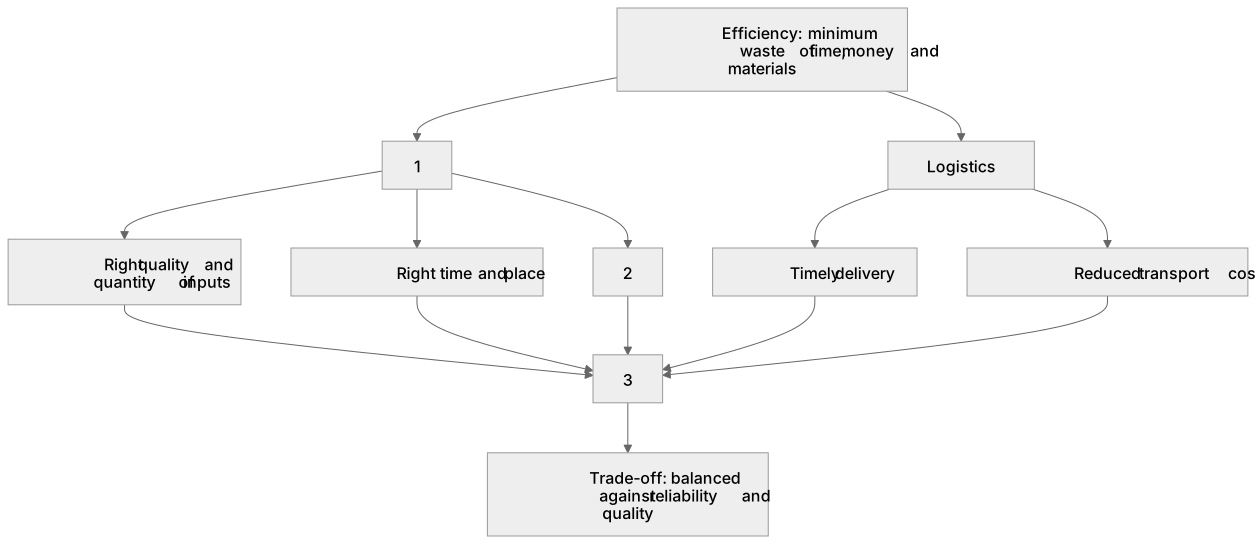
1Box 1
2Box 2
3Box 3
There is more to this lesson
The full lesson goes on to check your understanding and help you earn the marks. Create a free account to carry on, with your progress saved.
A week of Premium from your first lesson · Then the free plan continues · No card, no charge
Test your understanding of The role of procurement: efficiency
Active recall beats re-reading. Take an instant quiz now to test what you’ve learned and lock it into long-term memory.
A week of Premium from your first lesson · Then the free plan continues · No card, no charge